Net Zero is costing you a fortune. It doesn’t have to
Dan Kitwood/Getty Images
Looking For Growth has launched the Emergency Energy Bill – a ready-made piece of legislation that the Government should pass tomorrow.
But it won’t. Labour won’t take the radical action necessary to get bills down unless we force them to. This Government, just like many of its predecessors over the last thirty years, has prioritised the ideological pursuit of Net Zero – at all costs – over the British people, and their industries.
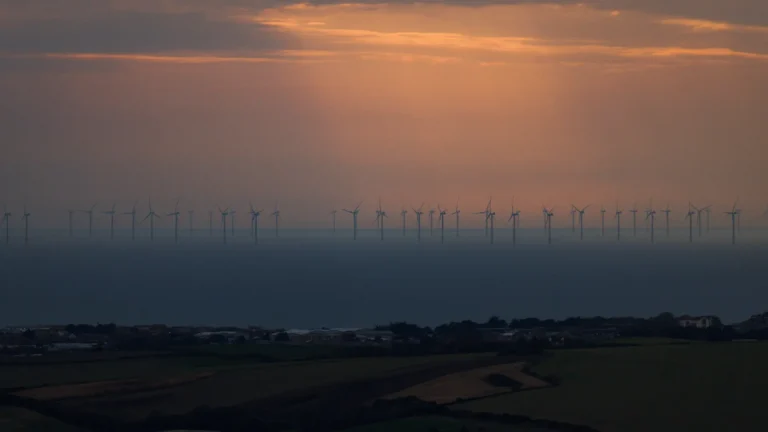
In fact, such is Westminster’s blind devotion to Net Zero that successive governments have procured offshore wind, no matter the price. Ministers and civil servants have treated Net Zero with an almost religious fervour, with any opponents pigeon-holed as extreme climate sceptics. It must be possible to argue that Britain needs a plan to get off fossil fuels over the long-term while simultaneously criticising the existing Net Zero approach.
The Department for Energy Security and Net Zero has been turned into a second Treasury
Britain’s energy system is broken. Last year, thanks to the contracts successive governments have negotiated, the British people were forced to fork out £1.5 billion just for big renewable companies to turn off their turbines. By 2030, this same system is forecast to cost us £8bn, equivalent to around £275 per household. Clearly, this is an absurd situation. The LFG Emergency Energy Bill would end, and investigate, the system behind this scandal.
The fundamental problem is that our energy policy has become detached from its original purpose. Rather than focusing solely on securing cheap and reliable energy for Britain, Westminster has made climate policy energy policy; emission and renewable energy targets have become more important than affordability and the security of supply.
The consequences are visible across the entire system. The British people are burdened with a stealth tax on their bills; regulators are instructed to prioritise government targets on emissions and clean power over protecting consumers from higher costs; and ministers are so committed to the agenda that they would rather import foreign gas – supporting the industries of other countries – than lift the ban on North Sea drilling and support our own. This has to end.
But it’s not just in the system that the effects are visible. Lower energy costs feed directly through the economy: with cheaper energy, households can afford to go on holiday or to spend extra on a meal out; firms can employ that extra person, build another factory or open up another shop.
The LFG Emergency Energy Bill was designed with one principle in mind: get bills down as far and as fast as possible while protecting the security of supply.
The Bill scraps all levies on energy bills. Introduced over thirty years ago, these taxes have made the Department for Energy Security and Net Zero a second Treasury, which is able to raise and spend billions on the renewable industry with little scrutiny. If ministers believe the projects funded by DESNZ merit support, they should be funded through general taxation and compete against other spending priorities in the Treasury. Many would, and should, fail in that competition.
Moreover, our Bill takes emergency action to reduce the fifteen-year-long queue for the grid, replacing the first come first served basis with an auction process. This system would root out the speculative applications that are unlikely to ever be built, while allowing a faster connection for projects that would actually be helpful and generating extra revenue that can be used to get bills down now.
It goes further still: the Bill reopens the North Sea. Britain will need gas well into the next decade – even Ed Miliband’s own department admits that – so we should get it ourselves, supporting our own industry and the jobs of our own people.
It will also end the stranglehold of the Government’s Clean Power 2030 targets, which have been pushing officials to buy more and more renewable energy no matter how bad the deal may be. Finally, the Bill acts to focus the regulators, changing the primary responsibility to minimising costs while maintaining the security of supply.
A century ago, MPs realised that incremental changes were not enough, so they passed the Electricity Supply Act, transforming Britain’s energy system. Today we face the same reckoning: once again, minor reforms will not be sufficient. While nuclear and batteries may answer the long-term, our Emergency Energy Bill does what successive governments chose not to – it takes radical action to get bills down now and save Britain’s industries.
The Iran war has created the largest supply disruption in the history of the oil market, beating the shocks of the 1970s and the war in Ukraine. Whatever happens with Donald Trump and the Strait of Hormuz, the Middle East oil industry cannot afford to be this exposed again. The Gulf has the money and […]

On June 23 Britain’s grid came close to collapse. Despite energy minister Michael Shanks calling claims ‘scaremongering’, new whistleblower information shows the grid had indeed been pushed past safe operating limits. A leaked National Energy System Operator (NESO) document said that ‘system constraints were breached and system security was compromised’ – a damning indictment of […]

In his first days as Prime Minister, Andy Burnham announced a series of populist pledges that purport to address the cost of living, but fail to address the deep structural issues afflicting the British economy. Burnham will soon discover – like the four short-lived predecessors who held office before him – that the voters of […]