The Price Mechanism
Britain needs to ignore the Blob and go nuclear

7 May 2026
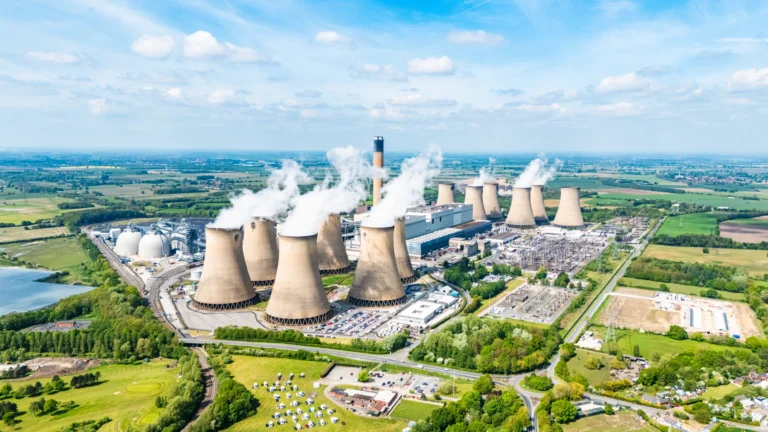
Photo: Getty Images
Three C-17 Globemasters. Eight shipping containers. The first nuclear reactor in history to be moved by air. While it feels like the opening of one of those special-forces slop series on Amazon that I count as one of my guiltiest pleasures, this is the very real Operation Windlord.
The operation, conducted by the US Air Force in February to ferry a five-megawatt unit from California to a desert lab in Utah, is now in its next phase: engineers are racing to switch it on by July 4, the 250th anniversary of American independence. The reactor was built by Valar Atomics, a three-year-old startup that, like Operation Windlord, takes its name from Lord of the Rings.
There was a time when this story would have been Britain’s. When Queen Elizabeth opened Calder Hall in 1956, we became the first nation on earth to feed grid-scale civil nuclear power into a domestic electricity supply. By 1965, the year of Winston Churchill’s funeral, Britain had built more operational reactors than the United States, the Soviet Union and France combined. We commissioned 26 of them between 1956 and 1971, with sites approved in months and reactors connected to the grid in under five years.
Then, thanks to the usual morass of blob mentality and Nimbyism, we stopped. We have not built a single new commercial reactor since Sizewell B in 1995. The one we are currently building, Hinkley Point C, is on track to be the most expensive nuclear station in human history: roughly six times what South Korea spends per megawatt for the same job. There is a fascinating essay explaining this in Works in Progress that reads more like tragedy than history.
Across the Atlantic, there is no such tragedy. Donald Trump has overhauled licensing, freed military bases for first-of-a-kind builds and, crucially, launched a Department of Energy pilot programme that authorises private-sector test reactors directly, side-stepping the paralysis at the Nuclear Regulatory Commission that caused a similar decline in US nuclear to the one we suffered in Britain. American firms can now break ground without first proving the safety of a thing they cannot yet build. It is the rediscovery of how a state authorises a thing without first demanding evidence that only the thing itself can produce.
Back to Valar. In three years, Isaiah Taylor’s company has gone from a dream to a working prototype, Ward Zero, built and tested for under $20 million. The power-generating successor, Ward 250, is what has just been flown to Utah for the July 4 deadline. The engineering is remarkable, but think about the potential logistical implications of being able to move a small nuclear reactor anywhere in the world.
A five-megawatt unit can be flown to a military forward operating base in conflict zones. Or it can be plonked in a disused Welsh mine, a remote Scottish highland or, in the words of the Anglofuturist podcast, under every village green. Think of the economic transformation.
So Valar’s bet, and it is the right one, is that the future of nuclear is not bespoke gigawatt cathedrals taking 25 years to commission, but manufactured products, made in factories, deployed in fleets, and made cheaper with every iteration. Mass production was, after all, what made nuclear the cheapest energy on earth in the 1960s.
And Britain? The Government’s SMR design competition was only launched in 2023, eight years after Rolls-Royce had formed its SMR consortium, and was finally narrowed to a single winner, Rolls-Royce, in summer 2025. Contracts were signed last month for three units in Anglesey, with a final investment decision still pending. Rolls-Royce is a serious British firm building a serious British reactor, but this could have been sorted years ago. In Government, Nadhim Zahawi and I started negotiating with the Americans on a deal to create an Airbus-style syndicate for Britain and the US to jointly build small modular reactors. Time and fate got in the way. And we are still building the huge old power plants, at great cost.
In Tolkien’s mythology, the Valar are angelic figures with huge power and ability to shape the world. It’s not a subtle metaphor, but given the precarious nature of energy security round the world today, we should realise that companies like Valar as capable of shaping the world as their fictional namesakes.


The way we as consumers engage with news, TV and online media is continually evolving. Traditional TV has been increasingly usurped by streaming services. Apps like YouTube are taking up a greater share of viewers’ time and are now successfully competing with the likes of Netflix. It is natural that in this environment competition is […]

For a nation of Nimbys, Britain – or at least London – is remarkably fond of its skyscrapers. We love them so much we give them cutesy diminutives like ‘The Gherkin’, ‘The Cheesegrater’ and the ‘Walkie Talkie’. We boast about vistas from which you can see them, marketing properties for their ‘stunning view of The […]

Barring some form of constitutional crisis, Andy Burnham will become Prime Minister. We do not even know who his new Chancellor will be, let alone what their policies and priorities are. However, whoever gets the top job at 1 Horse Guards Road, they should make tax reform their top priority if they want to bring […]