Learning the right lessons from the Grenfell tragedy
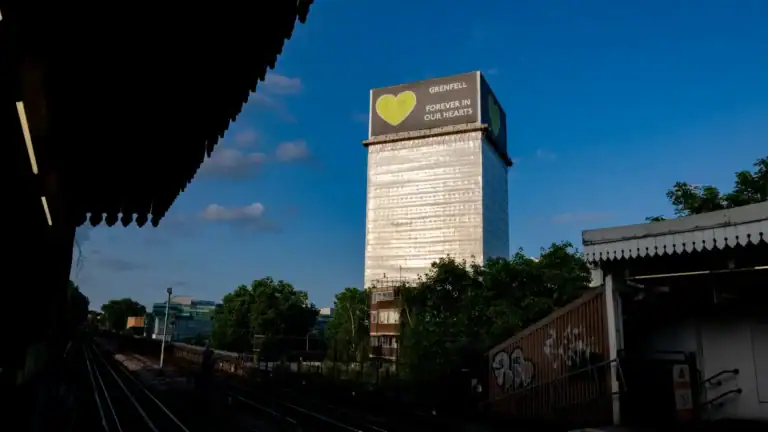
Photo: Guy Smallman/Getty Images
Grenfell was a preventable tragedy. The £177 million, seven-year inquiry established as much – fault was found in every corner, from the fire brigade, to the cladding, to the funding of fire safety in the building and how the government regulates building safety. The loss of 72 lives was horrifying, and owed to a confluence of poor decisions, and it is right that they are remembered; and that their families, friends and communities are cared for.
Simon Dudley, who until recently was Reform’s Housing Spokesperson, made comments on the Grenfell tragedy which were offensive to the victims, and to the wider public. He rightly apologised and resigned. What Dudley was highlighting, though, was the regulations imposed in the aftermath of the tragedy – the Building Safety Regulator. And he was absolutely correct in his criticisms of it.
I’ve worked in policy and regulatory affairs for a while, and seen a lot of regulators at work – big, small, financial, health, occupational, you name it. What I’ve never seen is a more destructive organisation for the sector it is seeking to steer, than the BSR. This is not the fault of its employees, who are dutifully working hard to stop another Grenfell from occurring again, nor is it the fault of the development sector that has rightly learned the correct lessons in building control. Instead, it is how the regulator operates.
To put into context what development for higher risk buildings (or buildings with more than six stories) looks like in London, according to the NLA, the number of tall buildings receiving planning permission fell to just six in 2024, while 58 applications were put in. Construction starts have fallen by over 90% below target in early 2025, and excellent development companies such as Berkeley Homes have seen their share price plummet as the industry struggles under the weight of regulations.
What is causing this development crisis? Wider macroeconomic problems, such as energy, have caused a supply chain schism, with costs surging by over 20% since 2020. On top of that, London’s buyer-constrained market has seen transactions fall by 20% between March 2025 and February 2026, with only 2,000 of those sales involving newly-built homes. As a result, developers cannot recycle their capital to build more units, exacerbating the dysfunction in London’s housing market. But worst of all is the arduous nature of building tall structures where they need to be – in our cities.
For a developer submitting plans to build a structure over six stories, they must pass through three ‘gateways’. In the first checkpoint, developers and architects must send the BSR all of the relevant data, plans and specifications of the planning application in relation to fire safety – this is the most simple and sensible step. Then comes the second checkpoint, where the applicant must submit detailed technical design, safety case and compliance documentation to prove the design meets all safety requirements. Every single document is then manually checked, line-by-line, by a BSR officer and communicated over unscannable PDFs. To reiterate: every single document involved in the construction of the building is manually checked by a bureaucrat, and then a decision is made as to whether shovels can go in the ground. The final stage is a rigorous inspection of the finished product, which by all intents and purposes is not functioning well either.
Stafford Beers, the systems thinker and academic, coined my favourite heuristic: ‘the purpose of the system is what it does’. When a regulator behaves in a manner which makes the very intent of the market it is regulating obscenely difficult, expensive, time consuming and operationally limiting, what do we expect the market to look like? Well, looking up in the sky, I’m not seeing many cranes for an ‘Apex City’.
To be more serious about the matter at hand, last year I authored a paper on the Building Safety Regulator, proposing sensible reforms to accelerate the construction of safe buildings, by utilising AI in the Gateway 2 stage, and using incentives and value signals to encourage innovation in safety. It is the only paper, to my knowledge, to receive endorsing forewords from the Labour Party, Liberal Democrats, Conservatives and Reform UK.
As Chris Curtis MP said about Richard Tice MP, in the following Westminster Hall debate on reforming the BSR: ‘Since being elected last year, I have been searching for something that the hon. Member for Boston and Skegness (Richard Tice) and I can agree on, and I am thankful that we finally managed to find it.’ My concern is that following the Dudley Debacle, this goodwill and agreement will retreat under the guise of politicking, and necessary reforms to the BSR will no longer be forthcoming. We cannot allow that to happen.
In order to save the London housing market, give justice to young people and the victims of the Grenfell Tragedy, we must rapidly reform the BSR. We cannot allow the death of the construction sector in the capital, and nor can we allow the young, poor and destitute to be trapped in unsafe highrises because developers are prevented from building safer buildings. There is a better way, as I have laid out, and the Government must move to seize it.

Ambitions to get our economy growing require an equal determination to address the barriers that hold it back. This summer, half of England was reported to be in serious drought for the second year running, and the Environment Agency warns of severe consequences for the economy, environment and wildlife if conditions do not improve. There’s […]

This week, Nimby Watch is paying a visit to the University of Warwick Warwick! What a beautiful place to visit. We’ve got the River Avon, a truly historic castle – begun by William the Conqueror himself – and a beautiful series of heritage buildings. What a delight. I assume you want to bulldoze half of […]

This week, Nimby Watch is golfing in Sevenoaks, a leafy town firmly within London’s commuter belt. Hang on, we’re golfing now? Since when did either of us play golf? Hey, I’ll have you know I placed third in a golfing competition just last month. I take my time at the tee deeply seriously. That was […]