The Knowledge Problem
Labour’s favourite economist has growth backwards


29 September 2026

Karol Serewis/Gallo Images Poland/Getty Images
Why haven’t we grown in the last decade? We are experiencing the longest spell of workers experiencing no average wage growth in real terms for well over a century – ‘the longest in history since consistent wage records exist, dating back to Victorian times,’ as a paper in the Oxford Review of Economic Policy shows. But what brought us here? The 2008 crisis? Then why did the US return to growth? Brexit? Then why aren’t other European economies like Germany and France growing faster than us? What brought us here has much to do with the force John Maynard Keynes believed the world is ruled by above all else: ideas.
We have been messing too much with growth. Keir Starmer wanted ‘strong, secure and fair growth’. In the coalition government, Nick Clegg, who now worries about why there is no party advocating for wealth creators, had the idea that ‘Our dilemma is not choosing between green and growth. It’s marrying the two.’ With some of the developed world’s highest electricity prices, it seems that idea has produced an unsuccessful marriage. And now the latest version is Andy Burnham’s ‘growth in every postcode’.
Nothing could be worse for entrepreneurs than an entrepreneurial state
But the intellectual fallacy behind the idea of a mission-directed growth is that it doesn’t understand growth. At its heart, growth is unpredictable, directionless and decentralised, and cannot be managed by a government. The idea that is leading the Labour Government, whether under Starmer or Burnham, can be traced to Mariana Mazzucato’s vision of the entrepreneurial state and mission-directed government.
Mazzucato is to Labour today what Friedrich Hayek was to the Thatcher government. In 2023, a year before he came to power, Starmer said, ‘Mission-driven government is a different way altogether. Not state control or pure free markets, but a genuine partnership’. This sounded like Mazzucato’s 2013 book, ‘The Entrepreneurial State’, which tried to ‘debunk’ public vs private sector myths. Labour returned to Downing Street with around five national ‘missions’, from achieving growth to improving the NHS.
Now, after two years, Starmer is no longer in power, but Andy Burnham’s ‘business-friendly socialism’ promises its own version of government direction to ignite the economy. Meanwhile long-term borrowing costs have hit a 28-year high, more than a million young people are not in work, education or training, costing the state £125 billion, and a record number of millionaires have left the country. It seems that nothing could be worse for entrepreneurs than an entrepreneurial state.
Now Mazzucato is back with a new book, ‘The Common Good Economy’, which sets out a new theory of the common good. As the Guardian put it, the book argues that it’s not enough to wish for growth; economic success requires a sense of purpose. But the book’s main problem is that it gets growth wrong.
This book, in Mazzucato’s intellectual journey, is an important one. In ‘The Entrepreneurial State’, she tried to expand a new view of the role of the state. In ‘The Value of Everything’ (2018), she developed a new theory of value, and in ‘Mission Economy’ (2021), there was more of a shift into a practical manner: the policy tools to achieve the common good. Then, in ‘The Big Con’ (2023), she tried to develop tools for state capacity to deliver the mission economy she wants. But ‘The Common Good Economy’ answers a challenge that emerged along the way.
She writes, ‘we need not only an entrepreneurial state and mission-oriented policies but also a new economics of collective action around the common good.’ She continues, ‘This is because all the problems we face require collaboration between different actors and collective intelligence between them. If – we do not know how to work together, with collective value creation at the centre, then we cannot reach “good” outcomes.’
Mazzucato, unconsciously, may be leading towards Adam Smith. She believes that, for us to reach good outcomes, we need to work together and use our ‘collective intelligence’. But the mechanism she demands, mission-directed economics, is one that stands against the process through which we achieve that collaboration: through the division of labour. What Adam Smith calls ‘the invention of a great number of machines which facilitate and abridge labour, and enable one man to do the work of many’ is blocked by her entrepreneurial state, which actively shapes the market and leads it towards a mission rather than allowing entrepreneurs to experiment on a micro scale themselves, through the profit-and-loss mechanism.
Mazzucato asks, ‘If there’s no purpose or direction, then what the hell are we doing?’ In 1903, The New York Times estimated that achieving human flight would require the ‘combined and continuous efforts of mathematicians and mechanicians from one million to ten million years’. Remarkably, this article was published just months before the Wright brothers’ first successful flight.
The scientific consensus was overwhelmingly against them; their efforts were deemed unscientific and irrational. Prominent scientists even published articles explaining why human flight was impossible. Their reasoning was based on inductive logic: small birds, such as pigeons, could fly, while larger birds, like ostriches, could not. From this, they concluded that there was a natural size limit for flying objects, making human flight unattainable.
Which direction were the Wright brothers going? The direction against scientific consensus. They were not following the patterns, but breaking them, and that’s the essence of growth and innovation: creativity, allowing the unexpected to happen and making the impossible possible. As Hayek wrote, ‘the value of freedom rests on the opportunities it provides for unforeseen and unpredictable actions’.
But to answer Mazzucato’s question, ‘what the hell are we doing?’: without a collective purpose, we are experimenting – taking risks, learning by trial and error and reaping the rewards. When we want a collective mission for the whole economy, we assume that we have the answers, like the journalists and scientists who thought flight was impossible. But growth and innovation come from accepting what Hayek called ‘the inevitable ignorance of all of us’. Mazzucato’s notion of the state is, on the other hand, the fatal conceit.


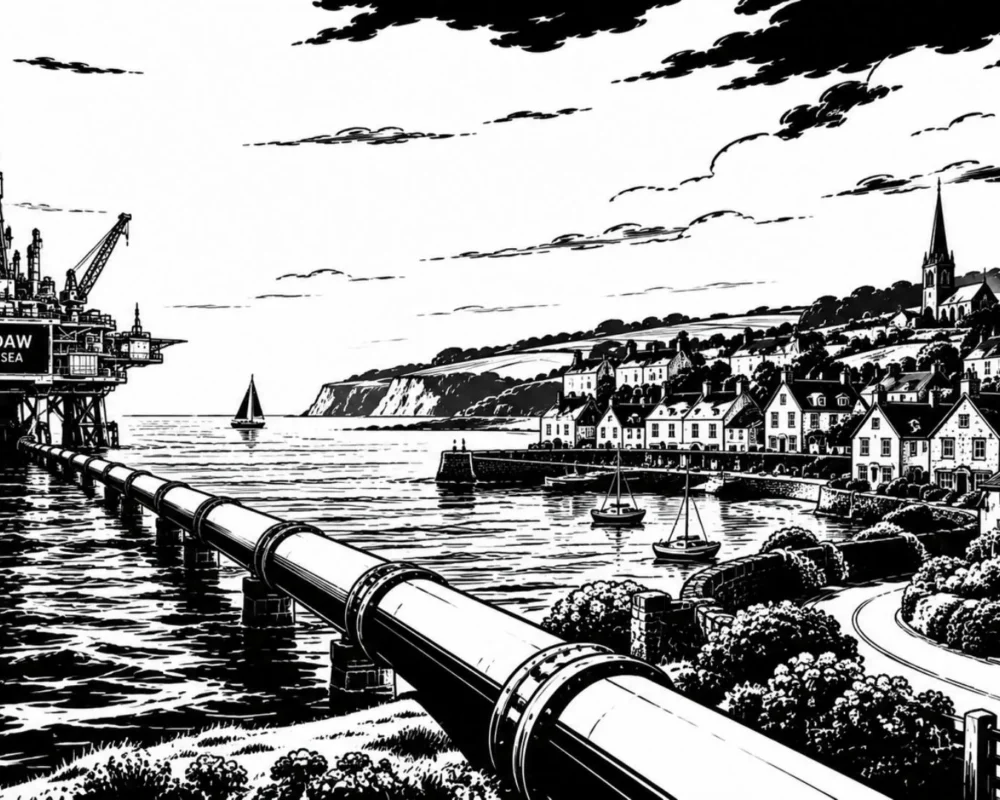
The Government has finally bowed to common sense and given the green light to the Jackdaw gas field in the North Sea. It’s the sensible move and a good start, although a decision on Rosebank is not yet forthcoming. Given the resistance both projects have faced, it’s worth setting out why Jackdaw’s approval is good […]
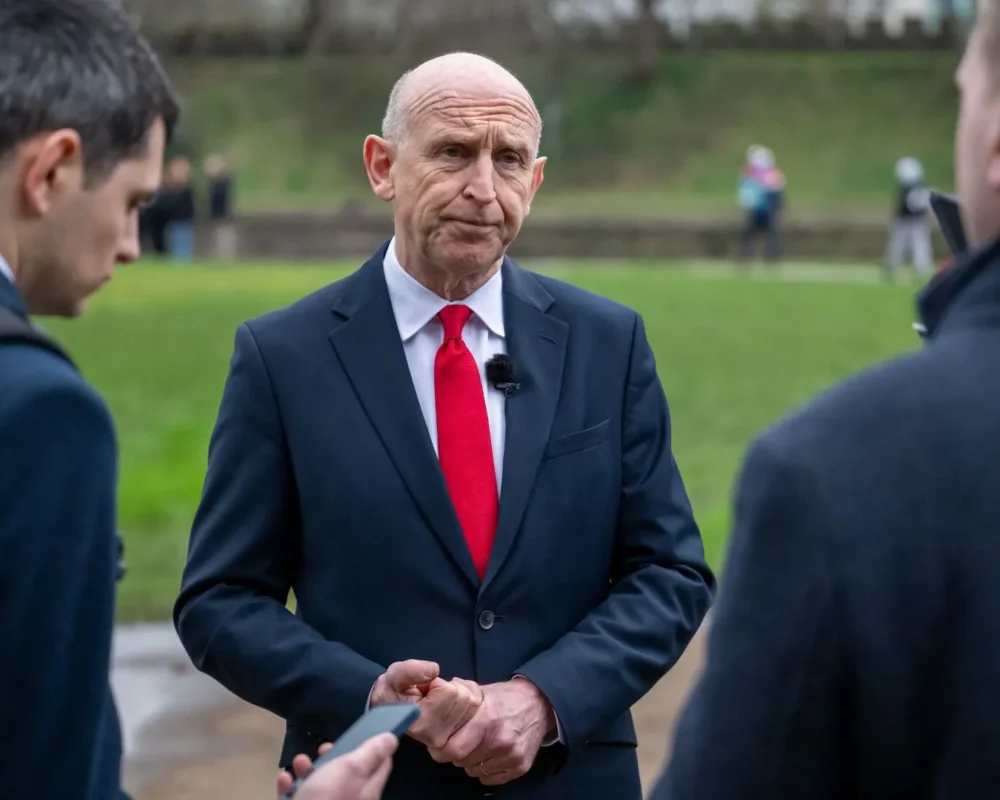
When John Healey sits down next Wednesday, the press gallery will focus hard on his headroom against the fiscal rules. In March the OBR put this at £23.6 billion against the main rule, which requires day-to-day spending to be covered by revenue by 2029/30. A recent Reuters poll of economists suggests it has since shrunk […]

The lifeblood of the economy. The backbone of Britain. When it comes to small businesses, it’s easy to lapse into cliché. But that’s because they really, really matter. The overwhelming majority of businesses in Britain are small businesses. They employ more than 13 million people. And it’s almost impossible to exaggerate how tough things are […]