Labour are reversing Gove’s schools revolution
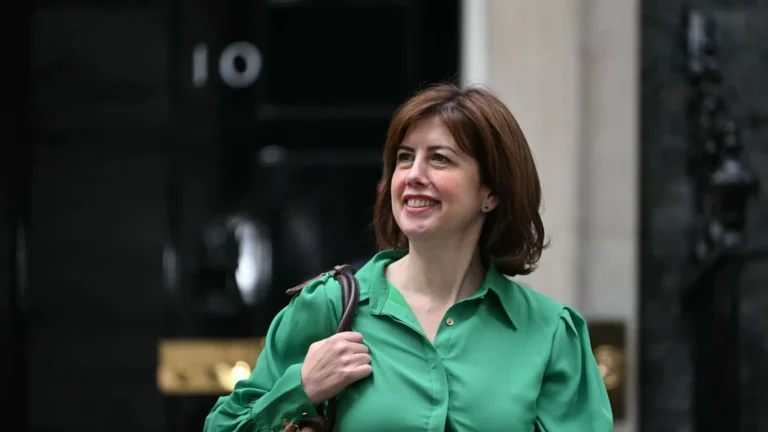
JUSTIN TALLIS / AFP via Getty Images
The reforms of Michael Gove represented a profound shift in England’s educational landscape, based upon the belief that outcomes improve when there is freedom with accountability. During his tenure as Education Secretary (2010-14), it became possible for all publicly funded schools to become academies, free schools could be created, and there were substantial reforms to curricula and qualifications, which emphasised knowledge acquisition and high standards of assessment respectively. The project which Gove began was never completed and schools were not really trusted with the gift of freedom, as well as being curtailed by ever-growing regulation and bureaucratic requirements. There now lies an opportunity for Conservative policymakers to finish the job that began over fifteen years ago.
The choice is between a system that trusts institutions to succeed and one that assumes Whitehall must tell them how
Notwithstanding the loss of momentum after 2014 – largely determined by ministerial merry-go-round and shifting priorities – there is evidence of a positive trajectory. In 2009, England’s students scored in maths below their counterparts in Scotland and almost identical to those in Northern Ireland in the Organisation for Economic Co-operation and Development’s (OECD) programme for international student assessment (PISA). Similarly, in reading, England sat both below Scotland and Northern Ireland. By 2018, England’s scores in maths and reading were higher than Scotland, Northern Ireland and Wales where education remains devolved, and while the 2022 data showed a post-Covid dip for all four nations, England remained the highest.
Since July 2024, the direction of travel has been to dismantle the philosophy of freedom with accountability and instead, to deliver an agenda of centralised control. At the heart of this has been the Children’s Wellbeing and Schools Act (2026), which requires all academies and free schools to teach the revised National Curriculum from September 2028, alongside the removing of other freedoms that academies enjoyed around staff appointments and remuneration.
If anything, the appointment of Lucy Powell as the successor to Bridget Phillipson appears to have catalysed the efforts to dismantle the Conservative legacy. Mistaking an economic problem for an educational one, she has attributed the UK’s one million young people not in education, employment or training to Gove’s reforms and suggested that the current system represents a one-size-fits-all academic straightjacket, seemingly oblivious to the wide range of existing technical and vocational qualifications.
The educational changes since the 2024 General Election have implemented policies which reflect a totally different theory of improvement and which are grounded in attempts to standardise provision, increase regulation, and reduce institutional difference. Ultimately, it is about Whitehall-directed uniformity and a failure to trust school leaders.
Irrespective of school type, those of us within education, recognise the immense benefits of genuine autonomy with meaningful accountability. Among such advantages is the freedom to adapt to the needs of the students – to develop distinctive programmes of study which are engaging, purposeful and preparing them for the modern world. Similarly, it affords opportunities to innovate, to partner with businesses and to build a leadership culture where practitioners and pupils alike can flourish in teaching and learning, rather than simply reacting to Department for Education statutory guidance.
This was what the Gove reforms permitted with their approach to academies, and while the evidence does not necessarily show that changing status automatically raised GCSE results, they created the institutional conditions in which strong leadership could flourish, weak schools could be challenged and successful schools could take responsibility for helping to improve others – a revolution which remains unfinished.
At the heart of this is meaningful and proper accountability, without which, autonomy simply provides the opportunity for underperformance to operate behind a different operational structure. Standards matter and completing the educational transformation requires an inspectorate which focuses on educational outcomes rather than process compliance. In such a system of high trust and high accountability, successful schools can share, replicate and disseminate what works for other schools; the corollary is also true where under-performance is addressed and lessons learnt. This is surely something that we owe to all our young people who will be more likely to thrive in an educational system which is underpinned by freedom with accountability.
There is a real opportunity here for Conservative policymakers. The debate is not about whether the history curriculum should be Anglo-centric or if the literary canon should be at the heart of reading lists as some would erroneously wish to frame it. The choice is about the practical outworkings of foundational political philosophy – between a system that trusts institutions to succeed and one that assumes Whitehall must tell them how; between freedom with accountability for outcomes, and uniformity with answerability for process. The success of England’s education system lies in greater autonomy, reduced regulation, and a system which allows excellence to flourish and under-performance to be addressed.
The Conservative education revolution was only half finished. Labour risks turning the clock back; the Conservatives should finish the job instead.


Schools do not exist in isolation from the economy. The number of young people who are not in employment, education or training (NEET) is, in large part, a function of the economic conditions in which they leave education. When growth is weak, entry-level opportunities are scarce, employers are cautious and the public finances that pay […]
After 17 months of drift following the Government’s January 2025 reset of the Higher Education (Freedom of Speech) Act 2023, the free speech complaints scheme administered by the Office for Students (OfS) is at last going ahead. The Government has now signed the commencement regulations needed to bring the scheme into force. From 1 September […]
Almost buried under this week’s avalanche of news reports on war in Iran and who-said-what-to whom in the newly-released Mandelson files, was an announcement from the Treasury Select Committee launching an inquiry into ‘widespread dissatisfaction’ over student loan repayment terms. They can say that again. It may not be as urgent or compelling as drone […]