It’s time for Britain to go nuclear
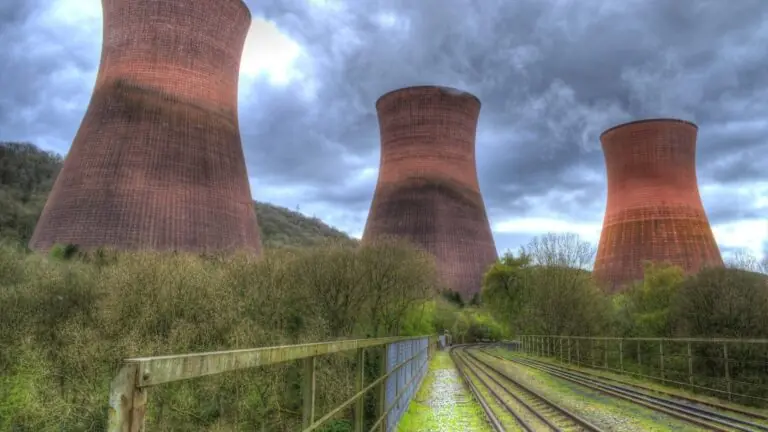
Photo: Getty Images
When the Budget is announced on Wednesday, the Chancellor will have a golden opportunity to take radical action to reduce every UK household’s energy bills. If she accepts all the recommendations suggested in the Nuclear Regulatory Review, published today, British energy can become cheap again. The report, which calls for the most radical reforms of Britain’s nuclear power sector in generations, argues that only a reset of our regulatory system can correct the failures of successive governments.
For decades, a labyrinth of consultations, legal challenges, reviews and paperwork has burdened our energy sector. Now, British energy is among the most expensive in the developed world. But it didn’t have to be this way. It does not need to cost over five times more to build a nuclear reactor in the UK than in South Korea. Civil and defence programmes do not need to suffer from endless delays and go millions over budget. There was nothing inevitable about average annual household energy bills increasing by over 50% over the last ten years. The choices of our politicians are responsible for these problems.
It is time to fix this paralysis. As the independent report outlines, a cumbersome system of regulation, combined with a ‘culture of complacency and extreme risk aversion’, has taken Britain from a world-leading pioneer of nuclear energy to not even finishing the construction of a nuclear power plant this century.
But this can change. The Chancellor could approve all 47 of the report’s recommendations, and break the costly cycle of bureaucracy, bottlenecks and ballooning bills. In doing so, she would revive a sector hobbled by the prioritisation of process over outcomes, overly cautious regulators, slow government decision-making and insufficient incentives to reduce social and capital costs.
Crucially, these changes would streamline planning for nuclear power plants, stop endless taxpayer-funded judicial reviews responsible for delaying projects by years, simplify existing rules to avoid excessive spending and automatically approve reactor designs previously accepted for use in the UK, cutting out hundreds of millions previously spent on regulators, lawyers and consultants.
Such reforms would give certainty to Britain’s nuclear industry. It would end the ‘regulatory merry-go-round’, meaning businesses could start work on numerous projects at once without the threat of spurious court cases and consequent modifications, which add significant and unnecessary costs throughout the supply chain. In turn, this would change the process-driven, risk-phobic culture that has permeated throughout the industry.
By removing these barriers, the report’s proposals would set Britain on a clear path towards affordable energy and, consequently, economic growth. Indeed, reduced energy prices are a key cornerstone of reversing decades of stagnation and decline. With cheaper energy, British businesses could start and expand here, rather than endure cost-cutting measures year after year, or moving abroad to scale up. With lower bills, households gain real spending power, and people would feel like their lives are improving. Lower costs ripple through economy: manufacturing revives, wages go further, jobs go up and Britain becomes more attractive to the entrepreneurs, risk-takers and wealth-creators that drive our prosperity. In short, by accepting all these recommendations, the Chancellor would not just ease the cost of living – she would be laying a fundamental foundation of sustained growth.
Britain led the way during the Industrial Revolution. We invented and innovated like no other nation. This made UK workers the richest in the world. We can lead again: with other nations beset by bureaucracy and instability, Britain has the opportunity to retain our own and attract the rest of the world’s capital and expertise.
We can be at the forefront of human development once more. Just as the Georgians and Victorians built the machines that powered the past, we can deliver breakthroughs in AI, biotech and medicine to advance humanity. Too often, Britain develops startups which go on to achieve success abroad. If we can persuade them to stay, and attract others, we can make the UK rich again.
These fortunes, the end of decline and the return to sustained growth, are only possible if we rescue Britain’s energy sector. Only a transformation of our nuclear regulatory framework will do. If the report is adopted in full, it would represent the most positive change to the existing system in decades. It would reverse decades of overregulation by simplify remaining rules, and change the political culture to focus on cost, not process.
If the Government is serious about growth, if it really wants to make our energy cheap and competitive again, the Chancellor must accept all the recommendations. If she does not, she will have failed to prioritise the British people, and failed to deliver the change they voted for.


Three C-17 Globemasters. Eight shipping containers. The first nuclear reactor in history to be moved by air. While it feels like the opening of one of those special-forces slop series on Amazon that I count as one of my guiltiest pleasures, this is the very real Operation Windlord. The operation, conducted by the US Air […]

At its peak, Britain was known as the workshop of the world. Sheffield produced high-quality steel, Manchester still had a strong textiles sector and the West Midlands was world-renowned for its cars. Glasgow, Sunderland and Newcastle were shipbuilding hubs, Stoke-on-Trent produced ceramics. Cities around Britain provided steady employment for skilled tradespeople, keeping communities together and […]

After nearly two decades of weak growth, stagnant wages and stubbornly high inequality – alongside one of the worst productivity records in the developed world since the financial crisis – Britain’s central problem is how to get the economy growing again. We don’t build enough homes. We don’t generate enough cheap energy. We don’t invest […]