How to make Venezuela great again
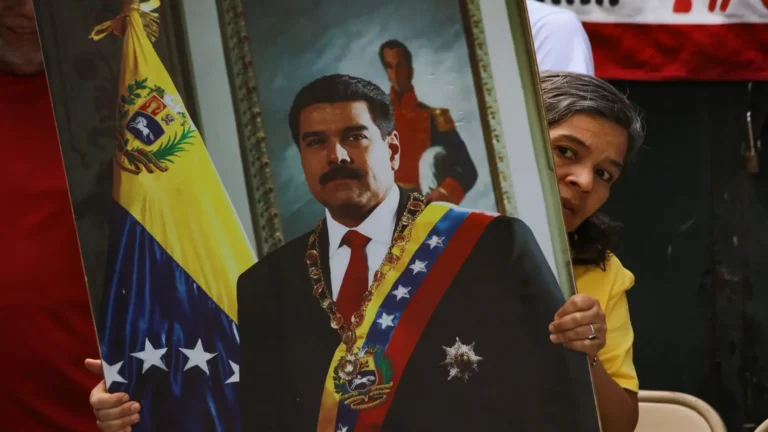
Photo: APHOTOGRAFIA/Getty Images
Zohran Mamdani and Zack Polanski have brought back the politics of ‘hope’. Many of their voters do not even know the policies involved or their unintended consequences; they vote based on vibe. The vibe of something new, something different, something that promises change. But this politics of hope is not new – and it is dangerous. Hugo Chávez was the most important face of this model of politics when he ran for president of Venezuela in 2002.
The most important ally of the politics of hope is the intellectual class. Six years after receiving the Nobel Prize in Economics, Joseph Stiglitz travelled to Caracas. He praised Chávez: ‘President Hugo Chávez appears to have had success in bringing health and education to the people in the poor neighbourhoods of Caracas.’
For Stiglitz and many left-wing intellectuals, Chávez was reviving socialism, fighting inequality and expressing scepticism toward economic growth. But like all socialist honeymoons, this did not last long. Today, more than 80% of Venezuelans live in poverty, 40% face food insecurity, a third of the population has left the country since 2015 and inflation reached 2,000,000% in 2018.
Why did socialism not work, again? The answer from the Left is American sanctions. At its core, this is a deep confession: for socialism to work, it needs help from evil capitalist countries. But even putting sanctions aside, the main reason Venezuela is poor is socialism itself.
The final chapter of Ludwig von Mises’s ‘Socialism’ is titled ‘Destructionism’. For Mises, destructionism is the essence of socialism: it does not create, it destroys. And its destruction lasts for decades. The legacy of communist systems can still be traced in Russia, Ukraine, Belarus and many other Eastern European countries.
Socialist destruction operates on two fronts: psychological and economic. Psychologically, socialism makes people dependent on an official to tell them what to do, what to produce, how to think and finally what the ‘truth’ is. This is why so many Russians miss communism – not because it produced prosperity or freedom, but because it offered psychological comfort. Big Brother was looking after you. Capitalism is not only a change of institutions; it is a psychological shift toward personal responsibility.
The economic effect is that socialism is a system of soft budget constraints. What is the difference between soft and hard budget constraints? A hard budget constraint is what firms face in a capitalist system: if revenues do not cover costs, you go bankrupt. Period. This creates incentives for resources to shift toward more efficient firms. Socialism, by contrast, operates with soft budget constraints: if you do not cover your costs, the state bails you out. Inefficiency is rewarded, and resources move from efficient firms to inefficient ones. Why should I make a profit if the reward comes when I fail?
These two elements mean that Venezuela’s problem – now that President Trump has deposed Chávez’s dictatorial successor Nicolás Maduro – is not merely one of resources. As Fraser Nelson has argued, oil will not save Venezuela.
So what can save it? We should learn from historical transitions from socialism to capitalism. Which countries were more successful? Those that implemented fast and comprehensive reforms, known as shock therapy. Those that failed pursued partial, gradualist reforms. The reason shock therapy worked and gradualism failed is political economy: if reforms are not fast and comprehensive enough, interest groups form and resist further change.
That is what would save Venezuela: reform on three fronts – from soft to hard budget constraints; from dictatorship to democracy; from collectivism to individualism. The first one is economic, the second one is political, and the third one cultural.
To move from soft to hard budget constraints, Venezuela must restore the market mechanism: protect property rights, pursue sound monetary and fiscal policy and stop subsidising zombie firms. To implement these reforms, the political system must break the power of the old establishment – what students in 1960s Belgrade called the ‘red bourgeoisie’. The biggest enemy of reform is state capture by entrenched elites, as we see in Russia and Belarus. Poland avoided this because shock therapy prevented the old elite from retaining power. The forces of the state were replaced by the forces of the market, and rent-seeking gave way to competition.
What worries me most is political change. Despite Donald Trump’s public scepticism, I still hope that María Corina Machado – whose presidency was stolen by the socialist dictator Maduro – can lead a new government. Otherwise, the old establishment will not be committed to reform because of its vested interests. Cultural change worries me least. Those who have experienced ‘the warmth of collectivism’, to quote Mamdani, do not want to queue for bread or worry about their next meal again.
Even as the habitual sceptics of foreign intervention who are an influential part of Trump’s MAGA movement line up to back the President’s actions, many leftists and libertarians, including voices at the Cato Institute, argue that US interference in Venezuela will do more harm than good. ‘Let Venezuelans decide for themselves,’ they say. But Venezuelans did decide in the last election, and Maduro stole it. What they fail to understand about countries like Venezuela is that there are barriers to ideas. In the Western world, the will of the people can be translated into policy change. Socialist dictatorships are designed to block this mechanism.
Foreign intervention can break that resistance and align outcomes with what people actually want, benefiting both Venezuelans and American interests. We do not live in a world of isolation. One foreign power defends Ukraine; another attacks it. One stood with South Korea; another backed North Korea. In a world where Russia, China and the Islamic Republic exist, my libertarian friends should understand that the United States should be the policeman.
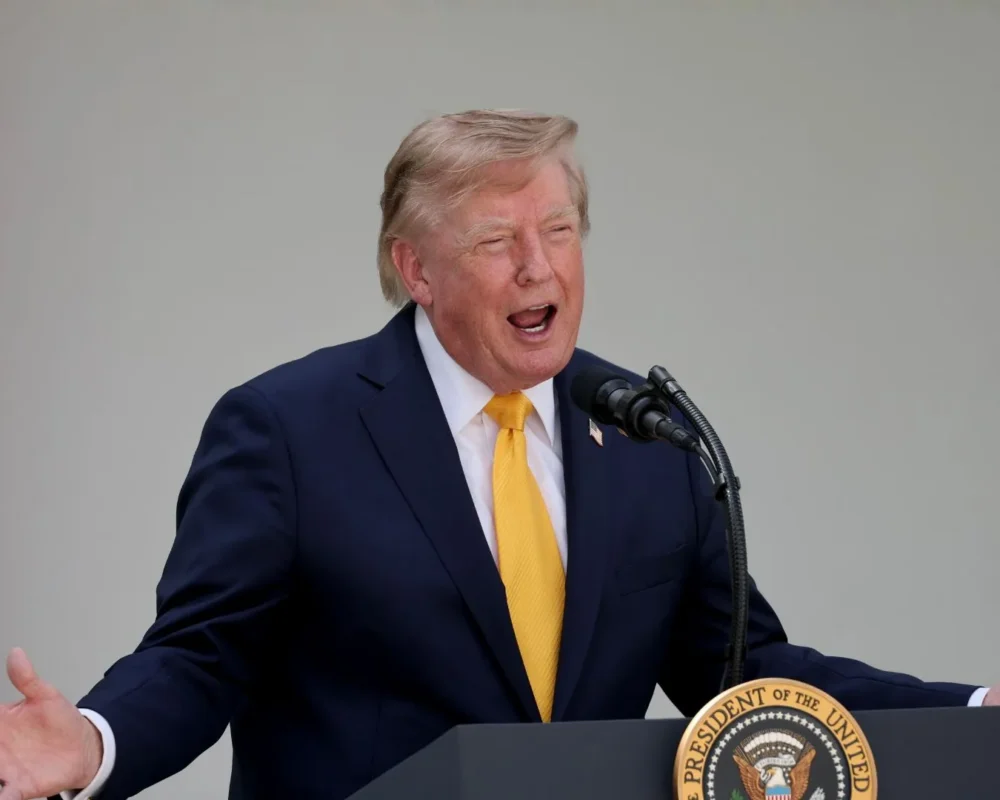
President Trump’s imposition of ‘economic D-Day’ against Iran – a series of sanctions against any nation dealing financially with Iran, as well as banks and businesses – has already been dismissed by the usual suspects whose knee jerk response is always to attack any new measures against the Tehran regime. When it comes to Iran, […]
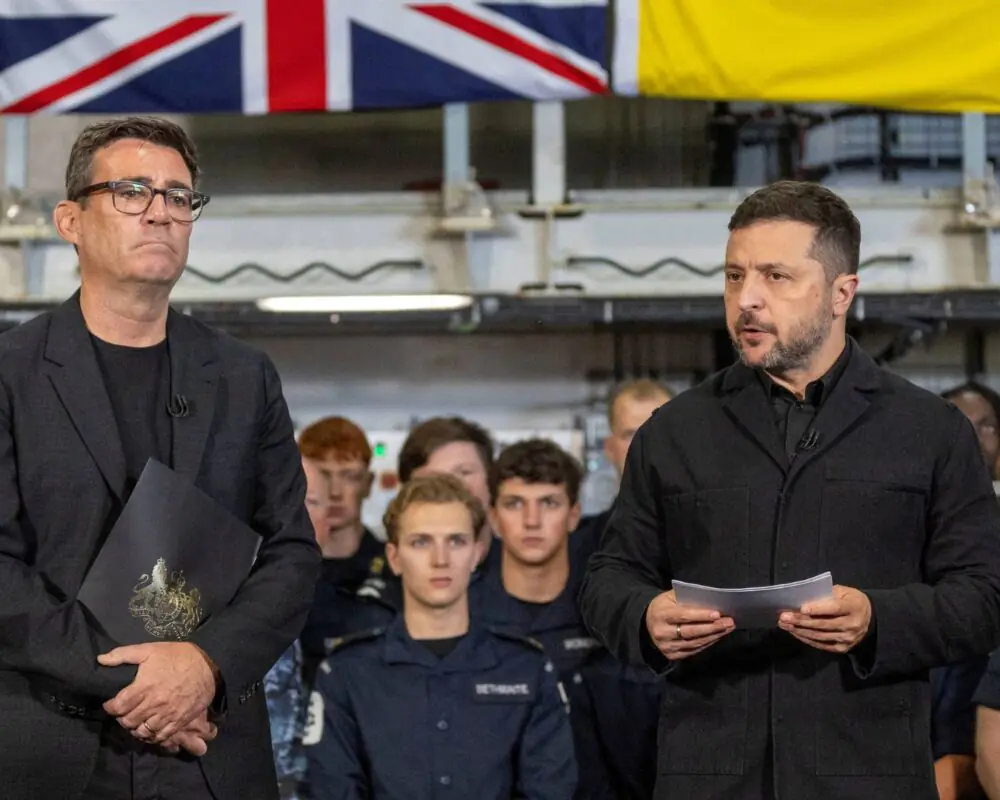
Britain and America have spent a decade arguing about Nimbyism as if it were a housing problem. It is much bigger than that: our inability to build, in a broad sense, has grown into a source of geopolitical weakness. The economic argument has been made already. Growth controls add anywhere from 17% to 38% to […]
‘A Waiter in Paris’ is the story of a young Englishman who graduated from a good university in London with a humanities degree, trained and educated for a world that no longer exists. ‘All while I applied for other, more “prestigious” jobs. Jobs that didn’t appear to exist anymore.’ That’s how Edward Chisholm puts it […]