A vote for Zack Polanski is a vote against success
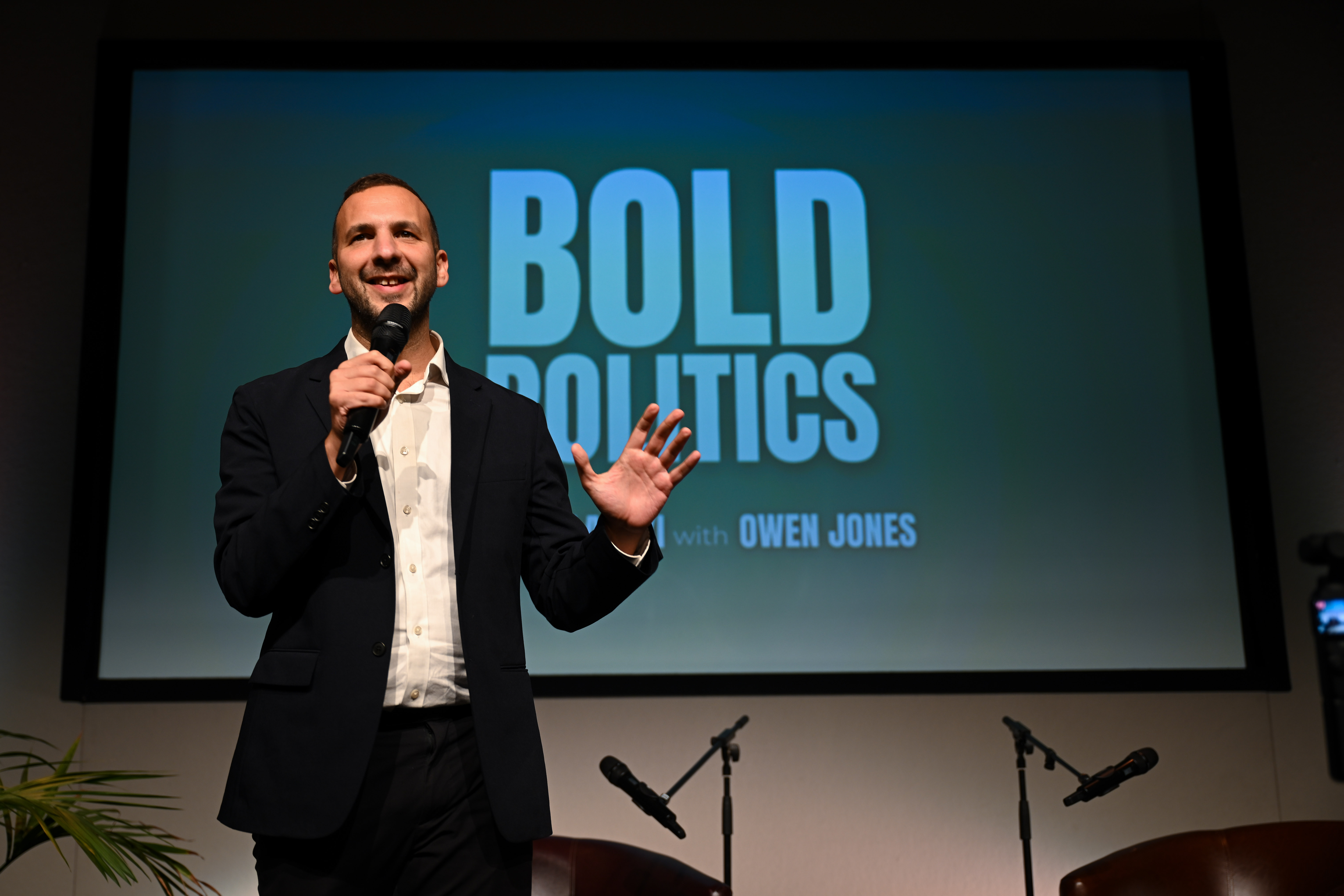
Photo: Finnbarr Webster/Getty Images
A wealth tax is a hugely attractive concept for many, as it sounds simple and fair: the wealthy, of course, are those whom we ought to be taxing, since they have, as Labour politicians forever remind us, the ‘broadest shoulders’. It is certainly popular with the voters, and a YouGov poll last week found that 75% of those surveyed supported its introduction. By contrast, only 22% supported a higher rate of income tax or an increase in National Insurance Contributions, while 14% of people backed a rise in VAT.
The reason is obvious: we all pay VAT, and half of us pay income tax and National Insurance. But we instinctively assume that a wealth tax will fall on someone else, someone higher up the socio-economic scale. Oxfam sums up the mindset perfectly: ‘wealth taxes typically only affect people whose assets exceed the specified limit. This ensures it targets only the wealthiest members of society’.
A wealth tax is a bad idea. Assessing an individual’s overall wealth is extremely difficult, and the tax applies most obviously to those who are most mobile, potentially causing capital flight and discouraging investment and economic activity. Austria, Denmark, Germany, the Netherlands, Finland, Luxembourg and Sweden all introduced wealth taxes in the 1990s and 2000s, and by 2007 all had repealed them. In Europe, only Spain, Switzerland and Norway retain them.
The new populist leader of the Green Party of England and Wales, Zack Polanski, clearly follows opinion polls rather than economic experience. He wants to impose an annual 1% levy on assets above £10 million and 2% on assets above £1 billion. This, he claims, could raise £15-25bn each year.
Polanski does not descend to the muddy arena of finely grained economic statistics, however. His approach is much simpler and, to give him credit, much more frank. He explained to the BBC’s Laura Kuenssberg recently: ‘this isn’t about creating public investment, we can do that anyway, we don’t need to tax the wealthy to do that’.
Set aside how he would ‘do that anyway’. If he is not primarily concerned with raising revenue, you might wonder why on earth he wants to introduce a new tax at all. The answer is frightening in its simple-mindedness:
It’s ultimately about reducing inequality… this is ultimately about tackling the deep inequality in our society.
Translation: Polanski thinks that there is some objective measure by which some people can be judged to have too much money, and the gap between them and everyone else judged to be too great. This can be solved by taking more money away from the rich and decreasing their wealth. This is a measure designed to punish those deemed too successful.
It is obvious that, outside a totalitarian regime, eliminating economic inequality is impossible. The United Kingdom is a nation of 70m people; how could we possibly achieve absolute equality of income, let alone wealth equality? In any even vaguely free market, it is self-evident that some forms of employment will be more lucrative than others, and absolutely should be.
Wealth equality could only be achieved by nationalising wealth and property wholesale and redistributing it on a vast scale so that everyone had the same. The profit motive and work ethic would be redundant, because the state would ensure that, ultimately, we all had the same and earned the same.
Reducing inequality seems a benign ambition, appealing as it does to something deep in human nature. Karl Marx, in 1847’s ‘Wage Labour and Capital’, identified the psychological aspect:
A house may be large or small, but as long as the surrounding houses are equally small, it satisfies all social requirements of a dwelling place. But let a palace arise by the side of this small house, and it shrinks from a house into a hut. The smallness of the house now indicates that its occupant is permitted to have either very few claims or none at all.
Marx may have been right, and people often do focus on relative wealth and inequality rather than absolute prosperity. And it is frustratingly nonsensical: if you could earn £50,000 a year or £100,000 a year, why would you let the circumstances of others potentially make you choose the lower sum?
This irrational but innately human response poses two questions: how do we counteract it, and how do we minimise inequality? The first can only be by sustained persuasion, the vocation which politicians have chosen. The second requires the creation of economic circumstances in which everyone is wealthier, relative not to each other but to their previous selves a year, five years, ten years ago. That requires open markets, free trade, sound money, an educated and skilled population and a sense of national pride and purpose.
Polanski, a former actor and hypnotherapist, has no appetite for this. For him, wealth creation is anathema: it is the source of inequality and therefore a problem to be addressed. Unsurprisingly, the Green Party also supports a Universal Basic Income, the nationalisation of society.
The Green Party leader has made no secret of his motivation, and 49-day prime minister Liz Truss remarked recently that there is ‘a certain kind of honesty about the Green Party’. Voters may find this candour charming and novel, but they should listen to what he is saying. Vote Green, punish success: a surefire recipe for a happier Britain.

This morning, John Healey delivered his first major speech as Chancellor. He set out his vision for the economy and, while it was encouraging to hear his determination to drive growth and solve the NEET crisis, all while claiming to be committed to fiscal discipline, it was quite light on detail. However, one specific point […]

When Andy Burnham arrived at No 10 in July he came with a bold message of change. 40 years of neoliberalism have left Britain hollowed out: wealth has drained from those with the least to those with the most; capital ran riot while the state stood back and watched. It’s a powerful story, and evidently […]

Alan Greenspan was always attacked by the Left because of his belief in market forces. John Kenneth Galbraith, at a White House conference, made fun of him, saying that the cure for inflation is always the same for ‘Bolsheviks and the devoted supporters of Ayn Rand’. But each and every government learns the hard way […]