How the private sector saved Liverpool
Getty Images
The fate of the high street, and support for local communities, has just come into even sharper focus following the local election results and their consequences – of which more later. Everyone thinks the high street is important, right? Voters constantly complain that the high street is full of vape shops. Shop owners say the tax system is stacked against them. Dingy high streets are a sign of broken Britain. Governments appoint high street czars to revive them. Nothing changes.
The problem is that all too often. the authorities – local or national – are focused on the symptoms rather than the cause. In response to voters’ concerns, MPs demand visible action for their town centre. We’ve seen successive governments hand out taxpayer funds to various preferred localities, often in places they hope will vote for them, which have, at their best, remediated land or prettified the landscape, but which, without the right development incentives, ultimately change very little for the lives of their residents.
So what are the right development incentives ?
A few years ago, when I worked in government, I participated in a cross-department discussion about how to revive local communities. The debate followed exactly the pattern above: we needed more pleasant parks, better local transport, action on crime and anti-social behaviour. Maybe we needed to set up a regulatory agency to save the local football club.
After listening for a bit, I said: ‘What we need are good jobs, which means private sector investment in the area. So we need to focus on what will attract business in and encourage new businesses to start.’
What policies will help with that ?
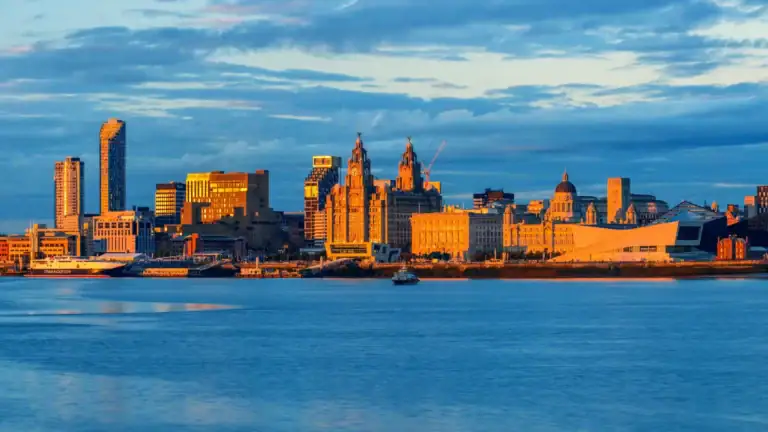
The North West is currently in the headlines, so let’s take what pretty well everyone would say was a hard case, my home city of Liverpool. By the early 1980s, the city was in a desperate state. The Mersey Docks & Harbour Board had gone bust; The British Leyland plant in Speke closed in the late 1970s. Unemployment was over 20%. The Toxteth riots took place in 1981.
Fast forward to 2008, and Grosvenor Investments opened the massive Liverpool One shopping centre, raising almost £1 billion for a 42 acre regeneration project involving 40 new shops. That year, Liverpool was feted as the European Capital of Culture, with tourists flocking to admire its heritage and spend money in its shops.
So how did we get from arson in the streets to the largest open air shopping centre in the UK, second only to Trafford Park in the North West ?
Of course, there is no single answer to that, but I’d highlight the following factors:
First, the correct national policies for encouraging growth and jobs. Liverpool’s economic situation was slow to improve, and started from a very low base, with 20% unemployment continuing through the mid 1980s, but did gradually begin to catch up with the rest of the economy. By the late 1990s, unemployment had halved. A sustained period of national growth – apart from the early 1990s following the Lawson boom – had helped Liverpool too.
In terms of private sector investment, a critical early signal was the first new high quality hotel to be built in the City for decades. The Swallow hotel opened in 1998, financed by Promenade Estates as part of a redevelopment project transforming a windswept carpark into a leisure area. This investment was opposed by many existing local hotels, who feared the sharper competition it would provide. Sure enough, it injected competition and higher standards into the market which forced others to improve their offerings.
Slowly, what had been a vicious cycle was starting to turn into a virtuous, market driven, cycle.
Of course, the market left to its own devices would not have picked Liverpool. Action by the public authorities was also needed. While this was complicated by a standoff between the Militant Tendency Council and the Conservative government, the most significant intervention was the regeneration of the Albert Dock area and the conversion of abandoned docks and warehouses to attractive cultural and leisure facilities. This exploited a rare heritage asset which Liverpool possessed and which could lead to increased tourism and economic activity.
Slowly, what had been a vicious cycle was starting to turn into a virtuous, market driven, cycle
The Albert Dock was reopened in 1988. It gave Liverpool a new story to tell, but of itself it was not a gamechanger: unemployment remained stubbornly high for several years. Only when the economy as a whole was growing consistently did Liverpool also realise its potential.
And the nature of that potential had changed. There was no point in trying to recreate Liverpool as the country’s premier port. Liverpool had to reinvent itself as far more of a leisure and services economy.
What lessons can we draw from this for saving the high street? First, the biggest impact on the local economy is likely to be the rate of growth nationally, driven by national policies which boost business confidence. Judicious local initiatives can supplement that by changing the local ‘terms of trade’, but on their own are unlikely to be gamechangers. Finally, regeneration efforts need to be focussed on enabling the market to meet future demand, not trying to bring back past glories.
Other narratives are of course also being promoted, notably the importance of regional planning and public investment represented by what is becoming known as ‘Manchesterism’. Without decrying the value of regional initiatives designed to incentivise business development, I would note that Greater Manchester’s GVA per head in 2023 (latest ONS figures) was 24% higher than Merseyside’s – pretty much exactly what it was in 1998. Manchester’s ‘exceptionalism’ requires careful scrutiny.

We’ve all had that feeling. You wake up after a boozy dinner and worry that you’ve said something stupid that will embarrass you. Well, on Monday evening, the man who is inexplicably Prime Minister told the Lord Mayor’s Banquet in the City of London that, ‘to be frank, we have lost more than we have […]
Your bank account tells a bigger story about you than almost anything else you own. What you earn, what you spend, whether you settle up on time. For most of the history of British banking only one firm could read that story and act on it, and that was the bank that held your account. […]

On Sunday, the Work and Pensions Secretary, Pat McFadden proposed a solution to Britain’s youth worklessness: a statute. Speaking on the BBC’s Sunday with Laura Kuenssberg, Mr McFadden agreed with Alan Milburn’s diagnosis that the support available to young people is ‘vague’ and needs ‘legislative underpinning’ to guarantee job placements for under-25s. Mr Milburn’s review […]