Healey’s Budget is about to bill you for Whitehall’s waste

15 October 2026
Oli SCARFF / AFP via Getty Images
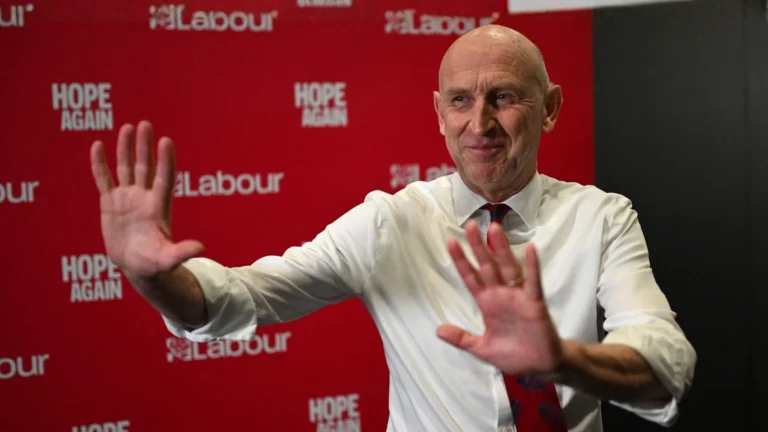
The remarkable thing about Britain’s tax burden is that however high it rises, the government always manages to spend more than it can afford, and John Healey’s first Budget looks unlikely to be any different. Businesses are expected to swallow higher taxes, workers are expected to give up more of their earnings and anyone lucky enough to have amassed some wealth becomes a potential target for the Treasury.
I suspect, even at this late stage, the Chancellor has little idea how the detail will finally look on October 28. The Treasury will be examining every conceivable means of raising additional revenue, while the Institute for Fiscal Studies (IFS) has just made his life more difficult by identifying another £35 billion a year in potential spending pressures by 2030/31. The Government already spends about £1.3 trillion annually. Would it really be unreasonable to expect ministers to demonstrate that they’re spending it properly and getting value for taxpayers’ money before demanding even more?
Westminster seems increasingly interested in how much money is committed to public services rather than what that money actually achieves
We’re constantly told that public services need additional resources. They undoubtedly face pressures, not least from the millions of people who have arrived in Britain during the extraordinary wave of immigration since 2020. But rising demand tells us nothing about whether existing resources are being spent efficiently. Take the NHS, where 9% of electronic referral letters are translated into foreign languages. Whatever the reasons for that expenditure, surely somebody should be examining the costs and whether taxpayers are getting value for money. Instead, Westminster seems increasingly interested in how much money is committed to public services rather than what that money actually achieves.
Every government announces record NHS spending, yet waiting times and productivity remain a source of frustration. Labour politicians still invoke austerity, apparently suffering from collective amnesia as health spending was protected from much of the restraint imposed after 2010. In fact, the Department of Health’s budget increased by 6.7% in real terms between 2010/11 and 2015/16. By 2024/25, the Department of Health and Social Care was spending £204.7 billion a year in England. Nobody disputes rising demand, but they shouldn’t exempt ministers from explaining what taxpayers are receiving for their money.
I wonder how many government departments could honestly claim to have improved productivity by even 1% a year over the past decade. The historical average is just 0.2%, yet the Treasury’s spending plans assume improvements of around 1.2% a year. Even if departments manage half that, the IFS estimates taxpayers could still be facing another £11 billion a year by 2030/31 just to maintain existing services.
In other words, the financial plans assume that departments will suddenly become considerably more efficient than they have been historically, and if they don’t, the taxpayer will be asked to make up the difference yet again. There are 6.2 million people employed in the public sector. Improving efficiency ought to be the number one priority, particularly when the alternative is another enormous bill for taxpayers.
Welfare provides an even more uncomfortable example. The proportion of working-age adults in England and Wales receiving disability benefits has risen from 5.5% in August 2019 to 8.2% in August 2025. Annual spending increased from £14 billion to £25 billion during the same period after inflation, and is forecast to reach £34 billion by 2030/31. More than seven million people in Britain now receive sickness or disability benefits, roughly one in 10 of the population. Are we seriously expected to believe that Britain has become this much sicker in just a few years, and that fraud and abuse have played almost no part in the surge in claims? Politicians seem more concerned about offending people than finding out how many are fiddling the benefits system at taxpayers’ expense.
Politicians are generally rewarded for announcing additional spending, but face rather less scrutiny when the promised improvements fail to materialise. There is little political reward for discovering that money has been wasted, particularly when doing something about it means confronting the people and organisations receiving it.
Taxation, by contrast, is still regarded by the Treasury as an easy source of revenue, especially if levied on the ‘Rich’. Labour’s first two Budgets announced around £68 billion of tax increases, including higher employers National Insurance, frozen income tax thresholds, changes to capital gains tax and other business levies. The IFS estimates that higher inflation and nominal wages could generate another £19 billion in revenue by 2029/30.
Like any economy, there’s a limit to what the private sector can support. Britain’s growth has been dreadful for much of the past two decades, productivity in the public sector remains criminally low and the tax burden is at a post-war high. Increasing the cost of employing people, working additional hours or investing capital makes it harder to generate the income from which all government expenditure must ultimately be financed.
What really rankles with me is the apparent absence of consequences for poor value for money in the public sector. Businesses that misallocate capital will eventually lose investors or customers. Individuals who consistently spend beyond their means have to make sacrifices. Yet, government departments can continue operating with abysmal productivity and outcomes while expecting the Treasury to protect their budgets. In some cases, there are demands to reduce the working week from five days to four while giving their employees a 10% pay rise.
For Healey, higher taxation will always be the easier option. But before he comes looking for another £35 billion to maintain the status quo, perhaps his Cabinet colleagues could be required to explain what taxpayers have received for the £1.3 trillion they’re already spending.


I moved from New York to Britain and I keep getting asked when I’m going back. Not by my family, or my friends back home, but by British people. They tell me about flat wages, looming youth unemployment and an air of decline throughout the country. But no one talks about lunch, because everyone here […]

There are certain things I expect very few people to care about. For example, if someone found a counterexample to an obscure mathematical conjecture from 1939, I would expect approximately three people in my group of friends (all three maths academics) to even pretend to care. And that is a very niche and self-selected group […]
Putting support services such as cleaning, security, and building maintenance out to tender has been a significant success since the policy was first introduced in the 1980s. Starting in local government but extended to central government, such services have cost less and been delivered to a higher standard as a result of competition. Yet Labour, […]