Half measures won’t cut it – Britain needs radicalism

Photo: Tomas Cuesta/Getty Images
During my time as a Member of Parliament, I warned for years about what higher taxes, more regulations and out-of-control state spending would do to our economy and society. We are seeing the consequences now. But this piece isn’t about that. This article is about the need to secure a paradigm shift in the UK towards free markets and freedom: ultimately, our problem is that the managerial consensus among the main political parties and the permanent bureaucracy is now breaking down.
This week, I launched my new movement, Fighting for a Free Future (FFF) – a bold, new cross-institutional group that will work to amplify the voices of freedom and secure this shift. FFF will fight in the battle of ideas. We will work to shift the terrain of debate and to create the conditions for Britain’s Javier Milei – Argentina’s reformist President – to emerge at the next general election.
In 1958, Leonard Read, founder of the Foundation for Economic Education, penned one of the most profound economic essays ever written: ‘I, Pencil.’ Through the voice of a simple wooden pencil, Read revealed a truth that should humble every would-be central planner in Whitehall: ‘Not a single person on the face of this earth knows how to make me.’ The pencil explains how millions of people across the globe – miners in Sri Lanka, loggers in Oregon, workers in factories across the world – cooperate to bring it into existence, and yet none knows more than a tiny fragment of the total process.
This isn’t merely an economics lesson; it’s a celebration of human cooperation and the miracle of voluntary exchange. As Read’s pencil observes: ‘If you can become aware of the miraculousness which I symbolise, you can help save the freedom mankind is so unhappily losing.’ Every pencil contains within it the secret of prosperity: that millions of people can cooperate without coercion, without central direction, without even knowing each other’s names, to create something wonderful. Every smartphone contains materials from dozens of countries, assembled by people who speak different languages and worship different gods, yet all cooperating through the price system. Every supermarket shelf represents the coordination of millions of individual decisions across vast supply chains. No central planner could achieve this level of complexity and efficiency. This is the foundation of human flourishing – the spontaneous order that emerges when people are free to trade, create and innovate.
We must retake the language of freedom and free markets and speak about them with the positivity that they deserve. We have somehow allowed these amazing concepts that function to serve all of us to become dirty words. It is bewildering that it is often more acceptable to call oneself a socialist than a capitalist.
Leonard Read understood that advancing liberty isn’t often about winning specific, in-depth and technical political and economic arguments; it’s about making freedom attractive: he wrote that the advancement of liberty is fundamentally a learning problem, not a selling problem. Yes, technical debates are important, but if we are to win, we must bring more to the table.
We must stop being apologetic about free markets and freedom. We must start telling the greatest story of human progress ever witnessed: how free markets have lifted billions out of poverty and created unprecedented prosperity. The numbers are staggering. In 1820, approximately 90% of humanity lived in extreme poverty. By 2018, that figure had fallen to just 8.6%. Despite the global population increasing from 1 billion to nearly 8 billion people, the absolute number living in extreme poverty has dramatically decreased. This represents the greatest reduction in human suffering in history.
Can we really say that our current economic problems have been caused by taxes that have been too low? That they have been caused by a state that is too small? That we haven’t taken on enough debt to deal with our problems? The evidence suggests precisely the opposite. Britain needs the same medicine that has worked throughout history: the liberation of human creativity through free markets.
Argentina under Milei offers hope for what genuine free market reform can achieve. When Milei took office in December 2023, Argentina was facing economic catastrophe with monthly inflation running at over 25% in December alone. Yet by implementing radical free market reforms from day one – including slashing government spending and eliminating three regulations per day – Milei achieved remarkable results. Just one year later, monthly inflation dropped to under 3%. His Ministry for Deregulation has shut down over 200 unnecessary government offices while at the same time increasing welfare payments to cover 100% of the basic food basket through systematic reform. Despite massive state shrinkage, the reforms are working.
The lesson is clear: when politicians have the courage to unleash social cooperation in free markets, positive transformation is possible. But this requires the groundwork that makes such reforms politically feasible, and this means making free markets and freedom attractive again.
We must speak about free markets with the same enthusiasm that the Left brings to their redistribution schemes. We need people at every level who understand that prosperity comes not from government programs or state direction but from individuals engaging in voluntary transactions to the benefit of each other’s interests and their own. Voluntary cooperation creates prosperity that no government could ever achieve. The price system coordinates the knowledge of millions, turning individual self-interest into collective benefit without coercion or central planning.
Free markets have already achieved what once seemed impossible: lifting billions out of poverty, extending lifespans and creating unprecedented prosperity. They can do so again if we let them. But first, we must rediscover our confidence in freedom and free markets and make the case with the passion it deserves.
The time for half-measures and political games is over. It is time to start fighting for a free future.
To find out more, visit www.fightingforafreefuture.com. To keep up with FFF’s work, you can also subscribe to Voices for a Free Future and to The Insurgency podcast with Steve Baker.
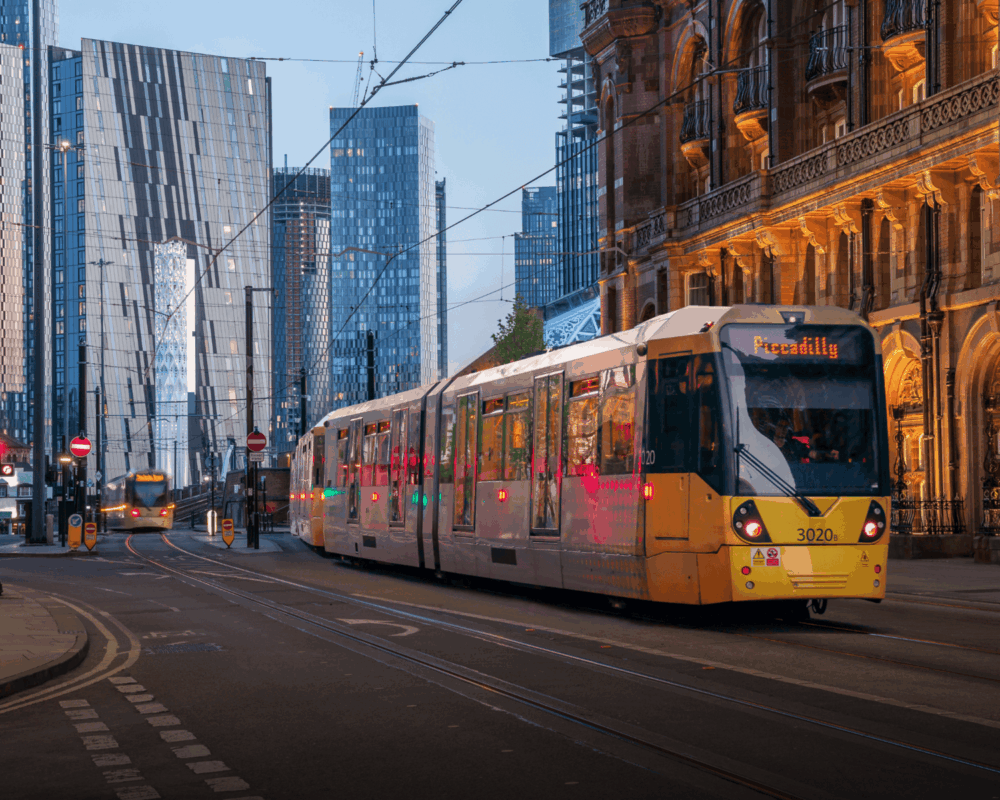
Since Andy Burnham became the Mayor of Manchester in 2017, the term Manchesterism has taken on a new meaning. To him, it stands for the expansion of the public sector and a managerial state. Now, with Keir Starmer on the brink of resignation and Burnham’s Makerfield by-election win clearing his path to Westminster, Britain may […]

Some are saying they don’t know what Andy Burnham’s big ideas are. They don’t know what he will try to achieve when he becomes prime minister. On GB News earlier this week, Boris Johnson described Burnham as a ‘mascaraed Mancunian mystery’. It is a peculiar concern. Burnham’s ideology seems to me no harder to identify […]

Elon Musk’s SpaceX has launched the largest ever public offering of stock today, selling $75 billion worth of shares. SpaceX emphasised its remarkable achievements in its IPO filing: ‘We are the primary launch provider for the US government. In 2025, we launched 11 of 12 National Security Space Launch (‘NSSL’) medium and heavy lift missions […]