Globalisation isn’t dead yet

Shi Borong/VCG via Getty Images
With trade flows being disrupted by war in the Middle East, the weaponisation of trade in raw materials, unilateral tariff impositions and nationalist subsidy programmes and procurement practices, it may seem naïve to complain that international trade rules as set by the WTO are not being followed. Globalisation, we are told, is yesterday’s story.
Regrettably, some of those peddling this narrative don’t seem to realise the cover they are giving for the protectionists and mercantilists around the globe. When Mark Carney states that those who have supported the trading system which has delivered the largest boost to economic growth the world has ever seen are like shopkeepers in Communist Czechoslovakia who know the system is broken but pretend it works, he causes real damage to the cause of open markets. Too many people in the US have gone along with – indeed promulgated – the myth that manufacturing there has been decimated by China, when in fact manufacturing output in the US has risen overall during the 21st century, with the (home-grown) financial crash and Covid pandemic responsible for its biggest dips.
No wonder supporters of open markets feel they are on the back foot, and even governments which have traditionally been among the most committed to liberalising international rules are losing their bearings, putting up trade barriers which bite on their closest trading partners and subscribing to the notion that security means domestic production (it rarely does) rather than diverse sources of supply.
Even without the pernicious narrative that trade liberalisation has had a negative impact, the global trading system would certainly be facing challenges. The power dynamics among the World Trade Organization’s membership looks nothing like it did 30 years ago, when a relatively small number of countries with similar, market-oriented economies could set the rules. When China has the largest share of world trade in goods, and India is the fifth-largest and fastest-growing major economy in the world, it cannot be business as usual for the West.
And the development of global value chains and new centres of high tech capability means that countries need to confront a more complex trading landscape than when all the manufacturing primes were Western companies. Many sectors face new competitors, working to different sets of standards, based in countries with different economic models. The sheer integration of the world economy means that differences in labour costs, social models or environmental standards have a much more immediate impact on the market, because the market is no longer national.
In this sense, the rules of the international trading system are victims of their own success. The problems we face today arise not because globalisation has failed, but because it has succeeded.
That should give those of us who support an open, liberal trading system some comfort, even in current circumstances. The genie is out of the bottle, and the world can never go back, short of a third world war, to the state it was in in the early 20th century. At a recent trade conference, panel members were bemoaning the various trials and tribulations of the international situation. I asked each of them whether they thought trade would grow or shrink in 2026. All of them said it would grow. If that doesn’t happen it won’t be because of Trump’s tariffs or the failure to agree new trade rules. It will be something far nastier like a prolonged war in the Middle East, and its ramifications for energy supplies.
This does not however mean we should be complacent about whether we have a set of international trade rules. While it may be impossible to achieve the tranquil world order envisaged when the WTO was set up, a world without any framework in which to engage with arguments about trade unfairness, weaponisation or national security has the potential to stoke wider political tensions as well as depress business confidence and increase costs for consumers.
Ironically, US unilateralism and threats have encouraged others to double down on such frameworks, with India – a notoriously reluctant participant in trade agreements – concluding deals with the UK and EU and renewing stalled efforts with Canada, the EU and CPTPP exploring closer relations eg on digital trade, and other bilateral agreements being landed. Crucially, the US approach has not resulted in widespread copycat behaviour by others.
The 14th Ministerial Conference of the WTO, held from 26-29 March, provides a snapshot of the current rather schizophrenic nature of countries’ commitment to trade rules. On the one hand, the prospect of some grand bargain to reform the WTO in a way which is acceptable to all its members looks as far away as ever. Even in areas where apparently all members agree in principle, wider linkages and politics intrude. For instance, all members appear to agree that a moratorium on tariffs on electronic commerce should be extended, but agreement broke down on whether the extension should be four years or five. One would hope that might be patched up in due course.
More positively, members lost patience with India’s blocking tactics stopping so-called plurilateral agreements (‘coalitions of the willing’) from being implemented. While they couldn’t override a direct veto, they said they would implement a separate agreement on e-commerce rules anyway on an ‘interim’ basis.
This is the trade world we now live in, with a rather ramshackle system still more or less in place. It’s messy, and trust is not high, but at a time when economic shocks threaten living standards, enough countries still recognise that protectionism will make things even worse.

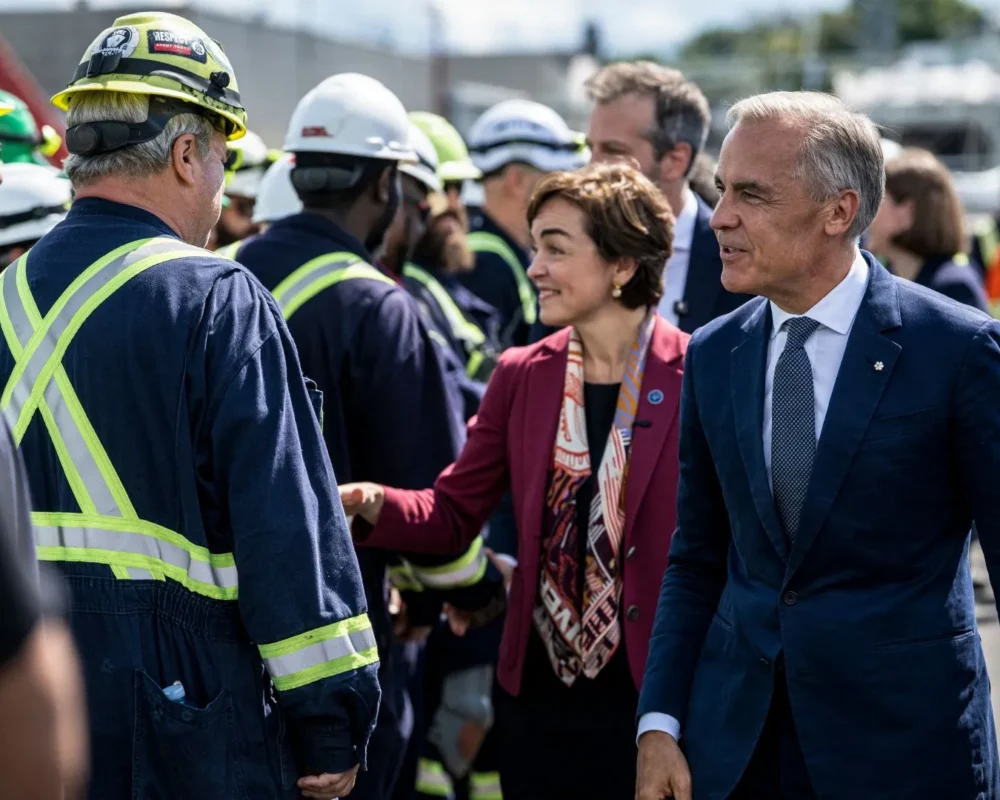
Late on August 28, trade talks between Canada and the United States broke down, an escalation in the trade war that the Trump administration began with Canada in early 2025. This escalation isn’t because Canadians favour tariffs as much as the US president, but because they refuse to quietly acquiesce to American demands. It might […]
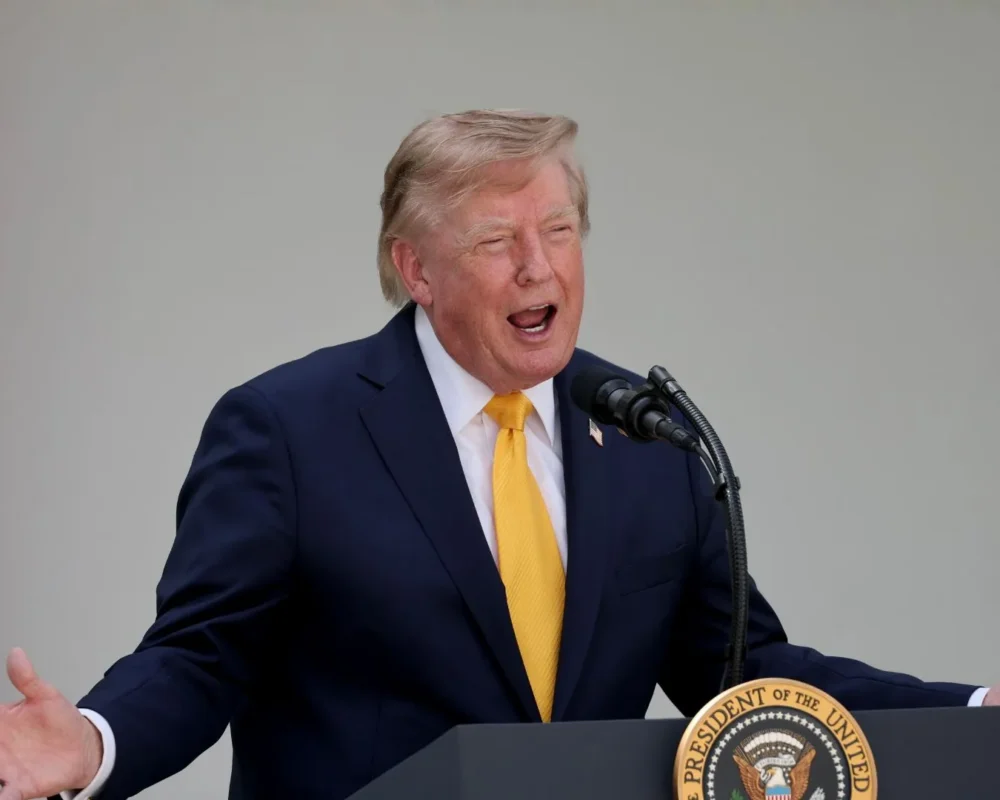
President Trump’s imposition of ‘economic D-Day’ against Iran – a series of sanctions against any nation dealing financially with Iran, as well as banks and businesses – has already been dismissed by the usual suspects whose knee jerk response is always to attack any new measures against the Tehran regime. When it comes to Iran, […]

Here’s a fun fact for you: Ireland, a country of just over 5 million people, is one of the top five largest exporters of pharmaceuticals on the planet. Ireland’s exports are estimated around 100 billion euros, with 19 of the top 20 pharmaceutical companies having a significant footprint employing roughly 50,000 people. This has translated […]