Football’s regulator is not fit for purpose
What City have done is wrong, and should be punished but it is not wrong on the scale of the Calciopoli corruption scandal
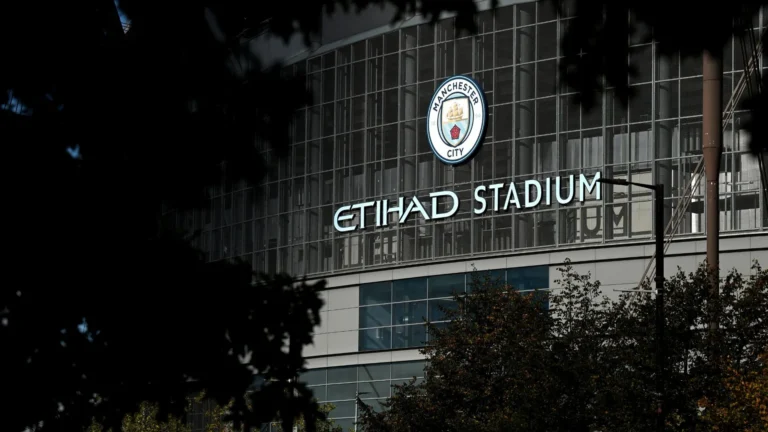
Oli SCARFF / AFP via Getty Images
What City have done is wrong, and should be punished but it is not wrong on the scale of the Calciopoli corruption scandal
The Manchester City scandal drags on. Tax Policy Associates now argues, based on the Premier League commission’s findings and leaked documents, that the club may have failed to pay some £12 million in income tax and NICs due on the pay of Roberto Mancini, who managed the club from 2009 to 2013. City, which denies wrongdoing and is appealing the commission’s decision, has not responded to the tax claims.
But the big story is still the finding of the independent commission that the Premier League’s regulations – particularly their Profit and Sustainability Rules (PSR) – were breached over 100 times between 2009 and 2018. This involved bogus sponsorship contracts with commercial partners and the production of misleading accounts which concealed the fact that the Abu Dhabi United Group was shovelling money into City’s coffers far in excess of what the PSR would allow.
At the moment it looks as though we will have an endless succession of appeals by City’s well-paid lawyers, hoping to spin out the process for years to come
A well-established proposition from sports economists such as Stefan Szymanski is that there is a strong correlation between a club’s wage bill (a proxy for the quality of its players) and league position. If City’s obfuscations and misrepresentations allowed them to pay more in wages than they would otherwise be allowed, this might seem an important factor behind their stellar record in the Premier League, with eight titles in the last 15 years, and in other competitions.
There are qualifications to this: the pay-win correlation is not perfect (and in any case there may be reverse causality – consistently successful clubs can afford to pay more). Some clubs do consistently better than their spending suggests (Bournemouth and Brentford are examples) while others do worse (Newcastle and Tottenham). Some managers make a real difference, and in this case few would dispute that Pep Guardiola was able to shape a disparate group of highly skilled individuals into a formidable team, constantly refreshed as players aged and younger stars were seamlessly incorporated. He was repeating at City what he had done previously at Barcelona and Bayern Munich.
Nevertheless, football is in uproar, claiming that City’s trophy wins were based on cheating. This should lead, it is asserted, to massive fines, expulsion from the Premier League (with some suggesting relegation as far as the National League) and stripping the club of its titles, retrospectively awarding them to the runners-up.
Isn’t this a bit overblown? What City have done is wrong, and should be punished. But it is not wrong on the scale of Calciopoli, the corruption scandal which implicated several Italian teams in all manner of dodgy business and eventually led to Juventus being relegated to Serie B – from which they predictably bounced back the following season. It was found that Juventus had pressured referees over a long period, via burner phones and secret meetings, to make decisions favouring the club. This involved such skullduggery as giving red cards to players of rival teams so that they would be ineligible to play against Juve.
What is the rationale for the Premier League’s PSR? One defensible argument is the need for clubs to be ‘sustainable’, in the sense of being able to pay their bills. Few clubs have ever balanced the books on a consistent basis, and when they try to rein in spending the fans tend to turn against them, as Mike Ashley found at Newcastle. Nevertheless, spending more than revenue needs to be backed by sufficient resources so that clubs are not in danger of going into administration, as too many have in the past. These episodes are disruptive, players don’t get paid and weakened teams are turned out, football and other creditors lose money. The example of Bury FC going bust was used to justify the government introducing an Independent Football Regulator outside the existing system of football governance.
There is, however, another rationale for rules on spending. The PSR, as with the similar UEFA Financial Fair Play rules, are allegedly about ‘fairness’. If rich clubs are allowed to spend far in excess of their revenue, this is ‘unfair’ on other clubs who don’t.
While there is some sense in this, it could be considered to restrict competition if new rich owners of Premier League teams are forbidden to use their resources to compete effectively against the existing elite. The same consideration applies further down the pyramid: some recent entrants to the English Football League (EFL) have had considerable financial injections which might be considered against ‘fairness’. In both cases imposing too-tight ‘sustainability’ rules could lead to challenges from competition authorities.
What should be the outcome of the current findings against Manchester City? Fines are an obvious recourse. But the Abu Dhabi owners have effectively bottomless pockets, and while a big windfall – some of which might be spent on grassroots football and other good causes – would no doubt be welcome, many feel that this is not enough. A direct relegation to the Championship would be unprecedented in English football. A big points deduction might achieve the same effect, though that can’t be guaranteed unless we are talking 80 points or so. Championship clubs would probably not welcome it; they would see City more or less automatically taking one of the precious promotion positions next season. Some would advocate relegation much further down the pyramid, as happened with Glasgow Rangers in Scotland, but relegation to the National League would turn that excellent competition into a circus.
At the moment it looks as though we will have an endless succession of appeals by City’s well-paid lawyers, hoping to spin out the process for years to come. We may also see a pile-on from clubs seeking compensation for having been denied European places and other prizes. At this point many will wonder why the much-vaunted Independent Regulator isn’t taking more of an interest. After all, the powers awarded to this body in the Football Governance Act include the ability to disqualify the owners and require a sale of the club – something which the Premier League can’t do off its own bat.
At the moment, the IFR seems to be staying out of the fray and leaving it to the Premier League. While this may be a correct position from the legal point of view, it does make you wonder whether this is not in part a political decision – always the danger when the government sets up a supposedly ‘independent’ entity. New Prime Minister Andy Burnham has already suggested that he would be unhappy to see Abu Dhabi United Group, which has done much to redevelop a run-down area of his former fiefdom, leaving Manchester. (Although Downing Street later put out a comment adding that ‘wherever wrongdoing is established, those responsible should face the appropriate consequences.’) A forced expulsion might also damage our wider relations with the United Arab Emirates and perhaps deter other investments from the Middle East.
Much better, the IFR may reason, to continue with its sterling work dreaming up ever-more elaborate financial sector-style reporting frameworks – a pointless burden on lower-league teams such as Accrington or Solihull Moors – rather than getting to grips with a real problem. We may have already had eight years of delay, but this could trundle on for quite a while yet.


Britain is looking for the effects of artificial intelligence in all the obvious places: redundancies, vacancies and unemployment numbers. So far, there is little evidence of dramatic change in overall headcount. The Office for National Statistics reports that most British businesses using AI have not changed the size of their workforce, even as AI adoption […]

Andy Burnham used the Labour Party conference in Liverpool this week to commit the Government to a National Care Service, universal and free at the point of use, while promising to ‘stick to our fiscal rules to get borrowing and debt down’. The service is due in the next Parliament and is supposed to be […]
A year ago I ended the Growth Commission’s annual Growth Budget with the prediction that if the then Chancellor Rachel Reeves continued with her policy of tax and spend, she – or more likely her successor – would be back in a year’s time asking for more. So the Government can’t say that they weren’t […]