Energy scarcity won’t save the planet
Getty Images
Poverty was once the norm. A quarter of babies died in their first year of life. In 1980, around 40% of the world’s population lived in extreme poverty. Today only 10% of people do.
Much of this is thanks to fossil fuels. The burning of wood, then coal, gas and oil, enabled us to prosper. This had a significant impact on the environment and climate. For most people who live in a building of any kind, that building was built on what was once a forest, grassland or desert. So was most of the world. To live as a human being means that we constantly make trade-offs with the environment. It has been this way since the dawn of humankind.
Trade-offs may sound obvious, but despite the positive impact on humankind of harnessing energy, environmental groups around the world continue to protest energy – all sources of it – and politicians have followed their lead by taking clean, reliable energy out of the equation.
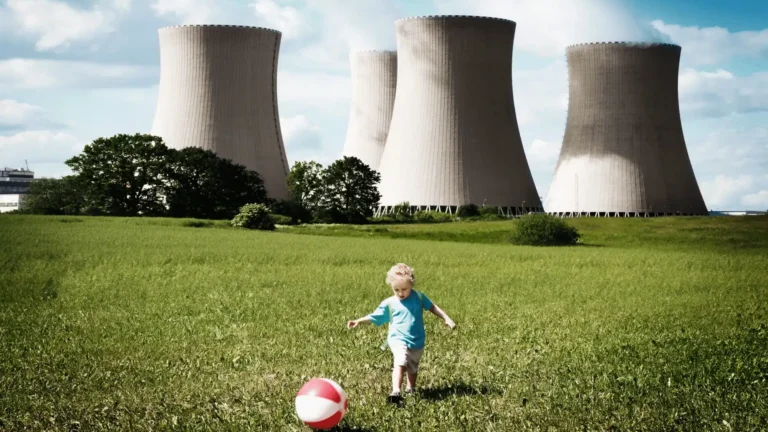
It’s easy to become downhearted by the bad news associated with energy production, but our energy choices need to be informed by data, not scary stories. That includes being honest about the role of nuclear power in tackling climate change.
We need energy to survive. Without it, we would be trapped in poverty. Billions of people around the world still are. Poverty is, essentially, energy poverty. To continue to thrive, warm our homes, light our streets, run hospitals and schools and feed billions of people, we need more reliable, clean energy.
I spent over a decade trying to convince people to consume less and reduce their carbon footprints, but the best behavioural science in the world has not found a way to make this happen enough for it to make a real difference in terms of climate change. Most people choose convenience over other options: this is an easily understandable evolutionary trait. We can and should insulate buildings, fund public transport and take other measures to avoid energy wastage, but even if we all do this the world over, it will not stop climate change or mitigate our growing need for more energy.
We take energy for granted. In a way, this is a good thing as it means we have moved past having to worry about the lights working after dark and being able to wash our clothes without hard manual labour. However, we still feel guilty for using energy, thanks to traditional environmentalism that has convinced us humans are a curse on the planet and we once lived in simpler, therefore better, times with fewer creature comforts and limited technology. Reducing personal energy use has become a widespread focus that globally informs policy.
A recent example of a Washington Post journalist proposing we should bathe in cold water to reduce energy usage demonstrates the ongoing glorification of energy scarcity by the most energy-rich individuals. The writer argues that heating water harms the planet as it ‘gobbles energy’, but neglects to cover the fact that being alive also gobbles energy. There is no way around that, discounting the most ardent Malthusian who believes in population reduction by force. The technologies we access in energy-rich nations, such as home heating or hot water and soap to kill germs, are not superfluous to our needs but essential for basic hygiene and healthy lifestyles.
In order to live well, humans use a lot of energy. Hyperfocusing on individual footprints distracts us from the effective large-scale solutions that are crucial for improving life on this planet.
We can invest in renewables, but we also need to be honest about their shortcomings. Wind and solar still need baseload power and wherever nuclear energy has been phased out it has historically been replaced by coal or gas. Hydropower is more reliable, but dams are geographically restricted and carry significant risk.
The root problem is not growth itself but that we have not always balanced human needs with protecting biodiversity and the health of our planet.
We will always need more energy, not less. The shift towards electrification and data centres is already demonstrating this. Consider also what may be next: around the corner could be solutions that save millions of lives and propel humankind forward, but if we embrace energy scarcity now, we will be unable to power these future discoveries and technologies.
Energy scarcity has taken centre stage this decade because people worry about climate change and want to achieve Net Zero goals, so they have increasingly embraced degrowth. But data shows that we can tackle climate change and end energy poverty if we embrace nuclear power. Cleaner, reliable energy without unrealistic sacrifices.
We can build a high-energy future and live energy-rich lives without causing planetary destruction. We can end energy poverty, eradicate air pollution and cool the air in our homes, schools and places of work so that heat-related deaths become uncommon. This may be an ambitious vision, but so what? Dystopian horror stories have consumed enough of our waking hours.
To make climate-adapted prosperity a reality, we need to use the language of solutions and re-evaluate the merits of heating up language that alerts and alarms people. Perhaps, instead, like the world around us, our language needs to chill out.
This is an edited extract from ‘Energy is Life’ by Zion Lights, published by Unicorn.

‘A Waiter in Paris’ is the story of a young Englishman who graduated from a good university in London with a humanities degree, trained and educated for a world that no longer exists. ‘All while I applied for other, more “prestigious” jobs. Jobs that didn’t appear to exist anymore.’ That’s how Edward Chisholm puts it […]
One doesn’t like to be a disappointment to one’s parents. But in (at least) one crucial regard, I’ve let my dad down. He is a steam train enthusiast, and I’ve never shown a blind bit of interest. So it was more with filial duty than pleasure that I took the old man to the Didcot […]

How do you know this wasn’t written by an AI? If you’re reading CapX, you are presumably interested in free speech, critical thinking and originality. So you should care that what you’re reading was written by a person with a mind. But public life is becoming colonised with ‘copy’ generated by AI. It’s become so […]