Britain’s knowledge workers are being taxed away

Mike Kemp/In Pictures via Getty Images
For the past 10 years, the European Centre for Entrepreneurship and Policy Reform (ECEPR) has been mapping Europe’s knowledge-intensive jobs in a recurring study, with a particular focus on how the geography of knowledge is shifting. The 2026 index shows the UK ahead compared to other large nations in Europe, but also reveals that smaller countries with more competitive tax rates are pulling ahead.
In total, 8.6% of adults in the UK are employed in different highly knowledge-intensive ‘brain business’ jobs: 2.8% are employed in ICT, 2.7% in advanced services, 2% in tech and 1.1% in creative professions.
Even Slovenia is ahead of the UK, with just above 9% of the population employed in brain business jobs
This is somewhat ahead of Germany, where the same number is 8.2%. The gap with France is far more pronounced, where 6.5% of adults are employed in highly knowledge-intensive jobs. And Italy and Spain are close to the bottom of the European league table, with just 5.6%. So, in comparison to the large European nations, the UK is a leader in knowledge-intensive work. However, several smaller and medium-sized European nations are ahead of the UK.
All else being equal, European countries with a higher share of engineers and scientists in their population also tend to have more brain business jobs. But taxes can override that tendency. Sweden, for example, has Europe’s highest concentration of engineers and scientists, but ranks third for knowledge-intensive employment, while Switzerland and Ireland – with lower tax rates – have a higher share of adults employed in brain business jobs. In these two countries, more than 11% of adults are employed in brain business jobs.
In Sweden, Denmark, Malta and the Netherlands more than 10% of adults are employed in brain business jobs, and the level is nearly as high in Estonia and Cyprus as well. Even Slovenia is ahead of the UK, with just above 9% of the population employed in brain business jobs.
The trend is very clear: smaller countries are outpacing the larger European nations in knowledge density. Switzerland for example has 625,000 brain business jobs. This is far fewer than the UK – which has 3.5 million such jobs and 792,700 in the London region alone, yet the Swiss figure represents a remarkable 11.4% of working age adults, a far higher proportion than for the UK.
A regional comparison reinforces this point. The highest share of adults employed in highly knowledge-intensive jobs is increasingly found in the capital regions of Central European countries.
Our research on knowledge-intensive jobs shows the importance of a growth-oriented economic policy to support them. It is not enough to have the best human capital, another essential ingredient is a lower tax burden.
In an increasingly integrated European market, smaller and medium-sized countries are succeeding at combining lower taxation with growing expert pools – and therefore attracting the growth of knowledge-intensive industries. If the UK does not want to fall further behind in knowledge intensity compared to countries such as Switzerland and Ireland, it too needs to lower the tax burden.


The IMF has just published its biannual World Economic Outlook. The report appeared to be modestly good news for the UK, predicting higher-than-expected economic growth of 1.3% in 2026, up from a 1% forecast in July. But one thing that caught my eye was the way that the IMF reported that the UK would see […]
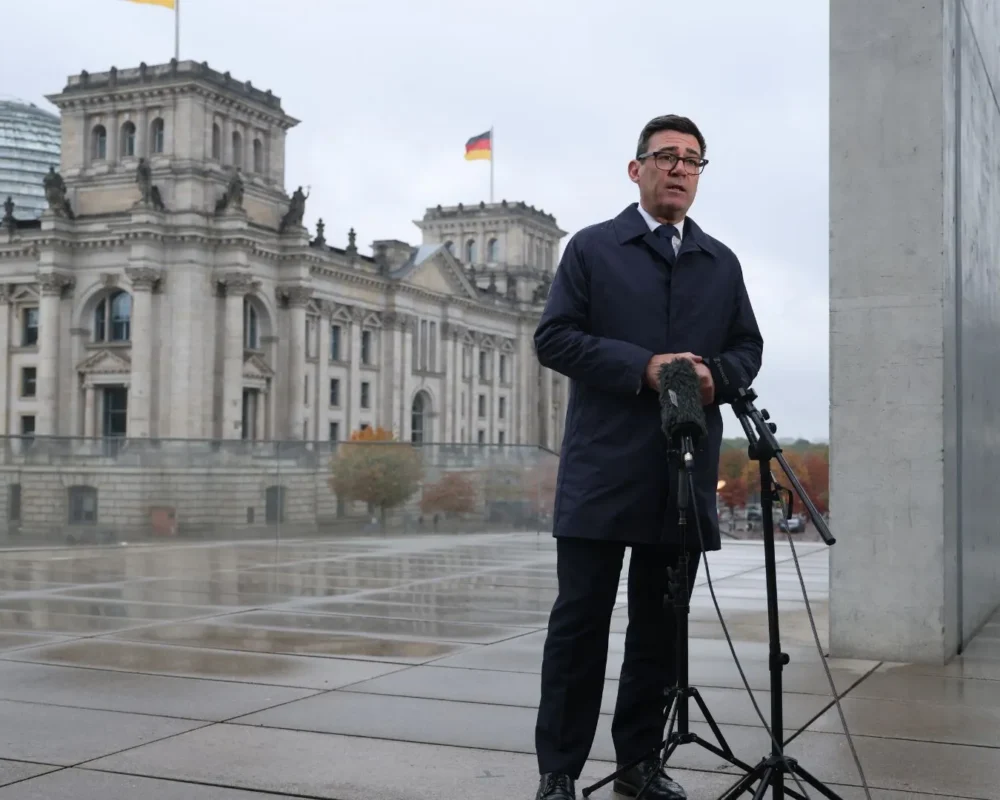
‘Just when I thought I was out, they pull me back in,’ says Michael Corleone in ‘The Godfather Part III’. A decade after we voted to leave the European Union, much of the establishment is still in denial about the verdict that was delivered. Andy Burnham has been absolutely shameless. Campaigning in the Makerfield by-election, […]

What explains prosperity? That is the most important question in economics. It was this question that led Adam Smith to write ‘The Wealth of Nations’. Before Smith, the physiocrats like Turgot explored it in works like ‘Reflections on the Formation and Distribution of Wealth’. It is this question that makes economics not only interesting, but […]