Britain’s inflation fixation has gone too far
Getty Images
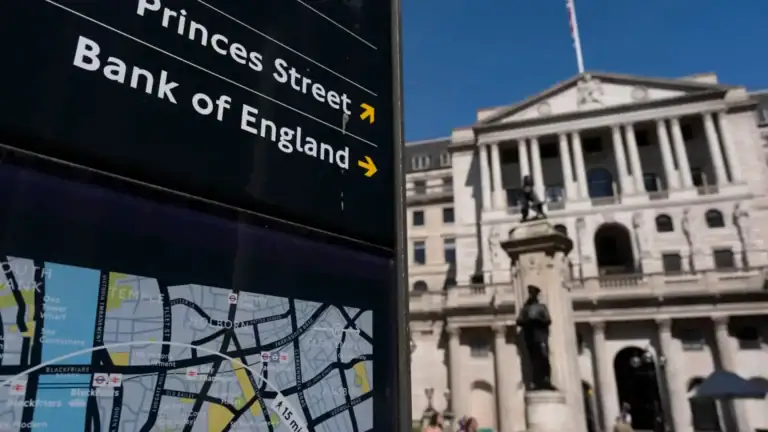
The Monetary Policy Committee (MPC) will announce its decision at noon today. A 25-basis-point cut to Bank Rate, taking it to 3.75%, is now fully priced in, following this week’s deteriorating unemployment data and better than expected inflation numbers. If it happens – as it should – it will be welcomed by many, including myself, as overdue.
That tells you something important.
As Milton Friedman observed half a century ago, monetary policy operates with ‘long and variable lags’. Decisions taken today are judgments about where inflation and the economy will be 18 to 24 months ahead, not reactions to last month’s data. A cut now therefore carries an implicit admission that policy has already been too tight and would simply correct last month’s mistake to hold rates. But focusing on that ‘error’ alone misses the deeper problem. The Bank of England’s difficulties are no longer just about timing, but about the framework within which policy is made.
The inflation numbers published this week underline the point. Prices in the year to November rose by 3.2%, the lowest since March, falling faster than the Bank – and many economists – expected. Disinflationary pressures are no longer confined to energy prices or base effects, but are broadening, reflecting weaker demand and fading pricing power across the economy.
At the same time, unemployment has risen to a four-year high of 5.1%. Private sector wage growth is easing, vacancies are falling and with business surveys pointing to further softening ahead, the UK economy is clearly losing momentum.
This is not an economy overheating. It is one slowing.
Yet there remains a vocal camp of respected economists arguing that the MPC should hold rates today, not cut. Inflation, they note, remains above target. At 3.2%, it is still some distance from the Bank’s explicit mandate of price stability, defined as a 2% inflation target, which is meant to come before all other considerations.
They are right about the mandate. And that is precisely the problem.
The Bank of England’s single-mandate framework encourages policymakers to put too much weight on one variable – the current Consumer Prices Index (CPI) – and too little on where the broader economy is heading when a wider set of indicators is considered, even though monetary policy is meant to be forward-looking.
That is, of course, a simplification. But it captures the bias – and the failure – at the heart of the current system.
In practice, inflation targeting has become too mechanical. CPI readings – often distorted by lagged effects or supply shocks – are treated as decisive. Labour-market deterioration is treated as secondary and something to be monitored but rarely acted upon until it feeds back into inflation forecasts. In such a system, policy tightens into weakness, easing comes late and credibility is damaged not because the Bank moves too early, but because it repeatedly moves too slowly.
This is why the debate cannot stop at today’s rate decision. The real question is whether the UK’s monetary policy framework is still fit for purpose.
In my view, it is not. The Bank of England should consider moving towards a formal dual mandate, giving explicit weight to employment as well as inflation, as the US Federal Reserve does. The Fed’s remit rightly reflects the reality that price stability and maximum sustainable employment are not competing objectives; they are mutually reinforcing.
The Bank often defends its laser focus on inflation on the grounds that it is a simple and easily understood measure for gauging its credibility and effectiveness. Cut too soon, we are told, and inflation expectations may become unanchored. Better, on this view, to err on the side of excessive tightness during disinflationary phases – precisely when the economy is most fragile and growth most needed.
A cut today would not resolve that tension. It would merely acknowledge that policy has been misjudged – and that the Bank has once again been behind the curve.
Nor is it necessary, at this stage, to go as far as adopting nominal GDP targeting, which I have previously advocated. But continuing with a single-mandate, inflation-fixated framework is becoming increasingly hard to justify.
The difficulty will only grow from here. As interest rates approach their neutral level – perhaps around 3.00 to 3.25% – the margin for error narrows sharply. Policy will no longer be clearly restrictive and that is precisely when a narrow, inflation-only mandate becomes most dangerous.
Which brings us to politics.
Rachel Reeves has spoken repeatedly about stability, credibility and seriousness. But none of these aims mean treating institutional mandates as untouchable. Seriousness means reviewing frameworks when they no longer deliver good outcomes – especially when they begin to work against growth and employment, once the core mantra of Labour.
A formal review of the Bank of England’s remit – including whether it should adopt a dual mandate that explicitly balances inflation and employment – is now overdue. This should not be a partisan cause. Conservatives who care about growth and work should be making the same argument. So too should Reform UK, which has rightly criticised economic stagnation and the failure of Britain’s institutions to adapt to new realities.
If Britain wants a central bank capable of operating in a more volatile, geopolitically fragmented and supply-shock-prone world, it needs a framework that looks beyond a single inflation number. Until that happens, today’s rate decision – cut or no cut – is a secondary issue. The real failure lies deeper, and it will keep recurring until the mandate itself is reformed.


Alan Milburn revealed the truth about one of Britain’s most fraudulent small taxes. His NEETS report says we should be ‘honest about what the Apprenticeship Levy is, which is a payroll tax. It is not a hypothecated tax and it is not ringfenced for apprenticeships. Government sets an apprenticeship budget, which is generally lower than […]
We’ve all had that feeling. You wake up after a boozy dinner and worry that you’ve said something stupid that will embarrass you. Well, on Monday evening, the man who is inexplicably Prime Minister told the Lord Mayor’s Banquet in the City of London that, ‘to be frank, we have lost more than we have […]

It may feel like a long time coming, but Britain is on the cusp of one of the biggest Brexit wins so far. In May, Britain became the first G7 economy to conclude negotiations on a multi-billion-pound Free Trade Agreement (FTA) with the six-nation Gulf Cooperation Council (GCC), following nearly four years of negotiations and […]