A National Care Service would be a disaster
Kirsty Wigglesworth - WPA Pool/Getty Images
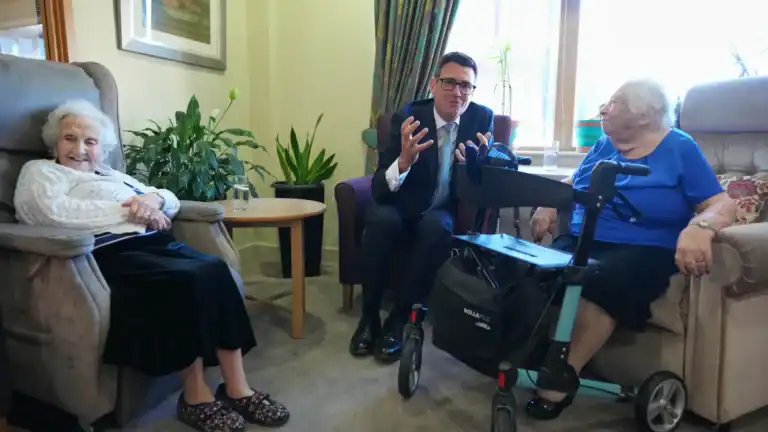
Andy Burnham has made social care his early priority. After three decades and more than 20 reviews, the system remains a lottery that punishes thrift, leaves local authorities overstretched and offers no sustainable answer to rising demand driven by longevity and the growing numbers of working-age adults with complex needs. One in seven people still face care costs of more than £100,000. The Prime Minister calls this ‘shameful’ and a ‘dereliction of public duty’. He is right in that diagnosis. The prescriptions on offer, however, look too familiar – and too flawed.
Burnham has proposed a National Care Service, free at the point of use like the NHS, allowing integration between health and social care. He has accelerated Baroness Casey’s review and invited cross-party talks. It is unlikely that any of this will succeed: we have been here before. As health secretary in 2009, Burnham floated a national care insurance scheme and sought Conservative and Liberal Democrat agreement; the Tories branded it a ‘death tax’. Then Theresa May’s ‘dementia tax’ and Boris Johnson’s proposed National Insurance surcharge suffered the same fate.
The fundamental problem remains; how to share care risks fairly without bankrupting individuals or taxpayers. And the only solutions to that seem to involve a clear division of responsibility
A National Care Service draws opposition from all sides. Many on the Right believe that it would add to the dissipation of taxpayers’ money, away from those who really need support, towards those who could pay their way. After all, a key reason that middle class people invest in savings, houses and pensions is to have a store of value ‘for a rainy day’. So when they do need social care, why should they not be expected to run down those funds to pay for it? Many on the Left, meanwhile, see the running down of inheritances that this entails as eroding privilege and promoting equality.
And though few on either side are prepared to openly criticise the NHS, they still see its faults – its monopoly attitudes, waste, bureaucracy, poor outcomes and unquenchable appetite for public funds. To which the Right would add that it is producer-driven rather than customer-driven. Would a National Care Service be any different?
On the funding side, there is also scepticism about the rumoured idea of a levy on earnings above some modest amount for those in their mid-thirties and beyond, to be invested into a collective cohort fund. If it is a genuine fund for that cohort, though, it does nothing to help today’s retirees, so the immediate problem remains. Meanwhile, a further tax on incomes is hardly likely to promote work, employment or the Government’s vaunted growth agenda. And does anyone think that future governments would not strive to see the fund invested how they deemed fit (as they now do with pension funds) or, like the ‘National Insurance Fund’, simply put the contributions into general revenues and divert the cash into their own pet spending plans rather than their advertised purpose?
More private sector-orientated proposals have problems too. Obligatory private saving would leave money lying idle for the majority who will never need expensive long-term care. Compulsory insurance would pool risk, but the hugely expensive long tail of catastrophic costs – lifelong disability or prolonged high-intensity dementia care – is hard for private insurers to price affordably.
The fundamental problem remains; how to share care risks fairly without bankrupting individuals or taxpayers. And the only solutions to that seem to involve a clear division of responsibility. For example, individuals should be expected, where they can, to provide for the shorter-term, more predictable phase of care needs through insurance, dedicated savings or a combination. The state then steps in only for the long tail – after a defined period of self-provision (say, five or six years) or beyond a high lifetime cost threshold. Public money then covers the remainder. So there is no National Care Service-style blank cheque, and no taxpayer money hole. But there is a targeted safety net against genuine catastrophe.
The advantages are many. Private insurance becomes viable because the insurer’s liability is capped. People have a genuine incentive to save or insure without the fear that every pound they set aside still leaves them exposed to unlimited costs. Scarce public resources are focused on the most prolonged and expensive cases rather than spread thinly. Personal choice is preserved for most families. There is less pressure to raid social care investment for other public spending priorities or to avoid that by ramping up taxes higher and higher. The vast bill of nationalising existing care home facilities is spared.
Funding alone is not enough, of course. Many care homes that accept local-authority residents are decades old, and some are converted properties with inadequate space, privacy and a lack of modern facilities. Public budgets will never deliver the capital investment required. Instead, we need structured investment partnerships that attract long-term private capital – pension funds, insurers and infrastructure investors – into new or refurbished facilities. Private capital would fund modern, purpose-built homes that are then leased on long-term contracts to local authorities or providers. So investors receive modest, stable, inflation-linked returns from an essential service; and the public sector gains higher-quality capacity without council tax bills going stratospheric.
Taken together, these approaches address both the financing of social care and the physical infrastructure that makes decent care possible.
Soundbites, gimmicks and yet more reviews will not solve the social care problem. The political choices are hard: how much risk individuals should bear, how far the state should underwrite catastrophe and how to mobilise private capital to fix things. An NHS-style universal service would be fiscally crippling and deliver poor results; unalloyed insurance and savings options would both struggle with the long tail. Instead, we need a coherent partnership framework that encourages thrift, self-provision and private investment while ensuring a decent standard for all.
This is the transcript of a speech delivered on November 10, 2026. Nikki is a mum in her fifties. On Universal Credit – since her job in a nursery became all too much. Without qualifications and – as she put it – no good at computers, she’s been struggling to find another job. But that’s […]

Andy Burnham’s much-promised strong and decisive leadership has been long on vibes, short on action during his first 100 days. With one telling exception. He has stuck to his guns about what the nation should call white bread rolls. Namely, ‘barm cakes’, as they do in his new constituency of Makerfield. In doing so, he’s […]
The problem with being a political golden boy like Labour pensions minister Torsten Bell is that it paints a target on your back, putting you firmly in the crosshairs of rivals and commentators in your own party and the opposition every time you do or say anything at all. Kudos, then, to the man widely […]