Churchill vs hedgehogs
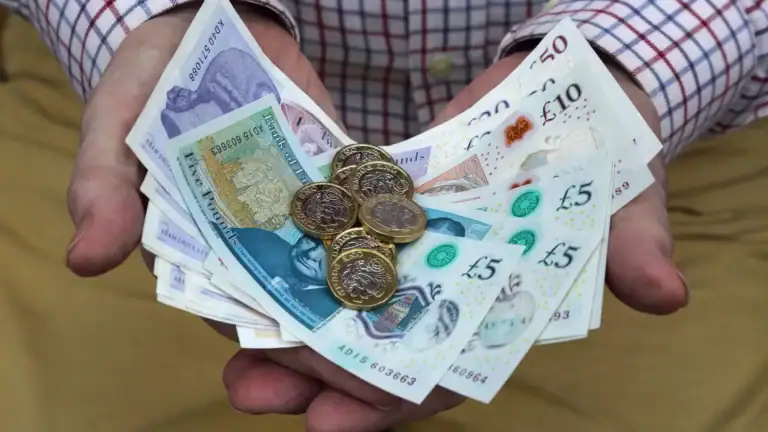
Photo: Getty Images
From Alexander the Great to Benjamin Franklin, nations and empires have long imprinted on their currency the likenesses of their most respected luminaries. It projects power, influence and most importantly, immortalises historical legacy.
Who knows this better in the modern age than us Britons?
Go to Canada, Australia, New Zealand and much of the Caribbean, and every time you exchange some hard-earned cash for a pack of fags, our monarch’s face will be on the notes and coins you hand over.
In Britain, we have grown up with not only the monarch on our currency, but also with the faces of some of our greatest countrymen and women. Jane Austen, Alan Turing, Winston Churchill, JMW Turner, Adam Smith, Charles Darwin and William Shakespeare: over the years, all these figures and more have appeared on our banknotes, serving as a regular reminder of the world-leading talent Britain is capable of producing.
Yet as the 21st century demonstrates to us with violent regularity, all beauty must die in the name of ‘progress’, and our banknotes will soon bear images of our native fauna, rather than the human beings who actually made this country great.
According to the Bank of England, the change is coming after 60% of the 44,000 responses to a public consultation on the matter last year chose nature as their preferred motif for our money. The theme came ahead of architecture and landmarks (56%), historical figures (38%), innovation (23%) and noteworthy milestones (19%).
Before you ask, no, our banknotes will not depict the animals that actually represent modern Britain. No XL Bullies, emaciated foxes or Nimby jumping spiders will be darkening our £5 notes anytime soon. A final shortlist is being drawn up, but hedgehogs, badgers and puffins are apparently among the animals up for consideration.
I’m not knocking Britain’s wildlife – I’m glad to live in a country where cows are statistically the most dangerous animal; and the odd sighting of a red kite is no bad thing either. But with more than a quarter of British women preferring to spend Valentine’s Day with their cat over their partner, Blighty’s love affair with animals is creepy enough as it is without being legitimised on legal tender.
I know what you’re thinking. The public did vote for this, and given that cash use continues to plummet, the most appropriate response to a change in banknote design is to shrug.
But that’s nonsense. First, consultations like this only exist so the people actually responsible can dodge a tricky decision. Second, the fact that fewer of us are using cash than ever isn’t the point – this is fundamentally a debate about how our country should be represented.
Third, this is a decision that is ultimately born of cowardice – or rather, institutional awkwardness in the face of lobbying from interest groups arguing that the figures shown on our cash should be more diverse. It wouldn’t be intellectually difficult to make the argument that, since Britain’s multiculturalism is an incredibly recent phenomenon, most of our notable historical figures are inconveniently white. But it is much easier to back down entirely and replace Churchill with a hedgehog.
If we do not champion our history, it gets forgotten. I remember reading War Graves Commission polling from a couple of years ago which found that fewer than half of those aged 18 to 34 could identify D-Day as the day on which the Allies landed at Normandy. Worse still, 22% of respondents between 18 and 24 felt that enough time had passed since the two World Wars that we no longer need to hold commemorative events at all.
The last thing Britain needs is for its national story to become diluted by the politics of the interest group, or reduced to the continued existence of badgers and birds.
Whether through statues, plaques or banknotes, public representations of our history serve as reminders of our shared past: the rudder which for centuries has guided us through periods of turbulence. If we allow it to, that history might just teach us a few lessons about steering out of our current squalls, too.

My favourite place in the world is outside Bank station, where Lombard Street meets Cornhill. To your right is Lombard Street, a name macroeconomists will recognise from Walter Bagehot’s 1873 book, which popularised the idea of the central bank as lender of last resort and which Ben Bernanke leaned on heavily during the 2008 financial […]
The Commonwealth is an anachronism in the 21st century – an imperial hangover that shows no signs of abatement but is instead getting worse. As King Charles addressed his subjects in Antigua and Barbuda ahead of this week’s Commonwealth Heads of Government meeting (CHOGM), our Prime Minister was throwing out statements about possible apologies and […]

The next assault upon economic logic to arrive in the bookshops is coming from Isabella Weber. The Guardian is already drooling over ‘Anti-Fascist Economics: In Defence of Affordability, Dignity and Democracy’ which means, obviously, that all proper-thinking residents of north London will be doing so as soon as they can. Weber is an economics professor […]


