Rachel Reeves is scaring the wealth out of London

Photo: Joe Giddens - WPA Pool/Getty Images
London’s super-prime property market has always been a reliable gauge of confidence among the wealthy. When optimism is high and money is made to feel welcome, capital flows in and property prices increase. When ministers start treating success like a sin, investment is withdrawn and transactions and property prices fall.
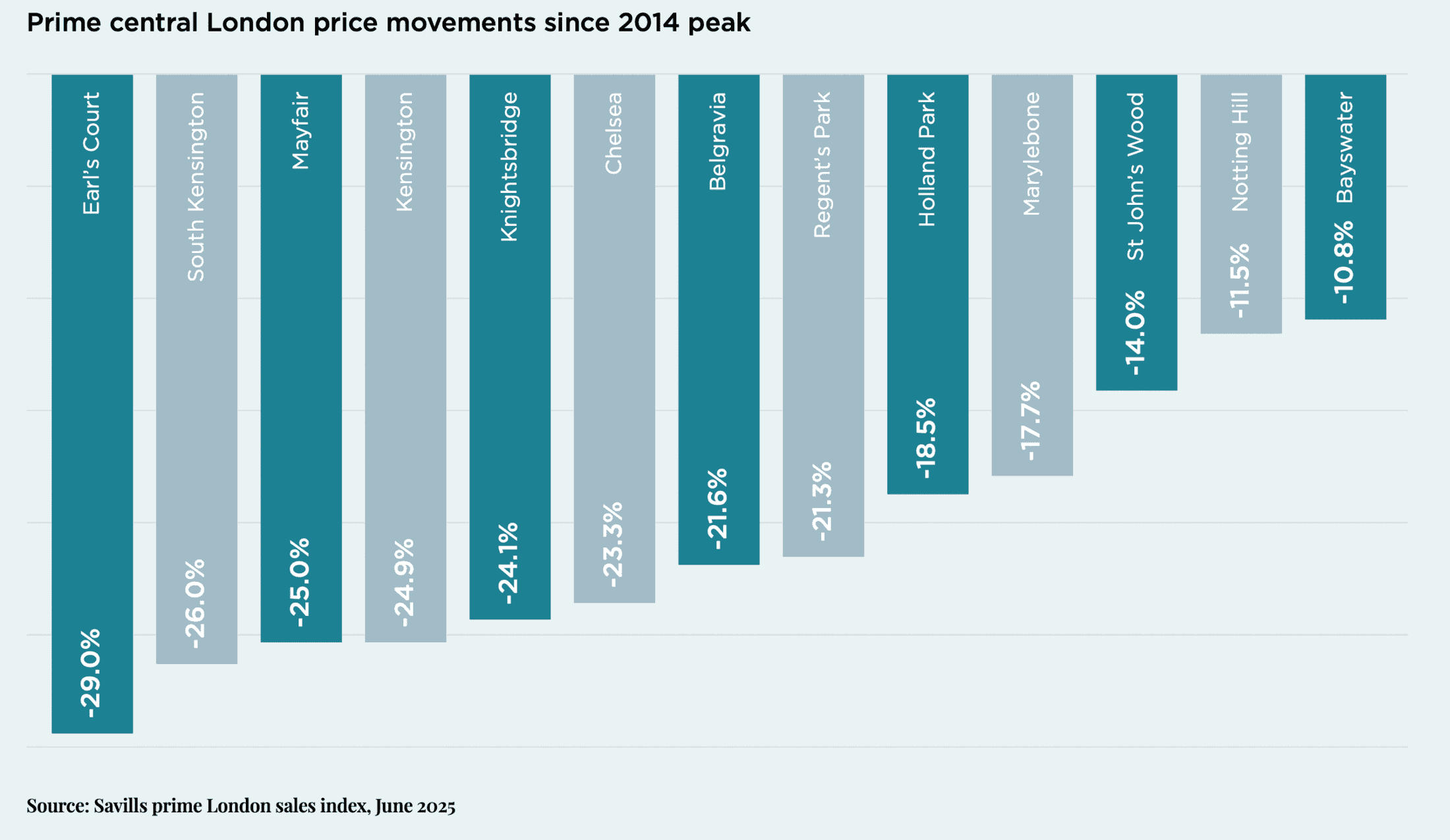
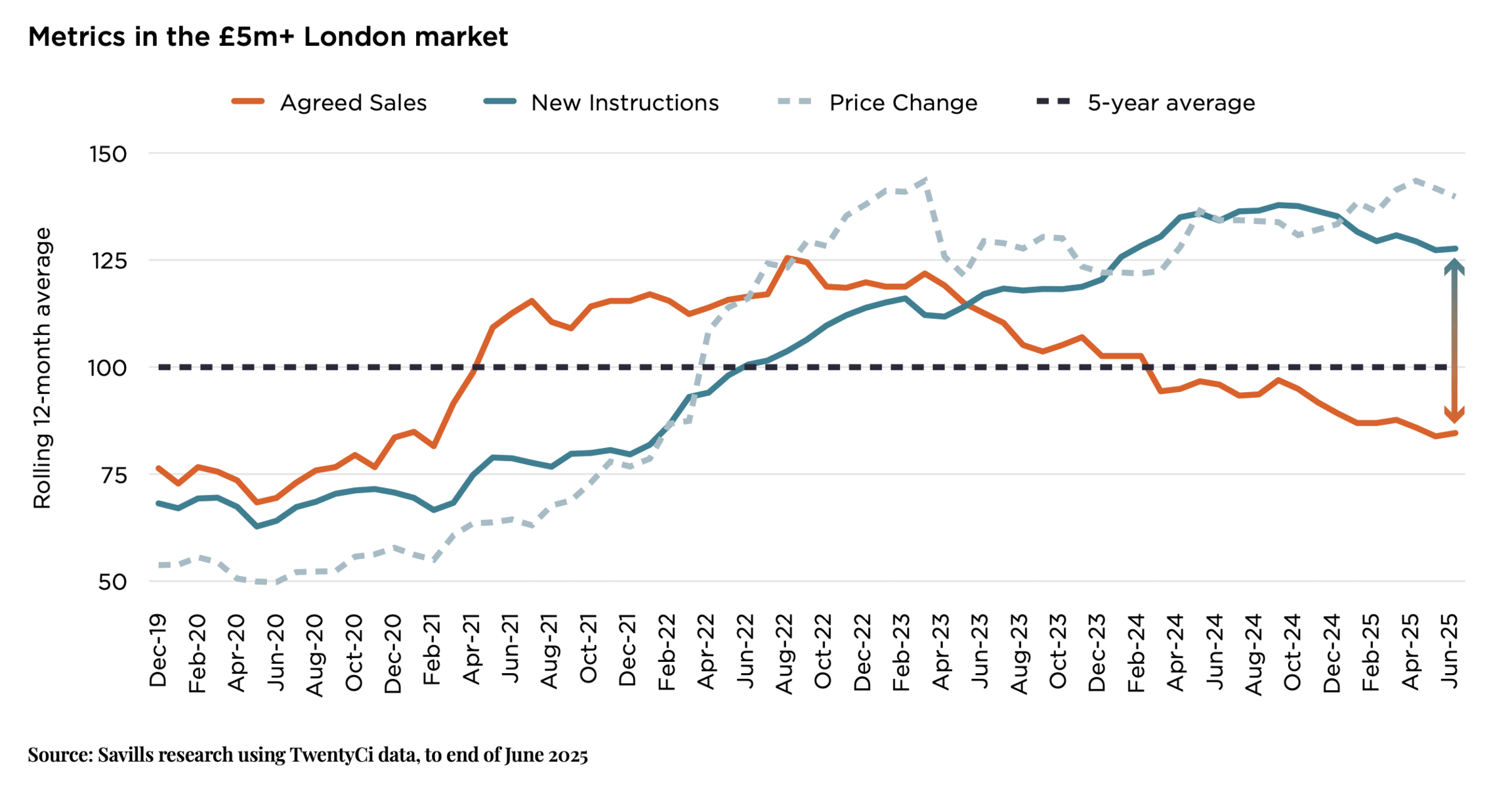
According to Savills’ Prime Central London Autumn 2025 report, prices in the capital’s most exclusive postcodes remain 22.4% below their 2014 peak, with values slipping a further 3.7% in the year to June. Transactions this year have slowed to a crawl – a combination of an increasing stock of unsold property on the market and paralysis driven by concerns about how the Chancellor will fix the public finances. Her decision on November 26 will determine whether London’s next property cycle starts in confidence or capital flight – and the early signs are not encouraging.
Under this Government, London has grown steadily less welcoming to wealth. The tightening of non-dom rules, talk of expanding inheritance tax and endless kite-flying over new property and wealth levies have left the city’s most successful residents suspended between anxiety and inertia. Savills reports that almost 40% of ultra-high-net-worth clients have already moved their tax residence overseas, while 67% have retained their London homes – for now. The destinations tell the real story: cities that understand the link between predictable taxation and economic vitality, like Dubai, Milan, Lisbon and Monaco.
The reality is simple enough, the more the Treasury squeezes the wealthy, the less it ends up collecting. The Adam Smith Institute estimates 10,800 millionaires left the UK in 2024, the largest outflow among developed countries. In tax terms, that’s the equivalent of losing more than half a million ordinary taxpayers. And these weren’t oligarchs fleeing scrutiny, but entrepreneurs, founders and investors who built businesses here before deciding they’d had enough. The top 1% of taxpayers contribute around 29% of all income tax revenue, and the top 5% pay more than half. When even a few thousand of them go, it matters.
The private bankers at Coutts put it more politely but the message is the same. They list a package of potential high-net-worth tax changes – including an annual levy on expensive homes, a so-called ‘mansion tax’, replacing stamp duty with a seller-paid transaction tax, extending capital gains to primary residences, and tightening ‘mixed-use property’ reliefs. Such changes could have a significant impact on high-value property prices. These ideas may still be speculative and years away from becoming law, but the effect is already visible. Buyers who once saw London property as a safe global asset now question whether they are purchasing a home or a future tax liability.
And the chill won’t stop at the billionaire enclaves of Belgravia and Knightsbridge. London’s super-prime market supports an entire ecosystem of architects, builders, surveyors and designers. When the top end seizes up, the slowdown ripples through every layer beneath it. The 600 new-build homes priced above £5 million in Savill’s database represent billions in construction contracts, wages and supply-chain spending. Stall those projects, and it’s not the yacht-owners who feel it first but all those who rely on their momentum. In Britain, class envy is often dressed up as moral purpose, yet it’s the middle class that ends up paying the bill.
Reeves might do well to look at how our competitors are behaving. While this Government toys with punishing ambition, others are working out how to reward it. Dubai now offers long-term visas to major investors. Switzerland’s lump-sum taxation keeps high earners anchored and revenues steady. Even Italy – not famed for fiscal prudence – has attracted tens of thousands of foreign millionaires since 2017, including 3,600 this year alone, under its €100,000 flat-tax regime (since doubled to €200,000). Britain, meanwhile, has scrapped the non-dom regime that underpinned London’s global appeal while flirting with wealth taxes that no other serious financial centre would contemplate.
Yet beneath the gloom, there are signs of resilience. Savills’ data shows that international demand hasn’t disappeared, only paused. Younger buyers, especially entrepreneurs under 40, still see London as a unique meeting place of capital and creativity. Almost half of new super-prime purchasers now fall into that group, a generational shift that hints at renewal if policy stabilises.
For the Chancellor, the choice could not be clearer. She can treat London’s wealth as a resource to cultivate or a target to raid. One path promises growth, investment and steady revenue; the other leads to empty penthouses, mothballed developments and shrinking tax receipts. France has already tried the latter. Its wealth tax, once hailed as a victory for fairness, drove tens of thousands of millionaires abroad before being quietly scrapped once the fiscal damage became obvious.
Rachel Reeves likes to say that ‘those with the broadest shoulders’ must pay their ‘fair share of tax’. Fair enough. But fairness that kills prosperity is no fairness at all. When the state already consumes 44% of national income, Britain’s problem isn’t insufficient taxation, but excessive spending. And that is where the focus should be.
If the Chancellor truly wants to balance the books without breaking confidence, she should use her upcoming Budget to steady the nerves among the wealthy. Rule out a wealth tax. Drop talk of a retrospective inheritance reform. Reassure investors that property ownership will not be treated as a sin. The revenues Britain needs will not come from confiscation but conviction, from convincing those who create and invest that this is still a country where success is celebrated, not punished.


Young Britons have stopped having sex. This is news to me, obviously, but according to a recent study in The Lancet, British people, particularly teens and young adults, are having less or no sex compared with past generations. Adults under 45 have sex an average of only twice a month, compared with once a week […]

When the Labour government took power in 2024 few might have imagined that two years later it would be able to boast about reducing net migration to 77,000, the lowest level in 29 years. On the face of it, Labour has not merely flattened the Boriswave (when net migration peaked at 944,000), it has reduced […]

It will surprise the majority of people that the most important port in the UK for the export and import of goods is Heathrow Airport. By trade value, Heathrow is gateway for a quarter of the nation’s goods trade, worth nearly £300 billion per annum. You would expect as a consequence, how an expanded airport might […]


