The Knowledge Problem
America’s very British revolution

7 July 2026

Tom Brenner for The Washington Post via Getty Images
Josiah Quincy Jr., who was the mayor of Boston in the middle of the nineteenth century, wrote in his Last Will and Testament that his son should read ‘John Locke’s works, – Lord Bacon’s works, – Gordon’s Tacitus, – and Cato’s Letters. May the spirit of liberty rest upon him!’ Indeed, there is nothing closer to the English philosopher Locke’s idea of ‘life, liberty, and property’ than the Declaration of Independence, whose 250th anniversary we are celebrating this month, with its immortal phrase: ‘Life, Liberty and the pursuit of Happiness.’ The history of the world is full of failed revolutions, those that devour their own children. But the American Revolution is different.
Research by the University of Chicago has estimated that the average lifespan of written constitutions since 1789 is only seventeen years. Revolutions are risky, especially from a conservative point of view, where, in a ‘revolutionary epoch,’ Russell Kirk writes, ‘sometimes men taste every novelty, sicken of them all, and return to ancient principles so long disused that they seem refreshingly hearty when they are rediscovered.’ But why has the American Constitution not only lasted far longer than seventeen years, but become the world’s oldest written constitution?
The American Revolution succeeded, because it was not a wholesale alteration of the British system, but an attempt to improve it
The American Revolution, although fought against the British, understood liberty through the British tradition. The famous quote from John Adams, one of America’s Founding Fathers, describing a ‘government of laws, and not of men’ refers to the British constitution, which he argued ‘is much more like a republic than an empire.’ The American Founding Fathers found their inspiration in the British constitution, with James Madison quoting Montesquieu, who described it as the ‘mirror of political liberty.’ The apple does not fall far from the tree, and that is why the American Revolution succeeded. It was not a wholesale alternation of the British system, but an attempt to improve it – or, as some argue, to apply the same principles to the colonies.
The Founding Fathers understood liberty well and protected it. Liberty, for them, was not a gift from government, but something so sacred that it lay beyond the reach of both government and majorities. Madison described individual rights as ‘beyond the legitimate reach of sovereignty’. We do not have liberty because government gives it to us and can take it away at any moment. Rather, we, as free individuals, give government the authority to exist in order to protect our liberties. That was the difference between the American model and the European one. ‘In Europe, charters of liberty have been granted by power; America has set the example of power granted by liberty.’ But to preserve liberty, you need the right theory of human nature. That is where the French Revolution failed and the American one succeeded.
The Rousseauian view of human nature was the unconstrained one. Human beings possessed unlimited capacity for change, and the only problem with the existing political structures of the time was that they stood against the public will to implement the changes the revolutionaries desired. Why place limits on the power of the sovereign if it simply reflected the will of the people? Americans and the British held a different view of human nature: the constrained one.
You need to limit the power of the state in order to preserve liberty. In Justice Robert Jackson’s view, that is the reason for the existence of the Bill of Rights: to place certain subjects ‘beyond the reach of majorities and officials, and to establish them as legal principles to be applied by the courts’. But what are those certain subjects? He continues: ‘One’s right to life, liberty, and property, to free speech, a free press, freedom of worship and assembly, and other fundamental rights may not be submitted to vote; they depend on the outcome of no elections.’
America was not perfect at the start, and it is not perfect today. But the Founding Fathers created a system capable of improving itself from within. When Lincoln won the Civil War, he consecrated the Declaration at Gettysburg as the spiritual foundation for a ‘new birth of freedom.’ The American system of liberty can be reborn again and again. Activists such as Frederick Douglass, in their fight against slavery, did not reject the Declaration of Independence or the Constitution of the United States. Instead, they grounded their arguments in these texts and demanded that their principles be applied. These historic documents became the foundation upon which generations who fought for liberty could rest their arguments, find inspiration, and ultimately win the debate.
This system of liberty, government of laws rather than men, and a culture of free enterprise transformed a place that, as the late Alan Greenspan wrote, in 1620 ‘produces less wealth than the smallest German principality’ into the world’s largest economy. Today, the United States has a stock market with a market capitalisation of more than $75 trillion, while the second largest, China, stands at around $8 trillion. It has won the most Olympic medals, produced the most Nobel laureates and leads the world not only through its nearly $1 trillion military budget – which accounts for roughly 37% of global defence spending – but also through its soft power: Hollywood, music and, lately, by surprising sceptical Europeans who have been reminded during the World Cup of what America represents on the world stage.
Tocqueville was right. America was the future, not because some central planner in Washington issued a government order that America should become the world’s richest country, as Xi Jinping has attempted through the ‘Made in China 2025’ plan, but because it gave power to individuals and communities to innovate, to create and to enjoy the blessings of liberty under the rule of law.

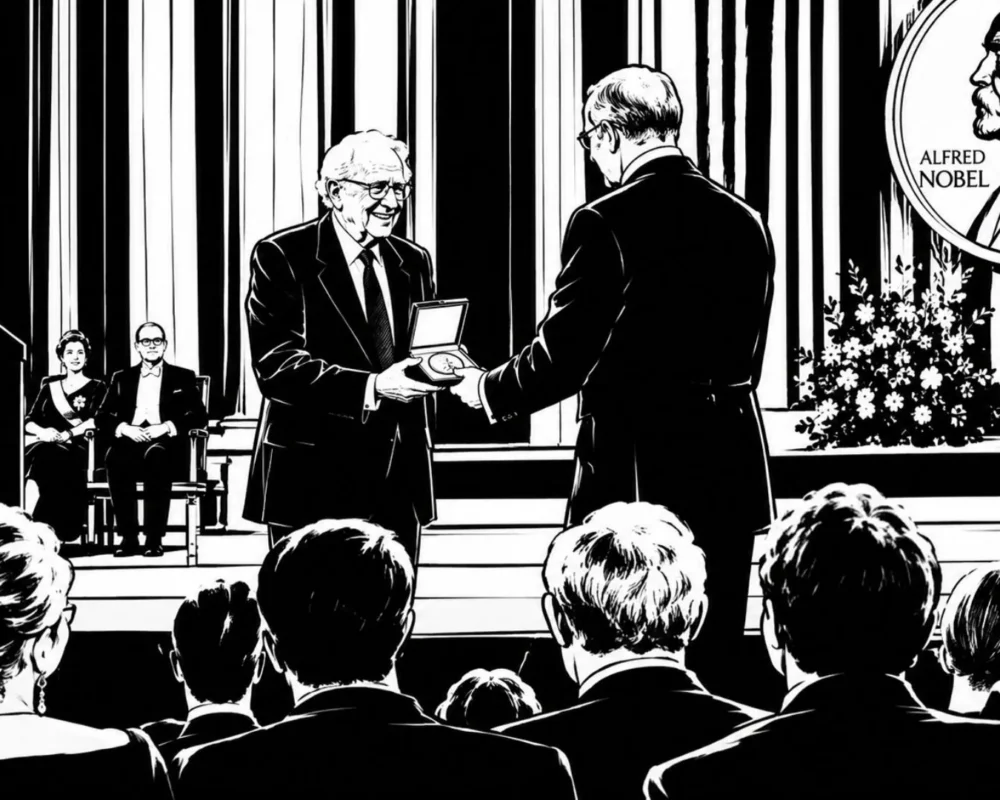
What explains prosperity? That is the most important question in economics. It was this question that led Adam Smith to write ‘The Wealth of Nations’. Before Smith, the physiocrats like Turgot explored it in works like ‘Reflections on the Formation and Distribution of Wealth’. It is this question that makes economics not only interesting, but […]

Just as there is a battle on the Right in Britain, so too is there a battle inside the Conservative Party for what the party should focus on. There are those who are concerned about the threat of political Islam, the damage to the social fabric of the Boriswave and other elements of mass immigration, […]
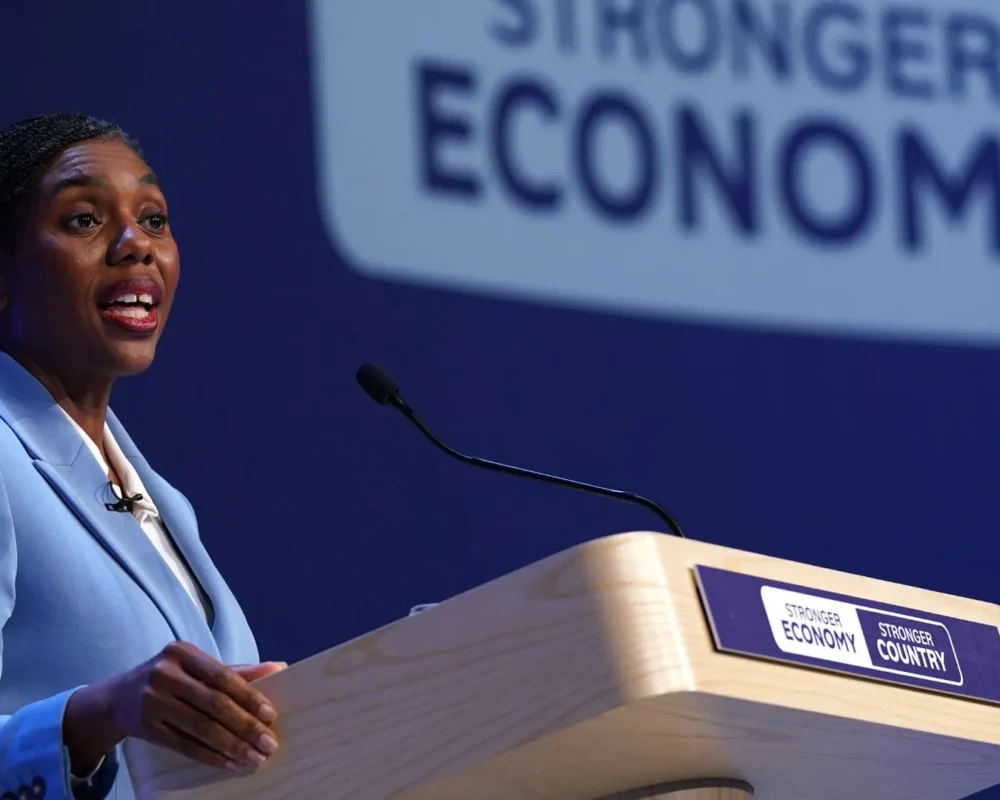
When William Buckley went on the front page of Time magazine, the title was simple: ‘Conservatism Can Be Fun’. That is what Kemi Badenoch has done at this conference. Conservatism can be fun, can be serious and can learn from its old mistakes. But most importantly, what makes it the world’s oldest party is its […]