Why has Britain chosen AI regulation over innovation?
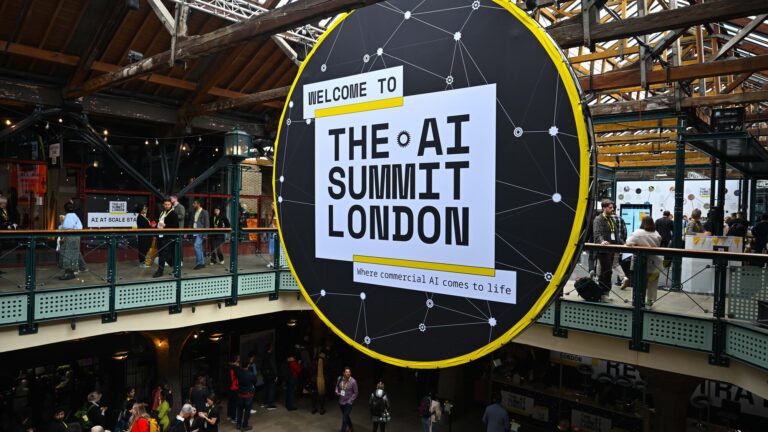
Photo by Rasid Necati Aslim via Getty Images
In an autumn of government reshuffles, one change you may have missed stands out as revealing our failure of ambition in a critical area of innovation – AI.
The UK talks a good game on leadership in AI but let’s be clear, we are not winning the race.
The US leads the pack with not only OpenAI, but Anthropic, Meta, Google and Nvidia, all of which have frontier models. China shocked the industry earlier this year when DeepSeek released a frontier-level model at a fraction of the cost. Even France, historically lagging the UK as a technology hub, has Mistral AI which has received large EU investment and full-throated backing.
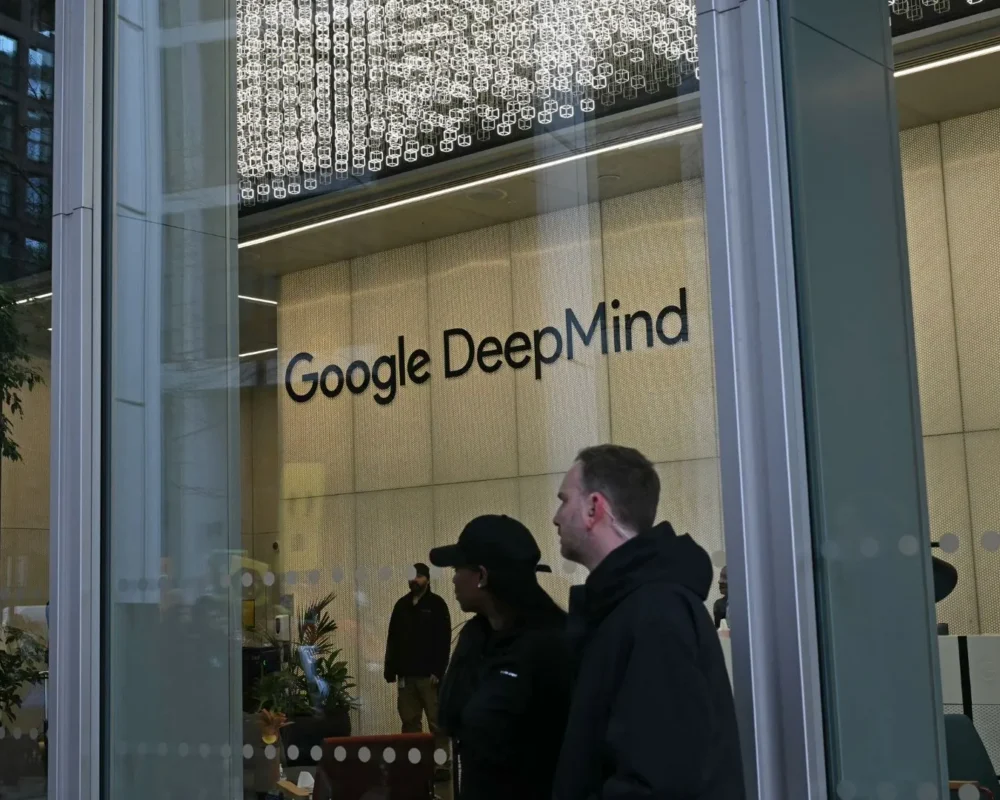
Our leading AI light is clearly DeepMind, which has won plaudits and Nobel prizes with its innovative protein-folding breakthroughs. However, this is not a UK business. It was gobbled up by Google back in 2014 and the innovations they now create benefit an American company.
In this context, you’d think that the appointment of a new senior AI adviser to the Prime Minister would be an opportunity to address this and reset the strategy. To lay out a renewed position for how Britain will strike forward.
Our former AI adviser was Matt Clifford, an established technology industry figure. He was a founder of Entrepreneur First, a startup accelerator and investor in early-stage firms, and he brought a growth-focused mindset to the UK’s AI ambitions, saying on appointment: ‘AI presents us with so many opportunities to grow the economy and improve people’s lives’. He has, regrettably, had to step back for personal reasons.
The new appointee is Dr Jade Leung, who brings a different perspective. Her career has been focused on AI regulation, completing a PhD on the topic in 2019 before taking a governance role at OpenAI. She has since held a senior role at the AI Security Institute, our current national AI quango.
Her day-to-day role at the Institute is to oversee AI safety testing, ensuring that frontier AI models cannot be used for nefarious means. A laudable task, but not one which is exactly pushing the technology forward. She is, in essence, a regulator, albeit without the formal legal powers.
The appointment of an AI safety expert to the PM’s key AI advisory role clearly indicates the direction of travel – we are focused on becoming the world’s AI regulator rather than its AI innovator.
To be fair to Starmer, the UK’s desire to focus on safety rather than innovation started under the previous government. The Frontier AI Taskforce quickly evolved into the AI Safety Institute, the precursor of today’s quango. As Prime Minister, Rishi Sunak made it our explicit goal, saying in 2023 ‘I want to make the UK not just the intellectual home, but the geographical home of global AI safety regulation’.
However, why should we expect the world to listen to us on AI safety, if we’re not even in the conversation on frontier AI development?
Other countries are making no secret that having a national frontier AI firm is critical to their strategic interests. This thinking is behind the Trump administration’s strong support for OpenAI and the EU’s heralding of Mistral AI.
We find ourselves in the slightly odd position where we can develop the talent, as we see with the success of DeepMind and smaller firms like Faculty. We have the investment infrastructure, with the world’s third largest venture capital market behind only the US and China.
The ‘DeepSeek moment’ from earlier this year showed that it doesn’t necessarily take the billions invested to date to be part of the leading pack in AI. Alan Mak recently proposed on CapX a number of promising, innovation-friendly policies for the technology sector more widely. One can hope that Kanishka Narayan, a former venture capitalist and newly-appointed junior technology minister, will take a look at these in his new role.
The Government could be setting out a much more confident position on AI. However we’ve doubled down on what is traditionally a European approach – if we can’t build it, then regulate it.
Which is a sad indictment of our aspirations as a country.
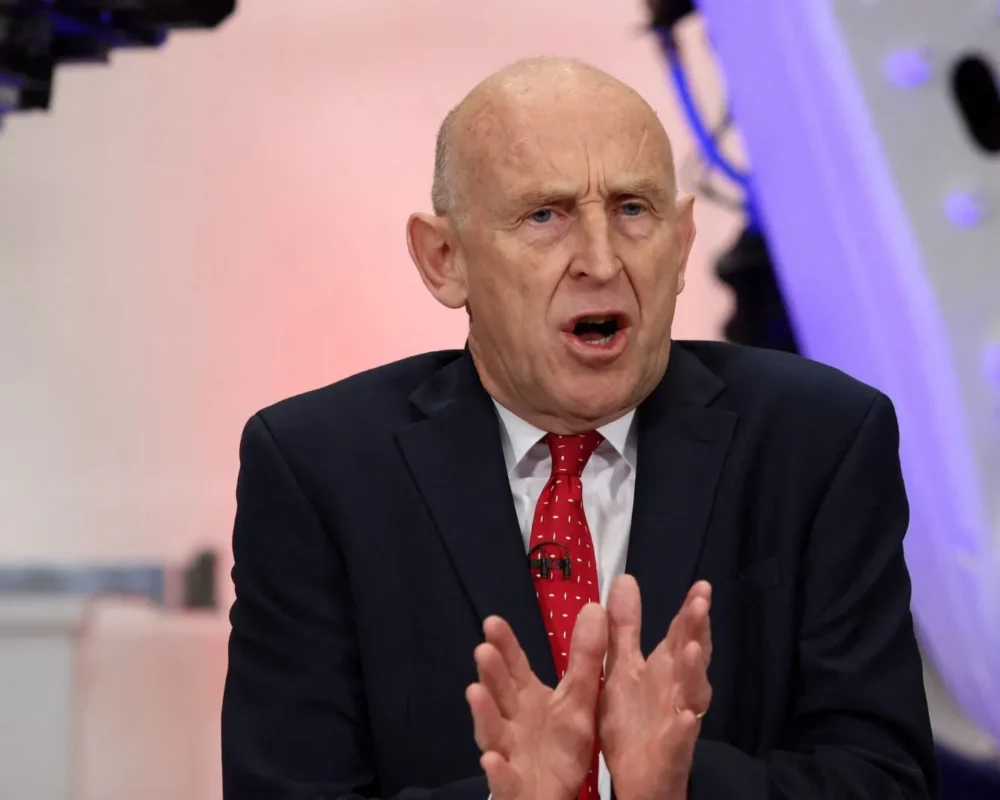
The Victorian economist William Stanley Jevons was clearly a worrier. When, in 1863, the Tyneside arms-maker Sir William Armstrong calculated that Britain’s coal would run out in 212 years, Jevons checked the sums. Armstrong had assumed the country’s appetite for coal grew by the same tonnage every year. But it actually grew by the same […]
If you spend enough time in politics you learn to spot a familiar mistake dressed up as a novel dilemma. In the 1980s, Xerox forbade the American programmer Richard Stallman from so much as fixing a glitch in his own printer, on the grounds that the code inside it was proprietary. It was this small, […]
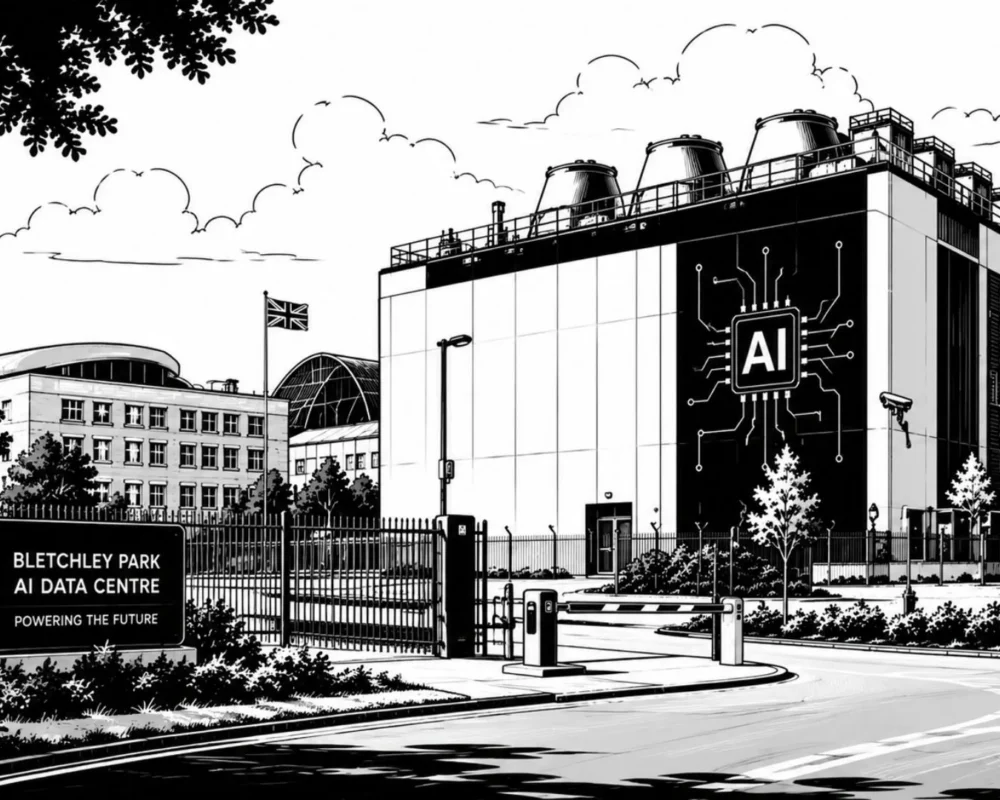
In 1943, a Post Office engineer called Tommy Flowers built a codebreaking machine out of 1,500 thermionic valves, partly out of his own pocket. Within a year Colossus, the world’s first programmable electronic computer, was cracking Nazi High Command ciphers at Bletchley Park. Britain had invented the data centre, in a large shed, and chock-full […]