Why Burnham’s Number 10 North won’t work
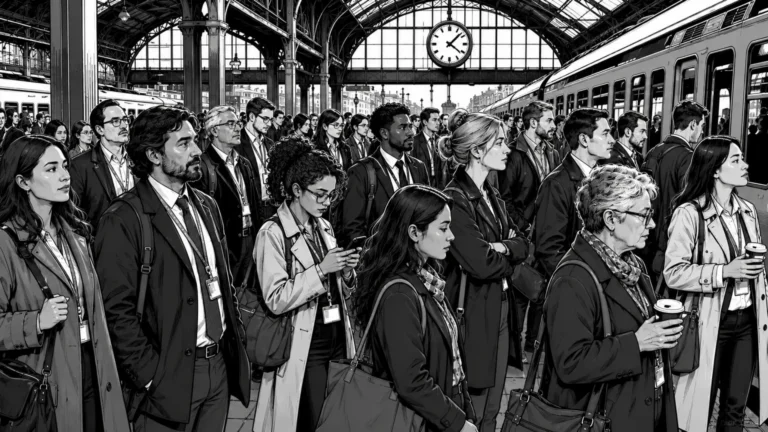
Andy Burnham’s Manc-a-Lago plan to escape the Westminster bubble by shipping bits of No.10 to the North is fated to fizzle out: the wrong answer to a problem misdiagnosed. The idea seems to be that physical proximity will make people feel the heart of government better understands them, while the new office will be full of different kinds of people, more culturally attuned to Folk Of The North. Neither idea withstands much scrutiny, while the whole plan risks forcing key officials to waste hours every week on a train. Or standing in Euston waiting for a train.
There is merit in the Prime Minister having a retreat from the goldfish bowl of Downing Street to pause, to plan and to have space to think. Traditionally this is Chequers in Buckinghamshire, but if Burnham finds returning to his family in the familiar milieu of Manchester works better, then more power to his elbow. But the plan he has announced is not that – it seems more about building an embassy or changing the culture of government by changing its postcode. Or creating a photo op.
On physical proximity, the idea seems to be that people in the south east currently feel a close affinity with the Government by dint of it being located in London. They might occasionally walk past a secure government building and, as they push through the gaggle of protesters blocking the pavement, enjoy the warm glow of knowing that the officials inside are surely toiling away to their personal betterment. Why, the argument seems to go, should the northerner not also have the chance to feel this healthy glow? This is an assumption in dire need of having its tyres kicked.
Even the European Parliament doesn’t try to shuttle between Brussels and Strasbourg several times in one week
A more seductive argument is that there’s a socio-cultural homogeneity to the kinds of people who fill up these government buildings: the dreaded drones of the Westminster bubble who all look, sound and think alike. Everyone recognises the type, though no one sees it in the mirror. Our Andy can fire up the Quattro and go north, leaving these lanyard-wearing bubble dwellers in his wake. This is an excellent plan with just two minor flaws: those Westminster people know how to use trains, and Manchester already has its own lanyards lying in wait.
The fundamental error is believing that the Westminster bubble is a function of a postcode, when it’s really a function of a process and a culture. If you want to recruit people from outside the bubble, the good news is there are millions of them already living in London. If you’re not finding them, wiser heads might wonder if there’s something about the way the Civil Service and No.10 recruit staff that fails to find them, or perhaps something about the workplace culture that, when do you find them, means they’re either driven away or assimilated.
The BBC’s big move to Greater Manchester 15 years ago is a great case study. Around 1,700 London staff moved north, anchoring a whole new Media City in Salford. But there’s no sign that the BBC’s own cultural norms shifted to better match the outlook of people outside their own media bubble. If anything, the culture wars of the last decade found the BBC more at odds with the general public than ever before.
A more alarming case study is the Office for National Statistics moving to south Wales. Of the staff who relocated, 90% eventually left, with the resulting loss of talent and institutional memory damaging not just the credibility of the relocation but of crucial national statistics. The Bank of England has complained it can no longer trust official labour market figures, while suspicion has also fallen on inflation, retail sales and public finance data.
Even if he can navigate these problems, Burnham’s travelling circus faces more fundamental problems. As I wrote this, trains to Manchester were being cancelled ‘because of cattle on the railway’. Last week saw extensive heatwave-induced problems. Yet even on a cool day with the cows safely in their field, neither the PM nor anyone in his team can have a private conversation or phone call for several hours aboard the train: are they meant to sit in silence, WhatsApping surreptitiously across the table like schoolchildren?
Burnham might choose to commission his own Royal Train to travel in private: ‘GBR Force One’. Or switch to the road, which takes twice as long and, to bring his staff, will need either a Presidential motorcade or Burnham’s Big Battle Bus. Whatever route he chooses, it all feels too much like a plot from ‘The Thick Of It’, with a permanent communication gap sowing confusion at the heart of government: a useful scriptwriting device, but no way to run a real-life administration.
When they get to Manchester, where will they go? Assuming they don’t all pitch up at Burnham’s gaff for tea and biscuits round the kitchen table, they’ll need a second set of offices. How much will that cost, and when will it be ready? Unless Chez Burnham is well-stocked on spare rooms, where will everyone stay? Even the European Parliament doesn’t try to shuttle between Brussels and Strasbourg several times in one week.
No, it won’t work. Since he’s now committed publicly to the idea then something will have to happen, even if just for the cameras, but it will be a token gesture or else fade away as reality sets in. Good thing too, because it’s a bad idea based on the wrong-headed notion that the problem is a postcode or a particular office building.
If the new Government is serious about bursting the Westminster bubble, about bringing in not just new versions of the same people but new kinds of people with new ways of thinking, they need to fix the actual problem. A recruitment process that finds the wrong people in London will find the wrong people in Manchester. Focus on that. And if the organisational culture is alien to normal people with mainstream opinions on social issues, pushing them either to leave or assimilate, then the BBC has already field-tested what happens if you move that culture to Greater Manchester: the lanyards migrate.
Most worrying is that Team Burnham’s answer to this problem was neither rethinking recruitment nor reforming workplace culture, but more travel time. Even before taking office, our prospective PM is already reaching for superficial, TV-friendly fixes to hard problems. Not exactly a reassuring start.

Even before he became Prime Minister in July, Andy Burnham had talked about the country in institutional, positively mechanical ways. He promised to ‘give Britain the circuit-breaker it needs’, and said that his Number 10 North, part of the Office for the Prime Minister and Cabinet based – where else? – in Manchester, would be […]
The Manchester City scandal drags on. Tax Policy Associates now argues, based on the Premier League commission’s findings and leaked documents, that the club may have failed to pay some £12 million in income tax and NICs due on the pay of Roberto Mancini, who managed the club from 2009 to 2013. City, which denies […]

Andy Burnham used the Labour Party conference in Liverpool this week to commit the Government to a National Care Service, universal and free at the point of use, while promising to ‘stick to our fiscal rules to get borrowing and debt down’. The service is due in the next Parliament and is supposed to be […]