Who will stand up for economic freedom?
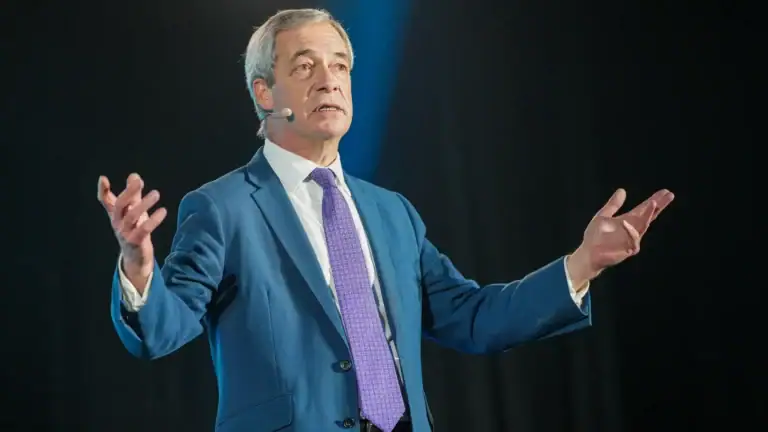
Photo: Christopher Furlong/Getty Images
Forget all the cloak-and-dagger machinations of the past week: the deception and spying, the sneaking and snitching. Both Kemi Badenoch and Nigel Farage are free marketeers. Both the Conservatives and Reform UK are likely to fight the next general election on pretty similar manifestos that each contain some pretty bold free market policies.
Most significantly, both parties are doing some serious thinking on how legal and institutional obstruction to such an agenda can be overcome. Some have criticised the least Conservative government for being ‘Conservative In Name Only’. But often, ministers from that time will testify that their efforts to apply their conservative thinking in even the most modest and reasonable way were thwarted. ‘You can’t do that, minister,’ some smug civil servant would tell them. It would be judicially reviewed.
For that matter, we have had the testimony from Paul Ovenden, who has worked for Keir Starmer in Downing Street. Ovenden laments that ‘stakeholder state’ where ‘the state that has got bigger and bigger while simultaneously and systematically emasculating itself’.
He says:
Once you start noticing it, you see it everywhere: in the democratic powers handed to arm’s-length bodies or the many small government departments too powerless or captured to resist lobbying efforts. The Stakeholder State ferments between the NGO and the campaign group, the celebrity letter-writing campaign and the activist lawyers. It is given voice by political podcasts where everyone violently agrees. It is canonised through a corrupted honours system.
So really we had (and have) a Government In Name Only. Ovenden argues that a ‘stiffened spine’ is all that’s needed to overcome the vested interests. That would be a good start. But Reform and the Conservatives are both inclined to legislative change as a precursor. Withdrawal from the ECHR. Repeal of the Human Rights Act and the Equalities Act. Scrapping the Judicial Appointments Commission and the Supreme Court to restore the pre-Blair legal settlement. Slaying the quangocracy.
But having got themselves elected and made the preliminary measures to empower them to implement change, how free market would a Conservative or Reform government be? Both Badenoch and Farage would have their free market instincts tempered by a desire for party unity and an eye on the opinion polls. Politicians are anxious to maintain their ‘electoral coalitions’.
Badenoch is burdened by the record of the Conservative government, which saw our country’s enterprising spirit held back by state regimentation. There is also the problem of the wets, who as is often suggested, would be more at home in the Liberal Democrats. Would she not face rebellions from all the lawyers in her ranks over moves to reduce the power of lawyers?
Reform also betray some ideological incoherence. Reducing the welfare bill is an imperative if the country is not to go bankrupt. Nigel Farage has acknowledged this. Yet he also called for the lifting of the two-child benefit cap. That has been tweaked a bit and doubtless the overall ‘package’ of welfare reform he offers will involve savings. But it was hardly an encouraging start.
We have Reform support for nationalisation and subsidies for the steel industry. Also the enthusiasm from the Reform MP Lee Anderson for more coal mines and the broader messages about reviving manufacturing industries. But in an open trading economy, it is not for the state to decry how many of us should be working in one industry or another.
Certainly, the state can avoid imposing burdens. For example, the Net Zero policies result in us having much higher energy costs than other countries. Reform have pledged a shale revolution for oil and gas which would be hugely welcome. That might well mean that energy-intensive industries became profitable that otherwise would not be. But what if it didn’t? What if service industries increasingly became our future? You can’t buck the market. Governments that try to find it expensive and futile.
Since May last year, we have seen Reform in power in several county councils. They were elected after highlighting the extent of wasteful spending by local authorities. Yet they have produced weak and inexperienced council leaders who have been daunted by the bureaucrats and failed to produce pruning hooks, let alone chainsaws. Indeed, all their councils are increasing council tax above inflation.
Other political parties have jeered that such failure shows cutting spending is impossible. That is not true. It was a question of having the strength to make the necessary decisions. They could have introduced a recruitment freeze. They could have sold surplus land and buildings to reduce debt and thus interest payments. They could have slashed spending on communications. They could have stopped wasting the public health budget on gimmickry and instead put it to practical use to ease pressure on adult social care. They could have taken many of the children in care from expensive children’s homes to be placed with foster carers. They could (as their own deputy leader Richard Tice advocated) have negotiated lower fees for their pension funds.
But these and a hundred and one other decisions would have required a determination to overcome institutional inertia and to champion the interests of the taxpayer. The failure locally is hardly encouraging of what we could expect nationally.
What clues to the defections from the Conservatives give us? One crucial test is whether a Reform government would liberalise the planning system to allow the dream of home ownership to be fulfilled. Robert Jenrick’s defection might be significant in this respect. He is a Yimby. As Housing Secretary, he was due to bring in some very significant reforms. Planning zones would have automatically allowed new housing in much of the country provided it followed popular local design codes, ‘a fast-track for beauty’. After the Chesham and Amersham by-election, Boris Johnson abandoned a pro-development policy and Jenrick was ousted. Could that agenda be revived?
Andrew Rosindell is as staunch a Thatcherite as you could meet. Other defections are a bit more puzzling. Jake Berry was a Net Zero zealot when he was Conservative MP and very much thought of ‘levelling up’ as demanding state handouts as the way to revive depressed areas. Danny Kruger favours protectionism over free trade. Nadine Dorries always struck me as a big state Conservative with her calls for an ‘industrial strategy’ and censorship of the internet.
What to conclude from all this? British politics is in for a bumpy ride. Its fractured state makes a hung parliament quite likely after the next election and if the Conservatives and Reform UK command a combined majority, the acrimonious personal relations between the leadership make an unstable ‘confidence and supply’ arrangement more likely than a coalition. Such a new government would set out on a broadly free market journey, but face plenty of dissent and contradictions within its ranks. Will it succeed? Doubtless, the picture will be mixed. But the ambition to change the country’s direction will be strong. The task may be formidable, but I wouldn’t emigrate just yet.


Britain is in the midst of a welfare crisis. In the financial year 2025/26, we spent £329.1 billion on benefits – almost £5,000 per person. That makes it the single biggest slice of state spending, larger than what we spend on the NHS, defence or education. You’d have thought that with all this money being […]
John Healey’s Budget repeated the message that the Government sees AI as a route to economic growth and better public services. From investment in British AI capability to plans for data centres and AI adoption across Whitehall, ministers are putting money and political weight behind that ambition. The success of this investment will depend on […]
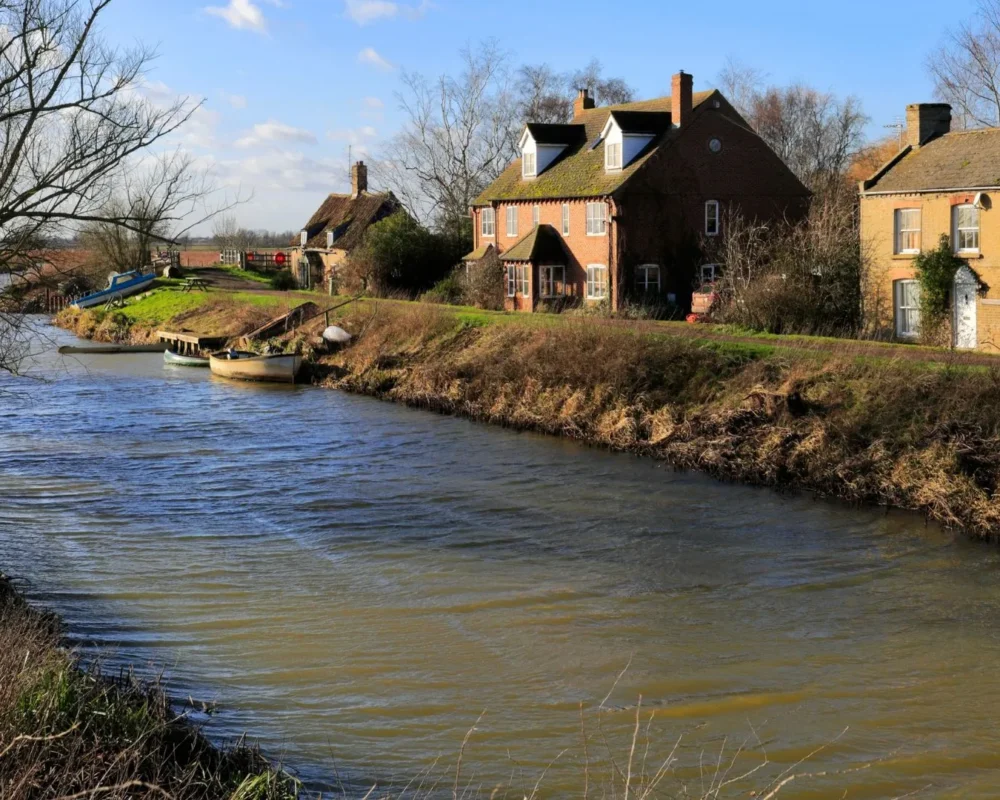
Ambitions to get our economy growing require an equal determination to address the barriers that hold it back. This summer, half of England was reported to be in serious drought for the second year running, and the Environment Agency warns of severe consequences for the economy, environment and wildlife if conditions do not improve. There’s […]