What Britain can learn from Japanese Thatcherism

Photo: Franck ROBICHON / POOL / AFP via Getty Images
In the pre-dawn stillness of Tokyo’s Nagatacho district, the lights on the fifth floor of the Kantei remain stubbornly ablaze. Inside, Japan’s first female Prime Minister is likely to be on her fourth cup of tea and her eighteenth hour of work. Sanae Takaichi does not believe in Japan’s legendary ‘lost decades’ (roughly 1991-2021) of stagnation, only in the ‘work, work, work’ philosophy that has become her trademark, and now, her country’s new mandate.
For Takaichi’s Liberal Democratic Party (LDP), the last few years have been a slow-motion descent into the political abyss. Bogged down by archaic slush-fund scandals and a public weary of institutional inertia, the party’s brand has rarely been more toxic. And yet, Takaichi has found a way to capitalise on her party’s decline as her personal popularity has soared.
She is a rare political creature in Japan, a conviction politician in a culture of consensus. Where her predecessors offered stability (a polite euphemism for managed decline), Takaichi has offered renaissance. She is a metalhead-turned-stateswoman who traded her drumsticks for a Thatcherite iron fist, and in doing so, she has decoupled the ‘Sana-mania’ for her own personal brand from the sludge of her party’s reputation.
On the international stage, Takaichi has signalled that the era of self-deprecation over. Whether it is the vocal support for Taiwan in the face of Chinese military drills or a blossoming personal relationship with the US president, Japan can no longer be considered a passive observer in the Indo-Pacific region. Her aim for Japan is to become as strategically indispensable as it is economically exceptional.
For Takaichi, economic stagnation was never a structural inevitability. They were a failure of political will, a feeling that rhymes with our own experiences in Britain. Her landslide election victory could well be the final, definitive rejection of the LDP’s old ‘consensus-first’ culture, a culture that prioritised harmony over growth and seniority over merit. In its place stands a leader who unapologetically models her governance on Margaret Thatcher, right down to the legendary four hour sleep cycles and a refusal to blink when facing down institutional pushback.
Takaichi’s ‘work, work, work’ mantra is being institutionalised into a high-pressure policy environment that treats capital efficiency as a matter of national security. In the 1980s, Margaret Thatcher’s ‘big bang’ deregulated the City of London and swept away the prevailing economic consensus. In 2026, Japan is undergoing its own version: a brutal, mandatory re-awakening of corporate capital. Nowhere is this more clear than at the Tokyo Stock Exchange.
Companies that fail to provide credible plans to increase returns on equity above a minimum baseline while also raising price-to-book ratios above 1.0x risk being forced to delist. In addition, Takaichi’s administration is accelerating plans to unwind the ‘Keiretsu’ safety blanket, a vast network of corporate cross-shareholdings designed to protect against hostile M&A.
However, the most ‘Thatcherite’ element of the Takaichi revolution isn’t found in corporate boardrooms, but in the savings accounts of the Japanese middle class. Much like the ‘Tell Sid’ privatisation campaign or the ‘Right to Buy’ housing scheme of 1980s Britain, the revamped Nippon Individual Savings Account (NISA) is creating a new generation of popular capitalists. By making the tax-free status permanent and raising savings limits, the government is attempting to coax Japan’s ¥2,100 trillion ($14 trillion) household cash pile out of the shadows.
For decades, the ‘demographics is destiny’ argument has been the ultimate bear case for Japan. Takaichi, however, has set out to prove that while you cannot fight demographic destiny, one can out-innovate it. Learning from the difficulties faced by Europe through uncontrolled mass migration, Takaichi has identified productivity growth as the missing piece to the puzzle. In a move that stunned the global ‘work-life balance’ lobby, she used her first policy speech to declare that Japan must stop prioritising ‘comfort’ and start prioritising output.
By funnelling ¥10 trillion into AI and robotics, she is attempting to replace the ‘missing millions’ with a robotic workforce, betting that a 2% rise in productivity is worth more to Japan than a 2% rise in its population.
At the heart of this drive for growth is Takaichi’s belief that a nation that cannot power its own factories or manufacture its own silicon is a nation on borrowed time. So while Europe fumbles on its energy policy, Takaichi looks to revive nuclear power in Japan. By fast-tracking the restart of the Kashiwazaki-Kariwa reactors, she is signalling her willingness to take on controversial issues, such as nuclear energy in the post-Fukushima world, for the national good.
This thinking extends beyond energy, from an intended declaration of independence for its semiconductor industry as protection from the geopolitical volatility of the Taiwan Strait, to rising levels of defence spending which will support every strategic dual-use technology from cyber security through to space technology.
The parallels between Japan and Britain are striking – and for Westminster, deeply humiliating. Both are island nations grappling with the weight of past glories, ageing demographics, high levels of national debt and a productivity puzzle that has defied a decade of technocratic tinkering. However, while Britain remains trapped in a cycle of managed decline, Takaichi’s Japan appears to have found an offramp.
There are many lessons for Britain here. The UK’s equity market currently suffers from a ‘UK discount’ that mirrors Japan’s pre-reform malaise. If a company on the London Stock Exchange is trading at half the value of its global peers, the current British response is a shrug and a ‘market forces’ platitude. There is no reason why Britain shouldn’t adopt a similar mandate to encourage listed companies to improve capital efficiency.
Similarly, Britain’s nation of homeowners is ageing. It should aim to become a nation of shareholders. Japan has taken significant inspiration from Britain’s ISAs in the way it has its revamped its new NISA. But there is always room for improvement. Instead of tinkering with small tax breaks or moving thresholds, Britain should emphatically encourage private savings across the investment ecosystem and empower its pensions and ISAs as channels for savings. This could help support domestic markets while staving off potential liquidity crunches in the future.
The most potent lesson Britain can learn is the most intangible. For years, Japan was told that its cultural aversion to risk and its ‘Keiretsu’ loyalty would make Thatcherite reform impossible. Takaichi proved that the public doesn’t want consensus if it means standing still. They want a leader who treats 3:00 AM work sessions as a duty and national pride as a policy tool.

Kyō no teki wa, ashita no tomo is a famous quote by Miyamoto Musashi, the renowned Japanese swordsman, writer and artist. Translated, it means ‘today’s enemy is tomorrow’s friend’ and it is interpreted as an observation on the transient nature of conflict. History, of course, is littered with foes turned friends. Britain and France, Britain […]
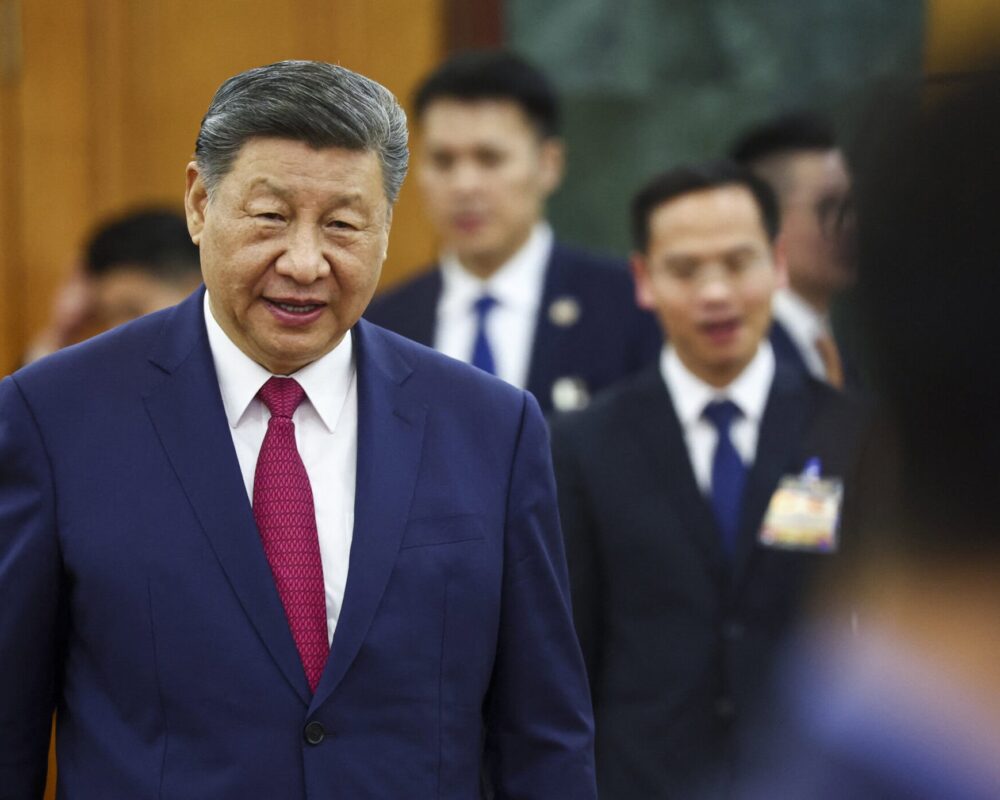
The Chinese have formidable qualities, but they have rarely been credited with a sense of humour. Yet in that regard, we may be underestimating them. In response to the tariff contest, a number of witty, AI-generated memes have appeared, mocking Messrs Trump, Vance and Musk, depicting the three as unhappy-looking cobblers trying to replace the […]
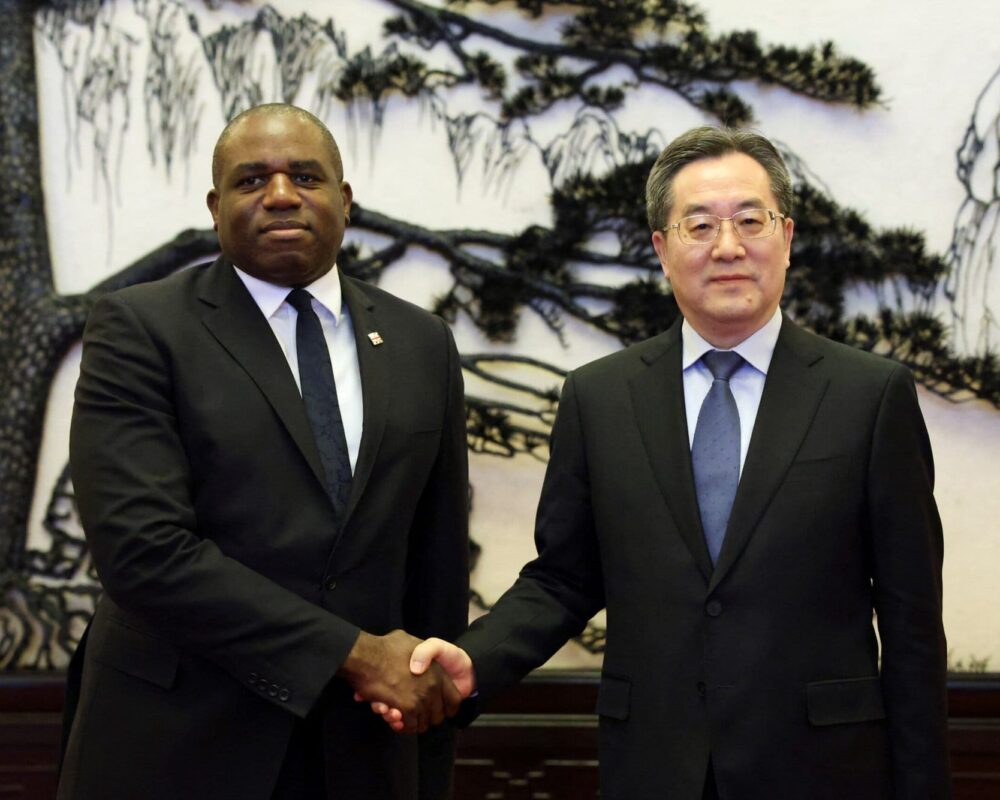
What a difference power makes. From the opposition benches, Labour were robust in their criticism of China’s authoritarian regime, pushing for stronger action against its human rights abuses and its influence operations on UK soil. Now they are in government, such concerns have been sidelined in favour of commercial opportunity. This is dangerously shortsighted. Chasing […]