What Ayn Rand can teach businesses about resilience
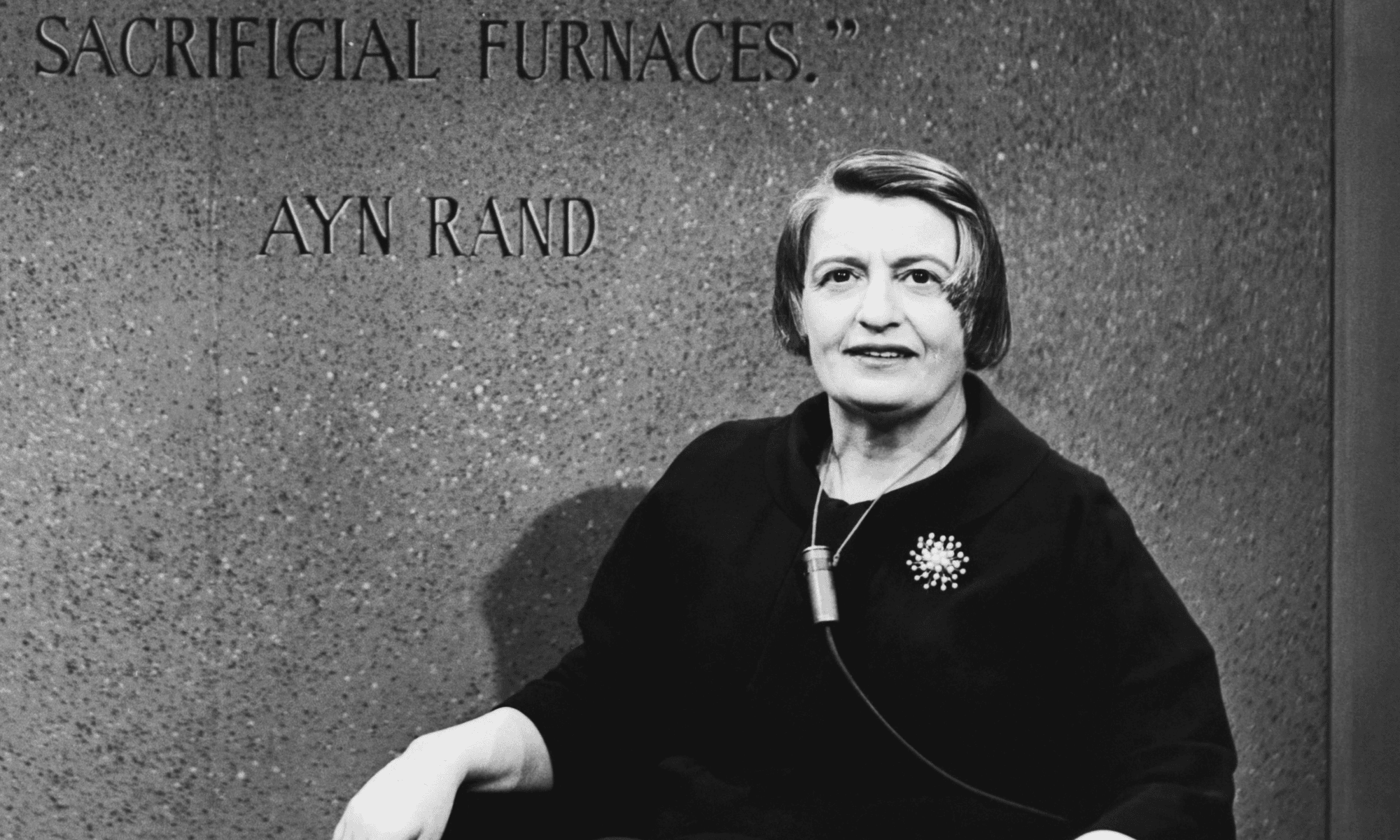
Photo: Raimondo Borea/Photo Researchers History/Getty Images
A generation ago, when asked how business was going, an owner might jokingly reply, ‘If it weren’t for the customers and staff, everything would be fine!’ Today, that’s changed. The greatest challenge facing small businesses isn’t customers or staff – it’s red tape, regulation and compliance.
When I delivered the Adam Smith Institute’s Ayn Rand Lecture this week, I shared how these forces have shaped my experience running a family business and how Rand’s philosophy helped frame my response to state interference – particularly during the London Olympics.
Speaking out as a business owner is rare. It’s risky. Politics divides, and taking a public stance can alienate customers. But when the Brexit debate emerged, I chose to engage. Not just because we had to spend tens of thousands reprinting our smoked salmon packaging to include a ‘Contains Fish’ warning – a symbol of absurd regulation – but because I believed it was important the public heard from entrepreneurs who face these burdens daily.
The central story of my talk – titled ‘Swimming Against the Tide’ – focused on our battle with the authorities during London’s Olympic bid. Our smokehouse, part of a family business over 100 years old, stood on land the state wanted for the Olympic Park. Ours was one of 350 businesses marked for compulsory purchase. The area, the largest concentration of manufacturing land in London, was branded a ‘regeneration project’ to justify seizure under CPO laws. The catch? The law guaranteed that businesses like ours would never receive enough compensation to relocate.
We chose to fight – not with lawyers or surveyors – but by speaking out. ‘Should the Olympics mean destroying heritage businesses?’ we asked. We weren’t against the Games. We simply wanted to continue trading and contributing to the economy, as we had for decades.
This echoed Ayn Rand’s ‘The Fountainhead’, where the protagonist resists the collective to preserve integrity and individual vision. Rand argued that the moral purpose of life is productive achievement through reason and effort. That’s all we were trying to do – to continue producing, creating and employing – not to be sacrificed for a grand, impersonal project.
Some 75% of the affected businesses didn’t survive. I remember a government minister, when asked about our fate, saying on the radio, ‘if you want to make an omelette, you’ve got to break a few eggs’. We were the eggs – disposable in the eyes of the state. But Rand rejected this logic. She championed the individual, not the collective, as the true engine of progress.
The easy path would have been to take what was offered and walk away. Many did, and were lost. But Rand’s values of integrity and independence compelled us to stand our ground. We weren’t greedy. We didn’t want more than our due. We simply wanted fair compensation to relocate and keep creating value. The real irrationality was in the system – in the inflated budgets, unchecked spending and disregard for individuals.
Rand’s idea of rational self-interest is often misunderstood. It’s not about selfishness in the pejorative sense. It’s about acting with purpose, using reason to create value and not being ashamed to pursue one’s own happiness and success.
After our fight, we had a choice. We could take the compensation and disappear – or rebuild. We chose the latter. We opened a new salmon smokery beside the Olympic Park on Fish Island. But we didn’t stop there. We added a restaurant, a gallery and a pop-up hospitality venue. We chose creation over resentment.
Rand once described man as ‘a heroic being, with his own happiness as his moral purpose, productive achievement as his noblest activity, and reason as his only absolute’. I don’t see myself as heroic. But I do believe in standing up when it matters. In every crisis, we face a choice: give in, or push back. See ourselves as victims, or respond with resilience.
Perhaps that’s the lesson – whether in sport, business, politics or life: greatness doesn’t come from committees or slogans or utopian visions. It comes from individuals – thinking independently, acting with purpose and refusing to give up.
Britain has built a tribunal system so sprawling and risk-free that it now consumes the very people who should be running organisations, improving products and services and designing more productive companies. What was meant to be a quick, low-cost alternative to the courts has become a parallel bureaucracy that traps skilled workers in disclosure exercises […]

Viewers of ‘Clarkson’s Farm’ – now back for another season – will be familiar with Jeremy Clarkson’s long-running battle with the bureaucrats of West Oxfordshire District Council. When his Diddly Squat farm shop boomed, the council dragged their feet over planning permission for a car park extension, bizarrely decreed he could only sell goods from […]

After nearly two decades of weak growth, stagnant wages and stubbornly high inequality – alongside one of the worst productivity records in the developed world since the financial crisis – Britain’s central problem is how to get the economy growing again. We don’t build enough homes. We don’t generate enough cheap energy. We don’t invest […]