Nimby Watch: Do Plaid Cymru’s eco-warriors hate solar panels?
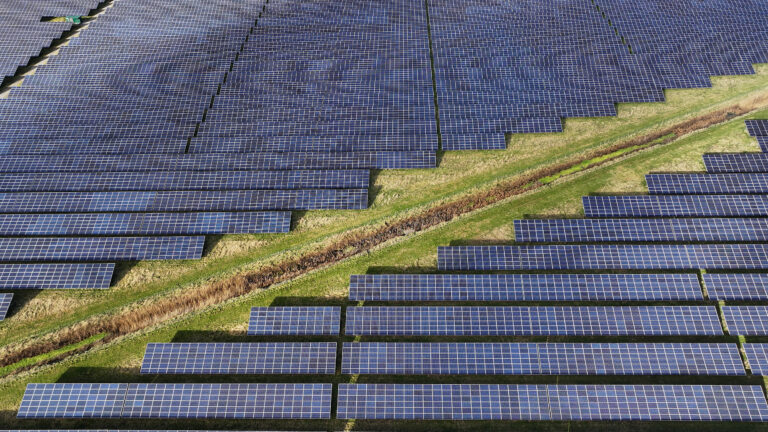
Photo: Christopher Furlong/Getty Images
In this week’s Nimby Watch, we’re going to Ynys Môn, one of the most beautiful tourist destinations in the UK, probably better known to you as the Isle of Anglesey…
Bore da! What brings us up to the Isle of Anglesey, then? Let’s be honest – no sass here, we can save that for later – Anglesey is a beautiful place to be, especially in these last days of summer. Can’t we just do something nice for a change?
We both know that the format of this column means we cannot. Okay, fine, obviously there’s a planning dispute going on up here. There are two separate plans to turn the Isle of Anglesey into a major power generation site, and if approved they will use a heck of a lot of land.
Okay, give us the details then. One proposed project, Enso Energy’s Alaw Môn, is intended to provide 160 megawatts of solar energy – enough to power almost 34,000 homes – on a site on the north of the island, which would cover a little over 600 acres of ‘good to moderate’ farmland.
That’s a pretty huge solar farm, but it’s dwarfed by the other proposed solar project – Maen Hir, proposed by Lightsource BP – which would span three sites in the centre of the island. This one would cover a massive 3,000 acres of farmland, but would generate 360 megawatts of power, which the developers say would power 140,000 homes (clearly, and annoyingly, the two companies measure megawatts-per-home differently). These are genuinely ambitious schemes.
You’ve made a point of saying how beautiful Anglesey is. Shouldn’t that mean we leave it unspoiled rather than turning it into an open-air power plant? That’s certainly the view of some local residents, unsurprisingly, but they’ve managed to get significant political support. Anglesey is one of the strongholds of the Welsh nationalist party, Plaid Cymru. They control the council, have the local Senedd seat and an MP, and both of the latter are orchestrating local opposition to the schemes.
‘Orchestrating’ opposition makes it sound like they’re forcing residents to the barricades, or something. Well, according to one Anglesey farmer who wrote in to nation.cymru, something close to that might have happened. Carwyn Thomas wrote to the publication in the wake of a 100-strong rally against the developments, noting ‘I have been told first hand that Rhun’s staff were spending their time on Friday phoning Anglesey residents and pleading with them to attend the rally,’ before sarcastically concluding ‘an excellent use of taxpayers’ money, I’m sure’.
Look, you haven’t convinced me quite yet: 3,600 acres sounds like an awful lot of farmland to lose. You’re right, it does. So let me try to make the case for it. This is a big scheme, but for renewables to generate serious power and replace fossil fuels, it won’t be enough to put a few panels on rooftops.
These schemes would cover about 2% of Anglesey, which on the one hand leaves most of it untouched, but on the other… is a lot! However, crucially, the farmland this solar would be built on is almost exclusively land used for grazing – and once the solar farm was built, the land could still be used for grazing, and so would still be farmland. As Carwyn Thomas notes in his letter, farmers are struggling to stay afloat, and so guaranteed income for decades to come would be a huge lifeline to one of Anglesey’s oldest industries. Farmland is working land, and always has been.
Okay, that’s not a bad argument, but why do we need to build solar farms at all. Can’t we just do this with offshore wind? The short answer is no: offshore wind costs a lot more than solar power, and we couldn’t get by on either wind or solar power alone – sometimes the sun doesn’t shine, and sometimes the wind doesn’t blow. Having a mix of both helps. And offshore wind wouldn’t provide a penny of income for farmers on Anglesey, and it’s their work that makes Anglesey look like it does. Without farmers, it would look totally different.
You and I might think that, but Plaid Cymru are entitled to feel otherwise, aren’t they? They’re not entitled to have their cake and eat it, though. Plaid Cymru’s latest manifesto promises to reach Net Zero by 2035 and in 2021, they promised to do this entirely with renewable energy. That’s less than ten years away now, and while they’re promising to find ways to do it without building any of these big contentious projects, they’re yet to say what those plans would actually be.
Just imagine! A pro-green party that supports Net Zero in theory but opposes the individual projects trying to deliver it. Yes, it does sound strangely familiar, doesn’t it?


This week, Nimby Watch is in for a reckoning… Hey, you. Excuse me? Are you talking to me? Yes, you. I’ve got something you should read. Hang on a minute, shouldn’t you be asking me questions? Are you breaking the format? Damn right I am. Every fortnight, you take me somewhere in the UK, show […]

This week, Nimby Watch is in Danson Park, Bexley, in South East London. But why? I see we’re in a park! You never bring me anywhere nice. It’s a particularly nice park, too! Danson Park, which celebrated its 100th birthday last year, has a lake – which hosts boating and water sports activities – football […]

This week, Nimby Watch is in Winstanley, in the historical county of Lancashire. But, like certain other people in Winstanley right now, we’ve got our eyes on Westminster… Okay then, why are we in Winstanley. Where exactly is Winstanley, anyway? Well, if you’re part of the southern Westminster elite, you might say that Winstanley is […]