Too hot this summer? The state is to blame
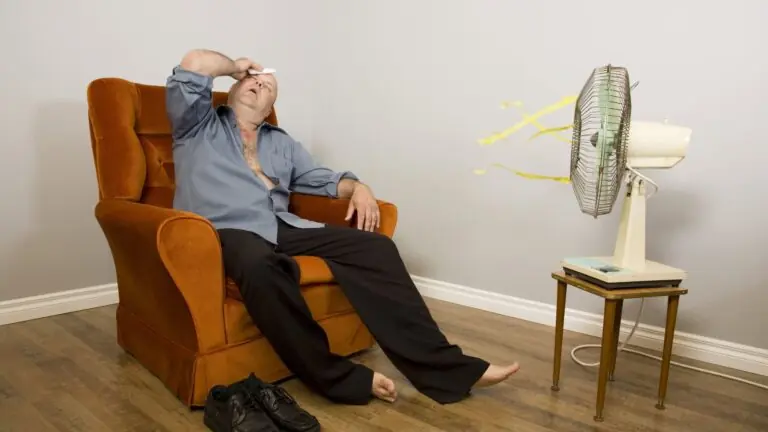
Photo: Getty Images
After the recent heatwave, Londoners have been forced to endure sweltering conditions inside their own homes – and this is no accident. The state is actively discouraging the use of air conditioning. As London Centric reports, A/C is ‘effectively banned’ in new houses and flats by planning rules. Before developers are allowed to install so-called ‘mechanical cooling’, they must demonstrate that all passive alternatives – like shade trees or improved airflow – have been exhausted.
That may sound like a noble commitment to sustainability. But it’s not how things work in other wealthy countries, and the cost is real – both for our public health and quality of life.
There’s a persistent stereotype of healthy Europeans and unhealthy Americans. But that story flips when the temperature rises. According to the Financial Times, between 2000 and 2019, an average of 83,000 western Europeans died each year due to extreme heat – compared to just 20,000 North Americans. And it’s not just about mortality: Europeans also suffer more in terms of sleep quality, cognitive performance and productivity during hot spells. While heatwaves become more frequent, getting permission to install air conditioning in the UK has become harder.
This paradoxical policy reflects a deeper ideological bias: a technocratic distrust of markets and a romanticised belief in sacrificing comfort for a bigger picture.
When people defend the free market, they often cite GDP growth, FTSE 100 performance or Cold-War comparisons like the US versus the USSR. But that misses the most human case for free markets: it makes ordinary life easier.
Alan Greenspan put it best in his book ‘Capitalism in America’: ‘The most important improvements are felt in the convenience of everyday life rather than in discrete economic sectors such as industry or agriculture.’ The real fruits of capitalism were felt in homes, not factories, where appliances slashed housework from 58 hours a week in 1900 to 18 by 1975.
Another example is electricity, which gave ordinary people a luxury that the kings and emperors didn’t have for thousands of years. Herodotus described an Egyptian king who only had six years to live. ‘Perceiving that his doom was fixed, [he] had lamps… lighted every day at eventime… and enjoyed himself… turning the nights into days, and so living twelve years in the space of six.’ The expansion of electricity after 1900 had a similarly transformative impact on the American population as a whole.
The market doesn’t just generate wealth. It gives people back their time, improves their comfort and offers control over their environment. That’s the humane side of capitalism too often ignored – especially on the Left, where the market is still dismissed as the embodiment of ‘trickle-down economics’. But the truth is this: when politicians limit the reach of the market, it’s the working class who suffer first and most. The rich will always find ways to cool their homes. It’s ordinary people – those who take the Tube home after long shifts – who are told to sweat through sleepless nights.
So why has this anti-convenience ideology taken root? Because many policymakers have fallen for the lie that there is something morally superior about sacrificing comfort in the name of a greater good.
We’re told that to save the planet, we must give up the comforts of modern life. But thanks to innovation, green technologies have made air conditioning more efficient and less harmful to the environment. The real problem isn’t the technology – it’s the mindset. Rather than allowing markets to expand cleaner, cheaper and more abundant supply, policymakers prefer to control demand. Instead of enabling people to cool their homes sustainably, they try to ration consumption altogether. By following this path, what we finally get is sacrificing our everyday comforts and not getting a greener planet.
That’s the wrong approach. Consumption should be guided by individual choice, not managed by government decree. But the technocratic worldview doesn’t trust people to make their own decisions. It wants to engineer outcomes – an instinct that is fundamentally incompatible with the logic of a free society.
As the economist Frank Knight argued, the defining characteristic of markets is uncertainty. Unlike socialist planning, which falsely promises predictability and control, free markets deal in unknowns. And this requires something many policymakers lack: epistemological humility – the recognition that we don’t know everything, and never will.
That’s why it’s better to trust individuals to make choices for themselves, rather than rely on the state to impose ‘socially optimal’ outcomes. The comforts of modern life – like a cool home on a hot day – aren’t luxuries. They’re the very evidence that freedom works.

Nigel Farage, the Member of Parliament for Clacton and leader of Reform UK, has resigned, triggering a by-election in the constituency. This follows weeks of speculation regarding an undeclared £5 million gift Farage received before he became an MP, as well as other gifts he allegedly should have declared. Farage intends to stand in the […]

Josiah Quincy Jr., who was the mayor of Boston in the middle of the nineteenth century, wrote in his Last Will and Testament that his son should read ‘John Locke’s works, – Lord Bacon’s works, – Gordon’s Tacitus, – and Cato’s Letters. May the spirit of liberty rest upon him!’ Indeed, there is nothing closer […]
Should Sadiq Khan decline to run for a fourth term as London mayor, his contribution to public life will largely have been stoking the culture war. From spaffing European symbols over the New Year’s fireworks to funding bemusing anti-misogyny campaigns, the public messaging has been relentless, if little else has. And yet there’s another cultural […]