Three questions the new AI Minister must answer

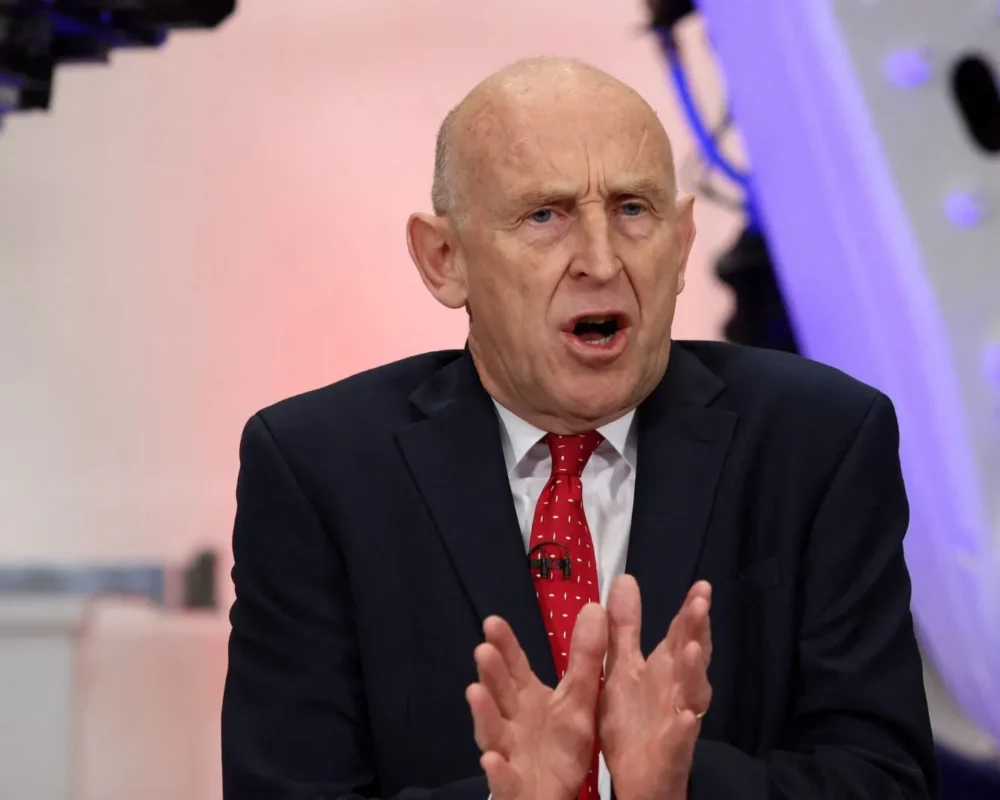
AI Minister addressing audience at UK government event focused on artificial intelligence advancements.
The elevation of an AI Minister to the Cabinet Office appears like a triumph for the technology. But Kanishka Narayan is, essentially, on his own island, floating between Andy Burnham’s inner circle and the Department for Business, Innovation, Science and Trade (BIST) – unmoored from AI’s former home, the Department for Science, Innovation and Technology (DSIT), which is being dismantled.
Back in 2024, Keir Starmer united Whitehall’s digital transformation efforts under one department, but Burnham’s reorganisation reverses this logic. AI has, of course, advanced tremendously in the last two years and has emerged as a behemoth, perhaps too outsized for a subsidiary office in a broad department. However, we risk being left with a minister with a lot of responsibility but little authority. This poses a real threat to AI’s wide-reaching potential – for efficiency, productivity and attracting capital.
There are three questions Narayan must answer to spearhead Britain’s AI strategy.
We risk being left with a minister with a lot of responsibility but little authority
First, and most important, what is the Government’s strategy for making the most of AI’s potential? Does it see this technology as simply a tool to enhance Whitehall’s productivity, or something more? How will trade-offs between different priorities be made, and who will make them? With responsibility for AI now split across multiple departments and teams, the new minister will need to work hard to harmonise this cacophony into a coherent strategy.
Narayan is jointly appointed to the Cabinet Office and BIST, attends Cabinet, and leads the new AI Taskforce. The Taskforce, alongside responsibility for the AI Security Institute (AISI), will sit in the newly created Office for the Prime Minister and the Cabinet. The Taskforce is chaired by Lord Vallance, of Vaccines Taskforce fame, who reports directly to Burnham, while the Taskforce itself reports to Narayan and the Cabinet Secretary. Meanwhile, BIST takes responsibility for science, innovation and commercialisation, and the Government Digital Service moves to the expanded culture and digital department.
The AI Taskforce is clearly intended to follow the model of the Vaccines Taskforce, which succeeded by bypassing departments. But Covid vaccines represented a single and measurable outcome, backed by a hefty budget. The impact of AI, by contrast, diffuses across the government and economy – which is illustrated by the sprawl of Burnham’s AI machinery. The precise authority structure remains, frankly, unclear.
Beyond the inscrutable reporting structure, this is a jagged arrangement strategy-wise. Each arm conveys a different fundamental approach to what AI is and what it is for. In the centre of government, AI is a broad-purpose tool, or, ambitiously, a new foundation for reforming the state. In BIST, AI is a cornerstone of industrial policy, aiming for overall economic growth. The AISI is more specialised but represents a key point of leverage Britain could hold in the AI stack: strategic evaluation of risk, culminating in better national security and worldwide prestige. And – not saving the best for last – AI in the Digital Service looks like little more than a new chatbot for government services.
I glean, however, that Burnham views AI as something he can embed throughout the government machine to improve the provision of public services. This risks an obsession with the technology as a cost-cutting device for Whitehall – which, of course, would be welcome if delivered successfully. But without an equally strong industrial and commercial strategy, this focus could come at the expense of AI as an overall driver of British growth, enterprise and international standing. We are yet to hear what will happen to DSIT’s £500 million Sovereign AI Fund and its semiconductor and compute strategies.
If AI is seen merely as a way to make Whitehall more efficient, Britain risks falling into over-dependence, with considerations of our global strategic advantages falling to the wayside. Alignment is far from a black-and-white question for Britain, which sits between the US’s bullish dominance in compute power and the EU’s heavy regulation.
Put frankly, Britain’s advantage is not attempting to catch up on compute power or frontier models. Nor is it to compete on blanket regulation. Britain’s approach must be subtler – and this requires significant clear-headedness from the government.
Sovereignty is an exciting word – but optionality might be the more important one at present. Britain should co-operate with the US on security, advanced models and chips – but avoid over-reliance, especially in light of the US’s brief export controls on Anthropic’s most powerful models. We should remain in worldwide dialogue in the interests of trade. And perhaps most importantly, we should ensure our critical systems can be moved across suppliers, which may be aided by the availability of near-frontier open weights. To ignore these choices would be to undermine Britain’s future.
Narayan’s lack of determined authority may leave him as the public face of AI without control over the policies that govern its public costs. These are real, and there will be many short-term losers: workers faced with difficult changes, residents worried about proximate data centres and creators fighting for rights to their work.
With a population that is broadly sceptical of AI, benefits appearing only in productivity stats and corporate profits will achieve nothing, especially amidst widespread fear of AI-induced job losses. To succeed, Narayan must be a spokesman and not a salesman; he must offer a moat to the public against the charge of the AI brigade. Data centres require grid connections and planning consent, both granted by people who live nearby. If the benefit-sharing is poorly handled, no working AI strategy can ever emerge. AI’s poor communication – stuck between tech bros on X and doomer headlines – could herald its stagnation or even its downfall. The public cannot be expected to naturally trust AI, and this trust must be genuinely won.
AI’s potential is too extensive to be confined to Whitehall efficiency; it should drive growth, industry, and confidence in Britain. But can one minister, with a deceptively specific brief, manage a technological revolution? Until he can define what AI is for, where Britain stands, and how we should pay for it, his office is really just a flashy title.


Britain is looking for the effects of artificial intelligence in all the obvious places: redundancies, vacancies and unemployment numbers. So far, there is little evidence of dramatic change in overall headcount. The Office for National Statistics reports that most British businesses using AI have not changed the size of their workforce, even as AI adoption […]

Sam Altman, CEO of OpenAI, and Dario Amodei, CEO of Anthropic, have called for increased regulation of AI to slow down the pace of development. They warn in apocalyptic terms of the dangers their own technology poses. After Jacob Coxon, a researcher, resigned from Anthropic, stating that he could no longer justify working on AI […]
The Victorian economist William Stanley Jevons was clearly a worrier. When, in 1863, the Tyneside arms-maker Sir William Armstrong calculated that Britain’s coal would run out in 212 years, Jevons checked the sums. Armstrong had assumed the country’s appetite for coal grew by the same tonnage every year. But it actually grew by the same […]