The SNP’s recipe for empty shelves
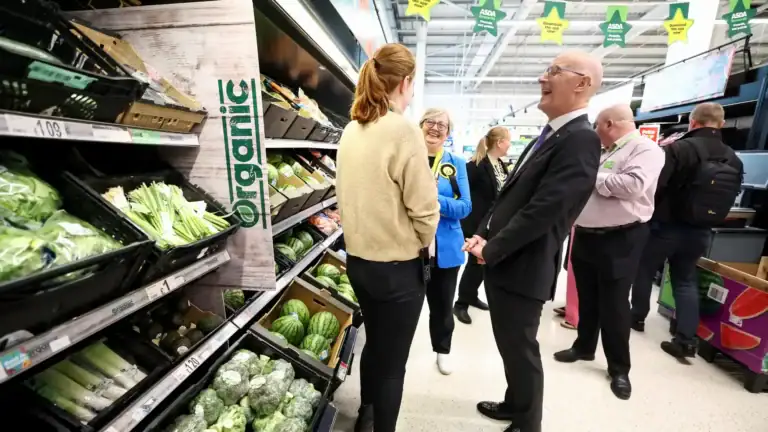
Jeff J Mitchell/Getty Images
It’s back to the 1970s. The Scottish First Minister John Swinney proposes the adoption of price controls on supermarket groceries to ease the pressure on the cost of living.
The SNP’s Manifesto, for the election to be held on May 7, declares:
To help with the cost of the weekly shop, we will establish legal price ceilings on a basket of essential food items such as bread, milk and eggs, ensuring that basic necessities for a balanced diet are affordable.
It adds:
The escalating cost of living crisis, particularly the sharp rise in food prices, requires targeted intervention to protect people’s ability to afford essentials. This is vital to ensure that everyone can get a balanced diet that meets nutritional needs. That’s why we will take a public health intervention to establish statutory price ceilings on a basket of 20 to 50 essential food items at large supermarkets, such as bread, milk and eggs to provide tangible relief to families struggling with grocery bills, ensuring that necessities for a balanced diet remain affordable.
The Scottish Retail Consortium has responded that Scotland’s supermarket food prices are already among the most affordable in Europe.
The Consortium added that higher prices were a result of rising supply chain and commodity costs and ‘relentless rises’ in statutory costs from governments. Supermarkets are fiercely competitive and already ‘run on very slim margins’.
Might it not get a bit tricky if the price suppliers had to offer meant they were running at a loss? Could that not lead to shortages? Ah. The Scottish Government has already thought of that. The SNP Manifesto adds:
Crucially, this will be implemented alongside a robust support framework designed to shield Scottish producers with support mechanisms and monitoring to ensure that this will not be allowed to impact on farmers and food producers and we will work with them to ensure Supermarkets make the change.
Thus we get sucked into the bureaucratic vortex. Price controls kill off supply. Then subsidies are poured in to bring it back to life. But if the supermarkets are funded to produce lower prices, then what is the fate of the corner store? The small independent grocers would be under even more pressure than they already face. Or if the price controls were applied to them too, then the subsidies would have to be larger. Each additional intervention creates more problems than it solves.
The state does ever-more meddling in the price of eggs. Commissars descend on the shopkeepers to ensure they are complying with the latest directive. The Scots stare at empty shelves and face a higher tax bill to pay for it all.
Why has this misguided proposal been put forward? I’m not sure which is a worse explanation. That Swinney really believes this madness. Or if it is purely cynical electoral opportunism that he knows can’t work. Before we even get into the economics, it would break the UK Internal Market Act. So unless there was some special dispensation, it could not be implemented. This suggests that Swinney feels he can safely advocate it, aware that it is a gimmick that would never face being tested by reality. Just a contrived battle with Westminster.
Yet just suppose it was introduced. What evidence does Swinney have that price controls have ever proved an effective solution to inflation?
The Institute for Fiscal Studies, hardly an outfit of free market zealots, says:
If these ceilings are set above market prices, the proposals could turn out to be toothless. But if these ceilings are below prevailing market prices, this proposal would be very radical and risky.
.
Unless there are specific anti-competitive reasons for elevated prices, ceilings could have the unintended consequence of creating shortages of these items, by causing demand to exceed supply.
Cast your mind back to 301 AD. The Roman Emperor Diocletian issued an Edict on Maximum Prices. It must have seemed like a good idea at the time. There was no lack of enthusiasm in the implementation. The death penalty was imposed for profiteers and speculators who refused to fall into line. They were the fall guys. Goods disappeared from the markets. But Rome’s food merchants were not the true culprits. The state itself was to blame. The solution to debasing the coinage was to cease debasing the coinage.
Milton Friedman offered this analogy:
Think of a kettle on your stove and it’s got a cover on it. The boiling water is threatening to throw the cover off. The obvious sensible thing to do is turn down the heat under the kettle. Another thing you can do is take a brick and put it on top of the kettle, and at the same time turn up the heat.
.
That’s precisely what President Nixon did in 1971 when he simultaneously put a brick on top of the kettle by freezing prices and wages, and at the same time launched a more expansive monetary and fiscal policy which turned up the heat under the kettle.
Between Emperor Diocletian and Richard Nixon, there have been plenty of other instructive price control failures. A volume entitled ‘Forty Centuries of Wage and Price Controls: How Not to Fight Inflation’ by Robert Schuettinger and Eamonn Butler offers case studies from Medieval Europe, the French Revolution, the 19th Century, the Nazis and the Soviets.
The Scottish Enlightenment gave us such champions of liberty as David Hume and Adam Smith. How ironic that it should be from that country that demands a return to the dark age of control and regimentation.
The idea that we can lower prices simply by issuing an order for lower prices is endlessly seductive. Unprincipled politicians in every era have found popularity by offering that bogus prospectus. But how many times do we need to be shown the futility of the policy? It always fails. Let’s hope the Scots don’t have to rediscover that lesson yet again.

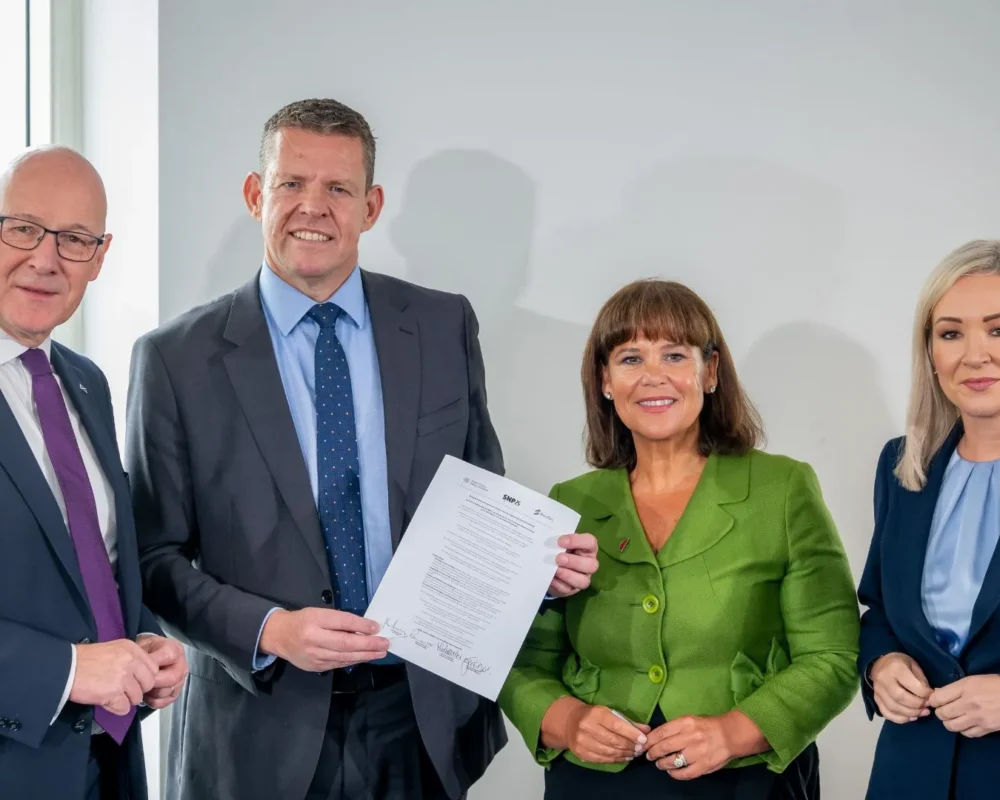
Did you ever hear the one about the leaders of Sinn Fein, Plaid Cymru and the Scottish National Party holding a press conference? It sounds like the beginning of a bad joke, but yesterday, the UK’s foremost regional separatists came together in Cardiff to pressure Andy Burnham into facilitating the dissolution of the nation. Michelle […]
Channel 5 has announced that it is preparing to dramatise the Peter Murrell embezzlement scandal. The 90-minute film will be made by Wonderhood Studios, whose most recent work was the well-received ‘Downfall’ about Huw Edwards. Not much is known about the production as yet, but those hoping for a deep dive into the complexities of […]

The ‘Burnham effect’ that propelled Labour to victory in Makerfield is only the latest example of regional and devolved democratic leaders who are miles more popular than their opposite numbers in Westminster. Political talents as diverse as Boris Johnson and Alex Salmond prospered after being sprinkled with devolved political fairy dust. So do these roles […]