The rise of the career hypocrite

Photo: Simon Ackerman/Getty Images
Anthony Scaramucci is set to tour the UK later this year, to promote his new book, ‘All the Wrong Moves’. People from cities such as London, Brighton and Manchester will have the opportunity to bask in the knowledge and experience of a political heavyweight who lasted less than a fortnight in the job.
Sniping comments aside, his tour reveals a deeper, systemic issue with the current political system. There now exists a certain breed of commentator that is eager to criticise the current framework of politics while failing to take responsibility for their role in creating it.
This is evident in Scaramucci’s narrative. His critique of Donald Trump, namely the spectacle, shamelessness and chaos of his regime, rests on the assumption that he observed these things from the outside. But this is not the case. Scaramucci joined the administration willingly and served as its public face. He did not just witness the Trump phenomenon. He was, albeit briefly, part of it. It is rank hypocrisy to criticise everything about Trump, from his policies to his style of governance, while simultaneously having helped to create him.
But this is not an isolated problem. This type of political commentator has become increasingly common as the tectonics of British politics have shifted. No one wants to be blamed for having created the very system Britain is now looking to replace, and so through podcasts, books and op-eds, many are seeking to distance themselves from their roles in bringing about our decline.
Perhaps the best example of this in Britain is the podcasting duo of Alastair Campbell and Rory Stewart. Campbell’s ceaseless commentary on the degraded state of public discourse, for instance, rests on the assumption that political spin and the manipulation of the media are things that happened in politics, rather than things he championed. However, Campbell did not sit back and observe the creation of a post-truth age. He helped to create it through the Blair years and was even dubbed the ‘King of Spin’. Our politicians’ reluctance to answer basic questions directly, which has come to define modern political communication, is due more to New Labour and Campbell than to any other recent political force.
Similarly, Stewart is a figure who snipes from the sidelines, while failing to recognise that there is blood on his hands too. On Newsnight just a few months ago, he lambasted the rise of Reform UK and popularity of Nigel Farage, claiming that if Britain continues down this road then ‘you end up with something… like fascism’. Again, however, Stewart fails to take accountability for his role in putting in place the conditions that allowed Farage to rise.
Under the Conservatives’ watch, immigration skyrocketed, houses went unbuilt and the welfare state ballooned out of proportion. Such issues angered people to the point of rejecting our traditional two-party system. Yet Stewart frames himself as the innocent bystander, who merely watched the system go up in flames, rather than admitting he helped to make it combustible.
The pattern in each case is the same. A figure who helped mould the political landscape into what it is today reinvents himself as its most sanctimonious critic.
While these figures sneer at those trying to fix the problems they inherited from the comfort of their moral high ground, they refuse to take accountability for their part in creating them. It’s time more of us called out this practice for what it is: hypocrisy.

What explains prosperity? That is the most important question in economics. It was this question that led Adam Smith to write ‘The Wealth of Nations’. Before Smith, the physiocrats like Turgot explored it in works like ‘Reflections on the Formation and Distribution of Wealth’. It is this question that makes economics not only interesting, but […]

Just as there is a battle on the Right in Britain, so too is there a battle inside the Conservative Party for what the party should focus on. There are those who are concerned about the threat of political Islam, the damage to the social fabric of the Boriswave and other elements of mass immigration, […]
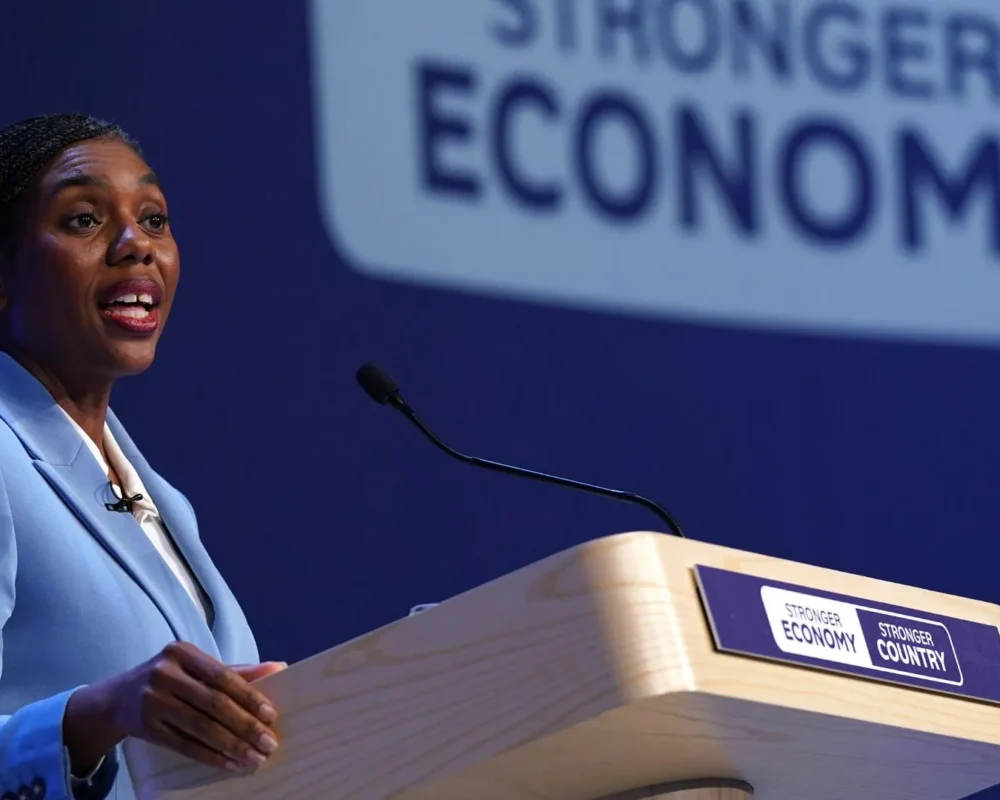
When William Buckley went on the front page of Time magazine, the title was simple: ‘Conservatism Can Be Fun’. That is what Kemi Badenoch has done at this conference. Conservatism can be fun, can be serious and can learn from its old mistakes. But most importantly, what makes it the world’s oldest party is its […]