The real reason your rent keeps going up

Photo: Getty Images
Rents go up and up and up. That is how most people my age view their lot in the property market, particularly in London. A steady, year-on-year increase in rent eats up any increases in wages they earn and more. If you look at the statistics over the past few years, they’re right to think this.
A student who graduated in 2022 and moved to London will have seen their rent increase by around 28% over the past three years.
A 60-year-old running a firm with a London office would notice that his net effective rent is nearly as low now as it was back in 1990, 35 years ago. In contrast, 1990 residential rents in London were around £620 a month; a quarter of what they are today.
Office rents have risen 15% in nominal terms over 35 years. Accounting for inflation, that’s a real terms fall of two-thirds. This isn’t even a consequence of COVID: if our 60-year-old CEO signed the lease in 2019, he’d be paying less than in 1990 in effective terms.
So, this raises the question. Why have the rents for offices stayed flat while residential rents increased so much? There are countless reasons, but one we can say is that it has been materially easier to build offices than to build residential units.
Wherever lots of offices have been built – Canary Wharf, the Square Mile or Croydon – it has always been where local authorities gave a free hand to developers. Often the biggest problem developers have faced is oversupply in these markets – a pretty good problem from a renter’s perspective. While the office market is not a free-for-all, its regulatory burden is a fraction of that weighing down the residential market.
Across the country there are few places where enough residential units are built. At all levels of government – national, mayoral or local – there is constant interference with housing. Nowhere is this more extreme than in London. The last decade has seen housing starts fall from 60,000 to likely less than 5,000 this year. The government’s London target is 88,000 units per annum; at the current start rate they’ll build 2025’s quota by the time a child born today is ready to go to university. That is just the number we need to build to stop things getting worse; if we want to start depressing rents and making homes affordable in London, we will need to build a lot more than 88,000 per year.
There is no silver bullet. There are many things which reduce delivery and increase rents. Most of these reasons start with regulations which in isolation seem sensible.
Some rules are made to determine what you can do with houses you build and to help tenants. The new Renters Rights Act allows tenants to challenge private rents. Do you think this makes it easier or harder to justify building new homes?
Some rules are made to ensure certain features are provided. For example, new apartments need to have a balcony; this alone adds around £40,000 or £220 per month to the clearing price or rent, in a country where it rains most days.
Some rules are made to ensure that developers ‘pay their fair share’. Developers are expected to pay a forest of taxes; affordable housing contribution, apprenticeship levies, CIL, MCIL, other S106 obligations, stamp duty, environmental offsets, conservation project contributions. This is all before you pay capital gains and corporation tax. London local authorities even conduct late-stage reviews where if you make too much profit the council will take 60% above what they think is ‘fair’. The problem is that the market doesn’t care what government or councils think is ‘fair’; the market will invest if their profits here are better than the next best option and they won’t if it isn’t. If the UK doesn’t compensate them, the pension funds, sovereign wealth funds and others can invest in building houses in Dublin, Paris or half a hundred other cities.
The point here isn’t to say that this policy or that policy is stupid – though many are. The point is that if we want more houses built, we need to make it easier to build them. It will cost around £20-30 billion a year to match that 88,000 homes target; this isn’t money the state can afford to provide – and if the right rules are in place, it doesn’t need to.
If the Government reduces regulation (and thus cost), more homes will be built. The private market is easy to predict because it responds to incentives. The best way to do this isn’t on the demand side. High rents are the symptom, not the cause of the problem.
We need to build 300,000 homes a year to meet Labour’s target of 1.5 million homes by the end of the parliament. This can be done. Ireland built over 30,000 homes last year and will build more this year; that is equivalent to the UK building around 400,000 homes. If they hit their 2025 target, they’ll build the equivalent of over 520,000 homes. Ireland isn’t a perfect system; but its one where the government has made repeated efforts to make it easier to build.
There are enough offices because the state didn’t interfere with people building offices. If the state doesn’t interfere with homes, enough will be built.
If we had kept residential rental growth to the same level as office rents, you would need to pay £710 a month to rent in London today, not £2,250 a month. For the last 35 years, we have run a real-time experiment of a less regulated office market side by side with an increasingly regulated housing market. The results are in, and it isn’t pretty.

When Waitrose suspended mackerel sales over fears of overfishing, it was a warning. Weeks later, M&S followed suit. And as stocks continue to plunge, retail giants like Sainsbury’s and Morrisons sit poised to take similar action. The crisis in our seas has finally hit the supermarket shelves, but in reality, it runs far deeper. Today, […]
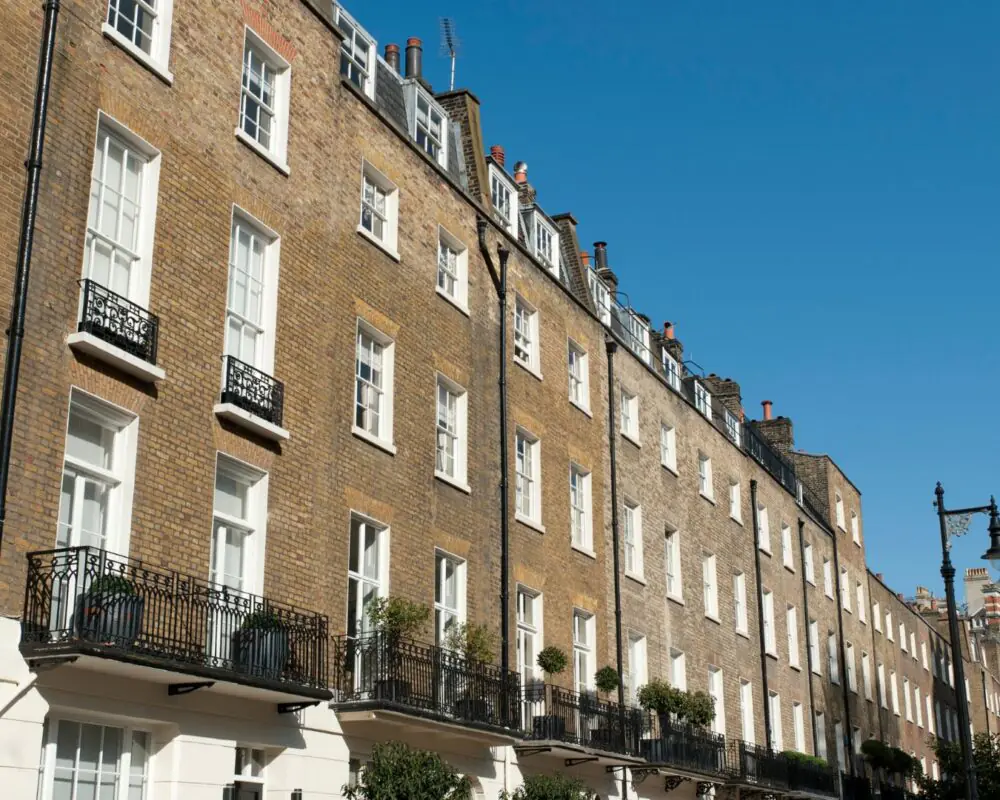
This week, Nimby Watch is in central London… Okay then, where are we this time? We’re in Belgravia, one of London’s swankiest neighbourhoods. Don’t say I never take you anywhere nice. Okay, fine. But neither one of us can afford anything here, as well you know, and I’m including coffee when I say that. Well… […]

The Government is consulting on a requirement for the provision of pay details in job advertisements. This is part of a wider consultation being run by the Office for Equality and Opportunity (OEO) on equal pay and pay discrimination. The remorseless expansion of the scope of equality legislation never slows, driven as it is by […]