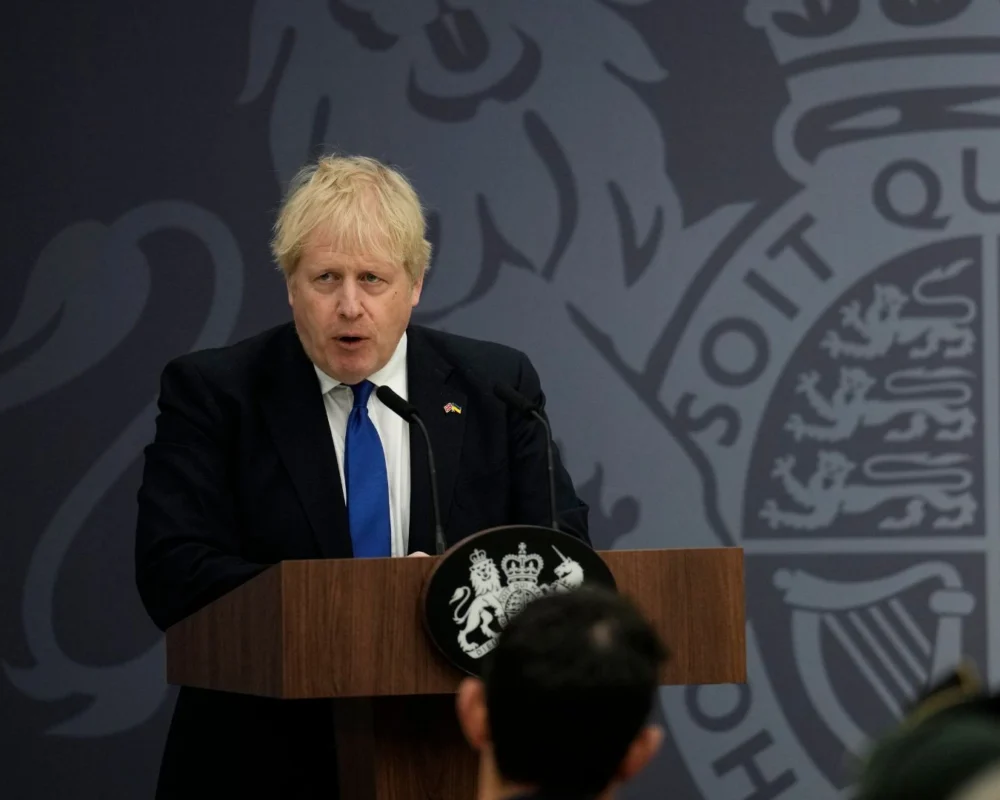
With the air of a parent trying, but not quite managing to connect with their wayward teenager, Keir Starmer is attempting to keep up with Britain’s shifting Overton window. In his days as a human rights lawyer, Starmer would not have dreamed that in years to come, he’d be calling on his European neighbours to reform the European Convention on Human Rights (ECHR) to make it easier for him to deport illegal immigrants.
In an opinion piece in The Guardian, he and his Danish counterpart, Mette Frederiksen, have urged other European leaders to agree on a ‘modernisation’ of how the ECHR can be interpreted by its signatories. Today, David Lammy and Richard Hermer will join delegates from other nations in Strasbourg to argue for certain clauses in the agreement to be amended. The two Articles which Lammy and Hermer will say should be reformed are 3 and 8: the former protects against torture, inhuman and degrading treatment, and the latter protects the right to a family life.
About time. Lammy and Hermer’s European trip coincides with the release of a report into the British asylum system by the National Audit Office (NAO). The paper analysed a sample of 5,000 asylum cases lodged almost three years ago, and found that over half still did not have an outcome. The NAO found that 35% of people in the sample had so far been granted protection, while approximately 9% were removed from the UK – only about three-fifths of those whose asylum applications were unsuccessful.
In a nation blighted by headlines about the residents of taxpayer-funded migrant hotels going on to commit acts of sexual violence on British streets, an asylum system this inefficient in removing those with no right to be here is unacceptable for many voters.
Certain Labour ministers patently recognise the importance of controlling migration for their future prospects – the issue is now up there with managing the economy as a top priority for British voters. But just how effective will the Government’s attempts at unclogging the migration system prove?
Lammy and Hermer are right to highlight the corrosive effects of Articles 3 and 8 of the ECHR. They have both acted as barriers to deporting some particularly nasty people.
This summer, it was reported that two Brazilian fugitives – Marlon Martins Dos Santos and Nicolas Gomes De Brito – had successfully evaded deportation under Article 3, due to prison conditions in their home country putting them at risk of torture or inhuman treatment. We’re not talking about shoplifters here. Dos Santos was sentenced to 14 years in Brazil for repeatedly raping a girl of 5, but had fled to the UK before he could be imprisoned. De Brito, who fled to the UK in 2019, is wanted by Brazilian authorities for allegedly sanctioning the murder of a rival gang member.
Article 8 of the ECHR was invoked in a now notorious case to prevent the removal of an Albanian criminal. His son’s special needs, including his selective dietary habits, were used to successfully argue in a first-tier tribunal that the boy would struggle to cope in Albania, and that deporting the criminal back to his home country would breach his right to a family life as defined under the ECHR. Although the Home Office overturned this on appeal, the case again shows how the ECHR makes it harder to deport criminals.
The problem with Labour’s approach is that it is rooted in the delusion that our deportation problem can be solved by us and other European states reforming the institution from within. For Starmer, the post-war European settlement on human rights remains sacrosanct – to withdraw from it would be an unforgivable dereliction of moral duty. He displayed this attitude in the article he co-wrote with Frederiksen:
This week European ministers, including from the UK and Denmark, are meeting in Strasbourg to push for a modernisation of the interpretation of the European convention on human rights – so that the convention system, which we believe in, can evolve to reflect the challenges of the 21st century.
Europe has faced big tests before and we have overcome them by acting together. Now we must do so again. Otherwise, the forces that seek to divide us will grow stronger.
Standing up to Strasbourg in this way may feel radical to the likes of Starmer, but it falls far short of the rapidly evolving opinions of many, not just in Britain, but across the West. With Donald Trump dismissing Europe as a ‘decaying’ collection of nations, and JD Vance lambasting European leaders for their poor record on free speech and defence, Euroscepticism has become globalised.
Reform UK and the Conservatives are further ahead of the curve, with both having pledged to withdraw from the ECHR completely in the event of either party forming a government. While Britons are still generally opposed to the idea, almost half feel that it would have a positive impact on our sovereignty and ability to remove illegal migrants.
For those still uncertain, research authored by Peter Lilley for the Centre for Policy Studies shows that withdrawal may be our only option. The reality is that regardless of how loose an interpretation a country is able to take of the terms of the ECHR, any amount of responsibility abdicated to a foreign court inevitably politicises judicial decision-making and erodes sovereignty.
The arguments against leaving are often either sensationalist, portrayed as though leaving the Convention would lead to a fascist, post-rights dystopia; or centre around constitutional logistics, that withdrawal would breach our obligations under the Good Friday Agreement (GFA) or Trade and Cooperation Agreement (TCA) with the EU. The last I checked, non-member states such as Canada or New Zealand hadn’t lapsed into authoritarianism, though I suppose that depends on your reading of wokery. And fortunately, neither the GFA nor TCA explicitly require us to be signed up to the ECHR.
Outside the yoke of Brussels, Britain is uniquely placed among European nations to restore sovereignty to its judicial system. Yet unless the Prime Minister is able to overcome his biases, then any trip to Strasbourg or Brussels to beg a recalcitrant, social democratic elite to grant us greater control over our affairs will be seen as the pathetic display that it is.
This Government is hardening its line on migration because it hopes to stem the rise of the ‘Far Right’, which despite what Guardian headlines would have you believe, does not yet exist in any meaningful way in mainstream politics. Though the bitter irony is that with each speech or manoeuvre that is not followed by visible action, the crisis at our borders intensifies, and Starmer might well unleash those forces he has spent his career fighting.