The City needs a Chancellor who understands growth
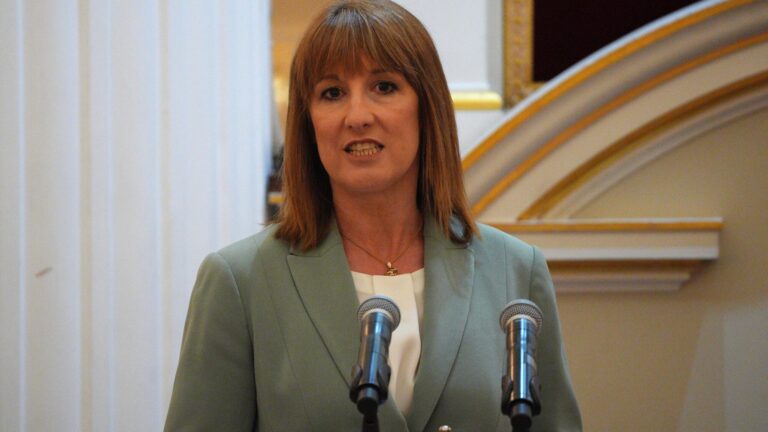
Photo by Carl Court via Getty Images
Mansion House speeches have taken on a grimily predictable format in recent years: heavy on promises, but short on tangible deregulation. This year’s speech by Chancellor Rachel Reeves was no exception. It was full of praise for the financial services sector, and repeated the Government’s commitment to regulate for growth, but ultimately offered little more than tinkering with the City’s heavy and growing regulatory burden.
The timing is particularly apt. The Chancellor’s speech comes as the UK economy faces mounting pressures that were entirely foreseeable. The following day, consumer prices were reported to have accelerated by 3.6%, driven by transport costs and a 4.5% rise in food inflation. These changes continue a trend of economic disruption that companies had been warning of since the 2024 Autumn Budget, when employers were hit with a steep rise in National Insurance contributions from 13.8% to 15%, and a drop in the threshold from £9,100 to £5,000.
The reaction from companies has been swift and predictable. In a survey conducted by Censuswide, 46 percent of businesses said they would raise prices to offset the additional costs, and one-third of businesses planned to cut jobs as a result of the NI rise. Large companies such as Lush, which employs 3,600 people in the UK, had to pay an additional £2.7 million a year, and Kwik Fit calculated that the adjustments would cost £5 million. 77% of businesses surveyed reported higher staffing costs by late May 2025, resulting in a fundamental repricing of employment risk.
With this backdrop of self-inflicted economic strain, Reeves’ Mansion House speech is more a tactical adjustment than radical reform. Requiring pension funds to invest more in UK investments through new ‘megafunds’ is an example of financial nationalism, which confuses capital formation with capital reallocation. By mistaking the shifting of existing savings for the creation of new productive investment, it risks inflating asset prices without generating additional economic output. This diverts attention from the deeper reforms needed to make the UK genuinely attractive to capital on its own merits. When private investors consistently choose to deploy resources elsewhere, the state’s response should be to address underlying structural barriers, not to constrain choice through regulatory devices.
This disregard for underlying problems is best exemplified in the attempt at mortgage market liberalisation; reducing lending requirements and expanding government-backed guarantees. Rather than addressing the housing supply shortage, these measures inject additional credit into an already distorted market. The inevitable outcome (more inflation in house prices) will further increase our mounting cost of living.
The deregulatory elements of Reeves’ programme, while welcome in principle, lack the scope and urgency that current circumstances demand. Modest adjustments to the Senior Managers and Certification Regime and minor changes to the Financial Ombudsman Service fall short of fundamental reform. Meanwhile, the exodus from London’s equity markets continues unabated, with more than 150 companies leaving the London Stock Exchange or moving their primary listing since the start of 2024. Only 18 new listings occurred last year, the lowest figure since records began in 2010.
This capital flight likewise reflects underlying issues barely acknowledged by Reeves. The government’s fiscal position, limited by spending commitments and rising debt service costs, largely precludes meaningful tax reduction. Instead, businesses face higher employment costs and the constant threat of new taxes, whether from business rates, windfall taxes or further restrictions on entrepreneurial activity. This creates a policy environment that promises growth while undermining the conditions needed to achieve it.
A further structural problem is the UK’s financial regulatory architecture, which the Government has shown only limited interest in addressing. Partly due to EU regulation and partly due to post-financial-crisis changes, the UK has adopted a ‘twin peak’ approach to financial regulation in which the Financial Conduct Authority (FCA) acts as the conduct regulator and the Prudential Regulation Authority (PRA), within the Bank of England, regulates systemically important banks and insurers for financial stability risks. As the volume of financial services regulation has increased, so has the remit of the FCA and PRA, and they are now considered among the most powerful regulators in the world.
With the UK-EU trade deal barely touching financial services, and ultimately no post-Brexit exodus of jobs from the City, Brexit offered a golden opportunity to revisit and pare back heavy-handed EU-derived regulation of trading venues, financial products and Know Your Customer (KYC) checks. But deregulation has not materialised, despite repeated promises by Chancellors, principally because the FCA – which implements most regulation via its rulebook – is a risk-averse organisation with no incentive to deregulate and every incentive to goldplate regulation.
The Chancellor (or the Treasury Select Committee) can call FCA senior leaders in to scold them, but ultimately her political control over its actions is very limited. Attempts in the summer of 2022 by HM Treasury to take a ‘call-in’ power over FCA rules were fought and ultimately dropped, leaving a situation in which the Chancellor is helpless to stop the FCA undermining her growth agenda. A recent extension of non-financial misconduct rules to non-banks by the FCA demonstrates that it will prioritise its interpretation of its statutory objectives over any government steer to deregulate and prioritise growth. Yet even aside from the Chancellor’s meagre grip on financial regulation, the paucity of ambition in the Mansion House speech shows she has little real vision for the sector in the first place.

It has been reported that the UK looks set to follow the example of the EU in imposing tariffs on electric vehicles from China. This would be a mistake, for five main reasons. First, we have to look at the main reason why the UK is considering doing it. The EU is using its proposed […]

The UK-EU relationship must be viewed through the lens of the battle for the world’s operating system. There are three operating systems in the world. The first is a competition on the merits system where countries are free to engage in regulatory competition but inter-operate on the basis of mutual recognition and equivalence. This historically […]

Even before he became Prime Minister in July, Andy Burnham had talked about the country in institutional, positively mechanical ways. He promised to ‘give Britain the circuit-breaker it needs’, and said that his Number 10 North, part of the Office for the Prime Minister and Cabinet based – where else? – in Manchester, would be […]