The bond markets are right to be worried

20 May 2026
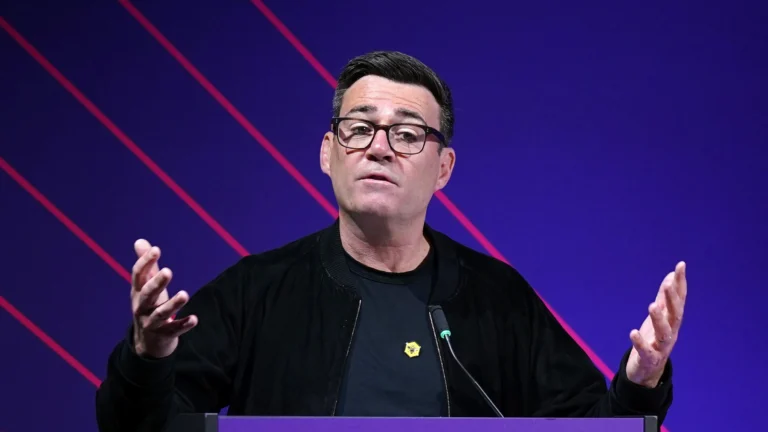
Ian Forsyth/Getty Images
Whether through pig ignorance or wilful blindness, politicians of all stripes have presided over the slow decay of Britain’s economy for at least the past two decades.
Under the Conservatives, taxation and public spending increased while growth and productivity slumped. It was largely this legacy that saw them ejected from office in 2024 when, after 14 years, many Britons felt less well off than they did in 2010. And with good reason: the bottom 20% of households have seen practically no growth in real disposable income since 2008.
On the eve of the election, just after he lost his seat, former Tory minister Steve Baker appeared on Good Morning Britain and delivered a legendary takedown of both Ed Balls and George Osborne for their roles in creating this economic settlement. During the tirade, he predicted that Labour’s attempt at fixing our limping economy would be ‘an absolute circus’. Prophetic.
Rather than deliver on their promise to make the tough decisions necessary to get Britain growing, Labour have done the opposite, retreating to their worst, most destructive instincts on tax and spend. Business, the powerhouse of economic growth, has been hamstrung by higher taxes and new regulation. The much-vaunted housebuilding revolution has been a total disappointment, with the Government set to fall 400,000 homes short of its national housebuilding target by the end of this parliament. Our welfare bill has continued to skyrocket as the Government has been bullied by its backbenchers into shelving much of its flagship Welfare Reform Bill.
Andy Burnham’s leadership ambitions are already costing ordinary Britons money
The International Monetary Fund (IMF) this week issued a stark warning to Britain’s policymakers. While the body upgraded its growth forecast for the UK – from 0.8% to 1% – it stressed that there is little room for broad cost-of-living support and that fiscal restraint is needed to keep us on a sound footing in the face of the war in the Middle East. If the Government ignores the IMF and refuses to rein in spending and borrowing, then a punitive market reaction will follow.
Any leader worth their salt would take note. But the chances of Keir Starmer tacking right on the economy when he has Andy Burnham threatening his leadership from the left are negligible. Yet while Starmer is by any metric a wholly uninspiring Prime Minister and has in no way meaningfully improved the economy, the markets have made it clear that they would rather a continuation of Starmerite decline than Burnham’s full-fat leftism.
So clear have the markets been in their disdain for Burnham that his leadership ambitions are already costing ordinary Britons money. Speaking at the Centre for Policy Studies on Tuesday, Shadow Chancellor Mel Stride pointed out that the markets jumped 18 basis points in response to news that Josh Simons was stepping down in Makerfield to clear the way for the Manchester Mayor’s leadership bid. Stride’s team have calculated that this ‘Burnham premium’ on borrowing costs would cost £5.4 billion cumulatively across the Office for Budget Responsibility’s five-year forecast – that’s £300 for every working household across Britain.
Part of the IMF’s prescription for our economic malaise is targeting our largest areas of public spending. We should apparently consider ‘replacing the triple lock with a policy of indexing the state pension to the cost of living’, and ‘improving the targeting of social benefits’. The markets therefore have reason to be worried, as the prospect of Burnham considering major welfare reform is about as slim as him going a minute without mentioning Oasis or Everton Football Club.
His trademark brand of ‘business-friendly socialism’, or ‘Manchesterism’, would be disastrous if implemented across the entire economy. His proposed agenda of nationalisation would be ruinously expensive and make Britain even less competitive, and his views on taxation are essentially those of a recently graduated Green Party councillor, having stated in an interview last year that ‘we’ve undertaxed people’s assets and wealth’. Burnham has also suggested that while he respects the Government’s fiscal rules, they should be changed to exempt defence spending, allowing for further increases. Someone really ought to explain to him that just because Andy Burnham thinks something shouldn’t cost money, that doesn’t make it so.
With Labour having given up on fiscal prudence altogether, it is up to the Conservatives and Reform UK to set forward their own credible alternatives. While the latter have promised to make the welfare system more targeted and lift people out of the dependency trap, the IMF won’t be happy that the right-wing upstarts are committed to the triple lock on the state pension – the cost of which is expected to rise by £80bn in today’s money by the 2070s. Similarly, the Tories have made positive noises on welfare reform but are reluctant to challenge the interests of their greying voting base.
September will mark 50 years since the Labour Chancellor Denis Healey went cap in hand to the IMF for a loan. If either the Tories or Reform hope to avoid that same fate in the event that either – or both – form a government, they could do worse than to follow the IMF’s advice sooner rather than later.

Nigel Farage, the Member of Parliament for Clacton and leader of Reform UK, has resigned, triggering a by-election in the constituency. This follows weeks of speculation regarding an undeclared £5 million gift Farage received before he became an MP, as well as other gifts he allegedly should have declared. Farage intends to stand in the […]
Most of those who, despite all discouragement, continue to invest in the UK have a sense of foreboding over an Andy Burnham premiership. We know that he will try to reconcile two irreconcilables. First, he will offer bold, exciting change from the uninspiring couple of years under Keir Starmer. Second, he will resist holding an […]

There was as much doubt about Labour’s leadership nominations as there was at the Accession Council in September 2022. Like the Privy Counsellors before them, Labour MPs have declared Andy Burnham leader with ‘one voice and consent of tongue and heart’. Although he won’t officially be declared Labour’s new leader until July 17, by securing […]