Sir Keir Starmer has announced his resignation as Prime Minister – either from mid-July or from mid-September, depending on how the Labour leadership process goes (coronation vs contest). He will thus have been prime minister for somewhere between about 730 and 800 days, following his victory by a huge majority in the 2024 General Election.
There have been many candidates in recent years for “worst ever Prime Minister”, and perhaps Starmer is not the strongest claimant on that. But he is, by almost any measure, the most hated Prime Minister ever. He will also surely go down in history as one of the least effectual Prime Ministers of all time.
The degree of hatred towards him is surely largely a response to his own sanctimonious, ultra-censorious attitude to other politicians. He made a huge deal in opposition about how dishonest, reckless and incompetent his Tory opponents were, in particular condemning Boris Johnson as reckless over policy during Covid and as mendaciously partying-whilst-people-died, whilst repeating so often that “Liz Truss crashed the economy” that she eventually threatened legal action for defamation.
Over the past year or so he has repeatedly condemned Nigel Farage as wicked over immigration or his criticisms of the police, and condemned Kemi Badenoch as irresponsible with the nation’s security over Chagos (attempting to patronise her in Parliament with talk of secret security briefings) and as a war-monger over Iran. Even in his resignation speech he declared that the Labour Party itself was “morally bankrupt” when he took over.
He pitched himself as a man of unimpeachable integrity, the straight-laced former Director of Public Prosecutions, a master of detail who cared only about doing what was right. He stood massively upon his own dignity if anyone dared suggest, for example, he bore some responsibility for the failure to prosecute Jimmy Savile.
Yet everyone in politics saw early, and the voters saw in due course, that the “man of integrity” was anything but. Under Jeremy Corbyn, Starmer was the strongest public advocate of overturning the EU Referendum vote, ablating the public will in the largest ever democratic vote in the UK and betraying the promise every major party had made to respect the referendum result. Having served with Corbyn (when other major Labour figures such as Rachel Reeves refused to do so), Starmer ran in the Labour leadership presenting himself as a friend of Corbyn’s and promising to carry forward his policies such as mass nationalisation – only then to eject Corbyn from the party and completely abandon Corbyn’s programme almost as soon as he won.
“He passes on to his successor a government headed rapidly towards fiscal crisis, potentially coming fourth in votes at the next General Election”
For me, the defining moment of Stamer’s political career came during Covid. Having agitated for earlier restrictions, an earlier (completely pointless and ineffectual) second lockdown, and self-importantly condemned Boris Johnson for his reluctance to impose them, Starmer bitterly opposed Johnson’s (belated and overly-delayed) decision to remove almost all restrictions in July 2021 in apocalyptic terms. He spoke of a “summer of chaos” in the NHS as it would overwhelmed by over 100,000 cases per day, declaring that this would be known as the “Johnson variant”. He was epically and demonstrably wrong, at a level few political judgements have ever been. Yet instead of withdrawing in abject humiliation and apologising, as he surely ought to have done, he and Labour continued to demand restrictions return through the Autumn and even into December as the over-hyped “Omicron” variant arrived.
Despite knowing for two years that Labour would certainly win in 2024, Starmer came into office with no concept of what the “change” or “growth” he so frequently promised might consist in or arise from. He seemed to imagine that simply being Keir Starmer instead of Johnson, Truss or Sunak, with his unimpeachable integrity, would make everything better, along with “spend even more money” even though the Tories in office raised spending and taxes to record levels.
Things rapidly unwound for him as PM. His response to the Southport murders angered huge numbers of people by appearing more focused on condemning his political opponents than on making the public safe. The government gave way on a series of public sector wage demands without securing any corresponding productivity improvements. His Chancellor’s 2024 Budget imposed huge further spending rises, with a few token cuts in welfare spending. But even his token cuts – such as on winter fuel payments – induced a backlash amongst MPs and were reversed. Labour MPs spent their whole political careers arguing against “Tory cuts and austerity”. They were completely unprepared, emotionally or philosophically, for coming into office in a situation in which the Tories had already raised spending far too high.
Two notions about Starmer’s period in office will probably stick in the imagination. First, he seemed almost pathologically attached to the idea that Britain should submit, in its laws, to some higher power. He tried to give away the Chagos in service of “international law”. The UK refused to assist the US in Venezuela and Iran not because the government had any principled objection in either situation, but because “international law” forbade doing so. International law appeared to stymie any alternative to the Rwanda scheme for asylum-seekers. And of course Starmer did all he could to submit to EU law in his “reset”.
Second was his two-tier approach to everything – earning him the “two-tier Keir” moniker. Two-tier policing. Two-tier attitude to Covid violations (Beer and curry, anyone?). Two-tier political response to gilt market spikes (“crashing the economy” when it was Truss; a normal Tuesday when it was Starmer). It was even two-tier as Starmer was ultimately undone. This was, ironically, the one time he tried something arguably bold – the appointment of Peter Mandelson as US Ambassador.
But this degenerated into a classic instance of his lack of integrity. He pretended he hadn’t known about Mandelson’s relationship with Epstein. He pretended he hadn’t misled Parliament to avoid the absurd fork he’d created in attacking Johnson: that an inadvertent misleading meant a lack of grip and thus obliged resignation. The whole business, from his overlooking of Mandelson’s own failings to his own evasiveness as the scandal evolved, was just another instance of his attitude that when he did things “that was different” and the same rules need not apply, whilst standing upon his own dignity and being sententious towards his opponents.
Stay informed with our free daily briefing.
His legacy? He passes on to his successor a government headed rapidly towards fiscal crisis, potentially coming fourth in votes at the next General Election, with the only real change of his term in office being the decriminalising of abortion up to birth. The average term of a Prime Minister from Theresa May to Sir Keir Starmer has been some 730-740 days – less than that of the average Premier League football manager (787 days). His successor seems unlikely to fare any better.
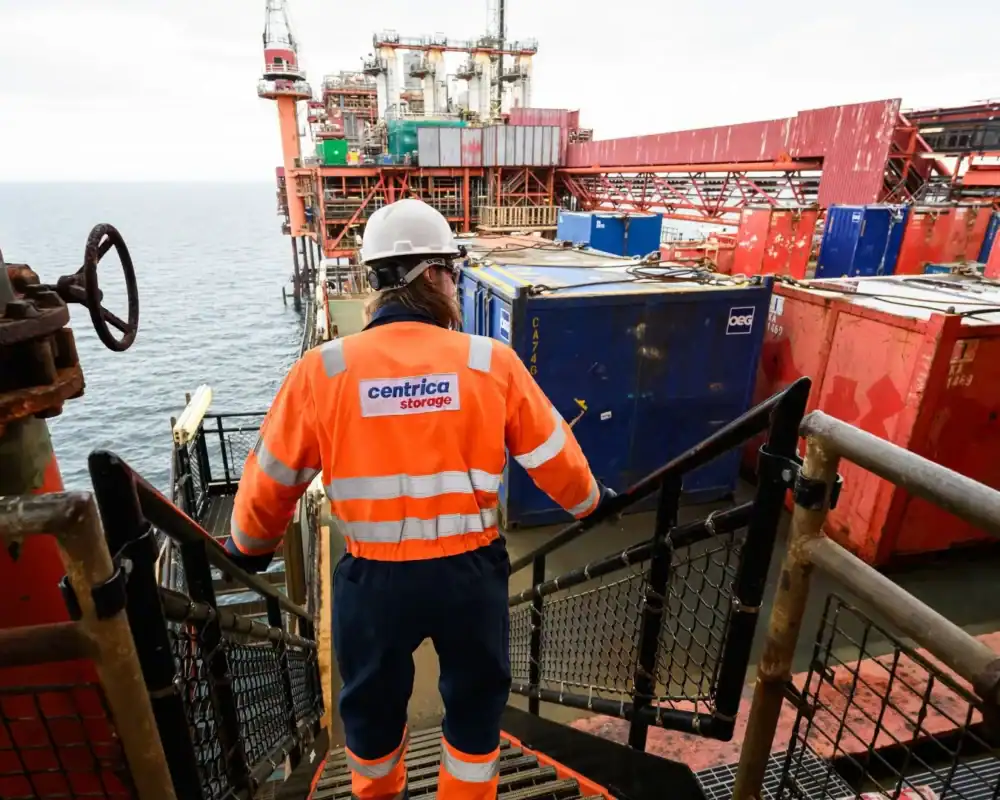
The UK only has 13 days worth of natural gas storage capacity, and it’s about to be cut in half. Britain needs gas storage now, and it will need it as North Sea extraction declines. Otherwise, we’re badly exposed to another energy crisis. Centrica has seemingly given us an easy out by offering to regenerate […]
22 Sep 2026
Economics
Shanker Singham
It’s time for Poland to join the G20
We live in an age of rapid economic change. New technologies are having an impact on the world that was unthinkable a generation ago; and industries are more mobile than ever, meaning that supply chains get reshaped, new centres of growth emerge and we see the resulting shifts in the balance of economic power. Yet […]
21 Sep 2026
Technology
Ben Ramanauskas
Trump is right about Britain’s technology laws
It’s been reported that officials in the Trump administration have given their UK counterparts a dressing-down over the Online Safety Act and the social-media ban for under-16s. As someone who previously worked on digital trade for the UK government, this does not surprise me. Both the Trump and Biden administrations have seen British laws such […]
Manage Consent
To provide the best experiences, we use technologies like cookies to store and/or access device information. Consenting to these technologies will allow us to process data such as browsing behavior or unique IDs on this site. Not consenting or withdrawing consent, may adversely affect certain features and functions.
Functional Always active
The technical storage or access is strictly necessary for the legitimate purpose of enabling the use of a specific service explicitly requested by the subscriber or user, or for the sole purpose of carrying out the transmission of a communication over an electronic communications network.
Preferences
The technical storage or access is necessary for the legitimate purpose of storing preferences that are not requested by the subscriber or user.
Statistics
The technical storage or access that is used exclusively for statistical purposes.The technical storage or access that is used exclusively for anonymous statistical purposes. Without a subpoena, voluntary compliance on the part of your Internet Service Provider, or additional records from a third party, information stored or retrieved for this purpose alone cannot usually be used to identify you.
Marketing
The technical storage or access is required to create user profiles to send advertising, or to track the user on a website or across several websites for similar marketing purposes.
To provide the best experiences, we use technologies like cookies to store and/or access device information. Consenting to these technologies will allow us to process data such as browsing behavior or unique IDs on this site. Not consenting or withdrawing consent, may adversely affect certain features and functions.
Functional Always active
The technical storage or access is strictly necessary for the legitimate purpose of enabling the use of a specific service explicitly requested by the subscriber or user, or for the sole purpose of carrying out the transmission of a communication over an electronic communications network.
Preferences
The technical storage or access is necessary for the legitimate purpose of storing preferences that are not requested by the subscriber or user.
Statistics
The technical storage or access that is used exclusively for statistical purposes.The technical storage or access that is used exclusively for anonymous statistical purposes. Without a subpoena, voluntary compliance on the part of your Internet Service Provider, or additional records from a third party, information stored or retrieved for this purpose alone cannot usually be used to identify you.
Marketing
The technical storage or access is required to create user profiles to send advertising, or to track the user on a website or across several websites for similar marketing purposes.