Capital Gains
Nobody is trying to copy the NHS

18 September 2026

Lady Justice Thirlwall at inquiry on Lucy Letby Murders – Thirlwall Inquiry via Getty Images
It reads like a horror story. A tiny baby projectile vomiting for four feet. Sinister rashes moving across newborn skin. A shifty nurse hovering over the cot of an infant with blood around his mouth. The looming threat in these sentences: ‘Mother D could see her daughter looked better and so went back to bed. Letby was on shift in the neonatal unit.’
But the Thirlwall Inquiry is not about serial child killer Lucy Letby’s crimes. It’s about a malignancy of another kind: NHS bureaucracy.
We must ask ourselves what it is about the NHS that leads to such cruelty. I can’t help but feel it has something to do with a model of state control that canonises the institution and dehumanises the patient
The report explicitly concludes that if the police had been involved earlier, lives could have been saved. Instead the Countess of Chester Hospital engaged in what Lady Justice Thirlwall describes as ‘an exercise in spin, steering the Board away from concerns about criminal acts’. The HR department raised concerns about moving Letby to a non-clinical role ‘given that she was backed by her union’. This was after 16 babies had mysteriously died or been seriously injured in her presence. Yet again and again staff at this hospital put the institution before the patients it was supposed to serve.
What the report also makes clear is that none of this was due to a lack of safeguarding. These deaths were subject to endless procedural theatrics. They were referred variously to a ‘serious incident panel’, a ‘child death overview panel’, a ‘review of neonatal deaths and stillbirths at Countess of Chester Hospital’, a ‘primary safety committee’, the ‘women and children’s care governance board’ and a Care Quality Commission investigation. But still they continued. Each of these reviews was as redundant as the awful jargon of their titles. As Thirlwall says: ‘All the safeguarding guidance in the world makes no difference to the safety of babies if those to whom concerns are expressed do nothing.’
It’s a travesty that all of this relates to some of the most vulnerable people in the world: sick babies and bereaved parents. This wasn’t just a failure of governance, it was a failure of basic decency. And, worse, it’s not the first time. The East Kent, Nottingham University Hospitals and the Shrewsbury and Telford Hospital NHS Trusts have all been subject to maternity scandals in which parents’ concerns were dismissed, doctors and nurses closed ranks and babies suffered avoidable harm. Maternity services at Leeds Teaching Hospitals NHS Trust and University Hospitals Sussex NHS Foundation Trust are currently under investigation. At some point we must ask ourselves what it is about the NHS that leads to such cruelty. I can’t help but feel it has something to do with a model of state control that canonises the institution and dehumanises the patient.
It should be said that there are flickers of integrity to be found in the Thirlwall Inquiry. Drs Brearey and Jayaram persistently raised concerns but were ignored or accused of bullying. They were vindicated in court. The collective refusal to believe that anyone would deliberately hurt a baby would be touching if the consequences weren’t so awful.
Likewise there are some things to be said for our behemoth of a health service. Its huge purchasing power enables it to buy drugs cheaply. It was able to administer vaccines effectively during Covid, but then so were countries like France with mixed social insurance schemes. And the enormous amounts of data it holds mean it is well-placed to benefit from advances in AI. For example Chelsea and Westminster Hospital was able to increase theatre utilisation from 73% to 86% and reduce waiting lists by 28% using Palantir technology.
This example does, however, expose another major flaw with a nationalised health service: it is uniquely vulnerable to political attack. Palantir has become caught up in the culture wars due to its use by ICE agents in America, which has nothing to do with its use for completely different purposes in UK public services. A cross-party group of MPs is calling for the NHS to break its contract with Palantir.
The company does itself no favours with its branding (it’s named after an indestructible dark crystal from ‘The Lord of the Rings’) and its founder’s apparent belief in the antichrist. But what should matter in a rational system is outcomes. If this technology gets patients treated faster, discharged faster and reduces waiting lists then arguments about US immigration policy should not be allowed to stand in the way of its wider adoption.
The Letby case is another example of how the health service invites politicisation. Her guilt is now contested by those who, for understandable reasons, have no faith in ‘the system’ and refuse to believe a seemingly ordinary woman could be a murderer. What is certain is that she was found guilty in two separate trials and that the ongoing doubt is prolonging misery for the victims’ families. If there’s anything about this country that can genuinely claim to be the ‘envy of the world’ it’s our justice system. English common law has been adopted internationally and London is sought out as an arena for dispute resolution by global companies. Nobody is trying to copy the NHS.
Whether you believe Letby is guilty or not, the Thirlwall Inquiry puts beyond doubt that the Countess of Chester Hospital was culpable in these deaths.
I will leave the final words to the mother of Baby H, who was born at 34 weeks and four days, quite early but an age at which the vast majority of children survive with no complications. Baby H swiftly deteriorated after birth and was put on a ventilator without her mother’s knowledge. When she complained, staff blamed the mother, who was in a wheelchair, for taking too long to come to visit the neonatal unit. Lucy Letby fashioned a morbid ‘memory box’, containing a hospital wristband and a teddy bear even though the child wasn’t dead (and thankfully survived after being transferred to another hospital). Baby H’s mother told the inquiry: ‘it really isn’t easy to put into words to truly convey the enormity of it… It’s affected my trust in hospitals and the health service very, very deeply.’
We should all share that mistrust and demand change.
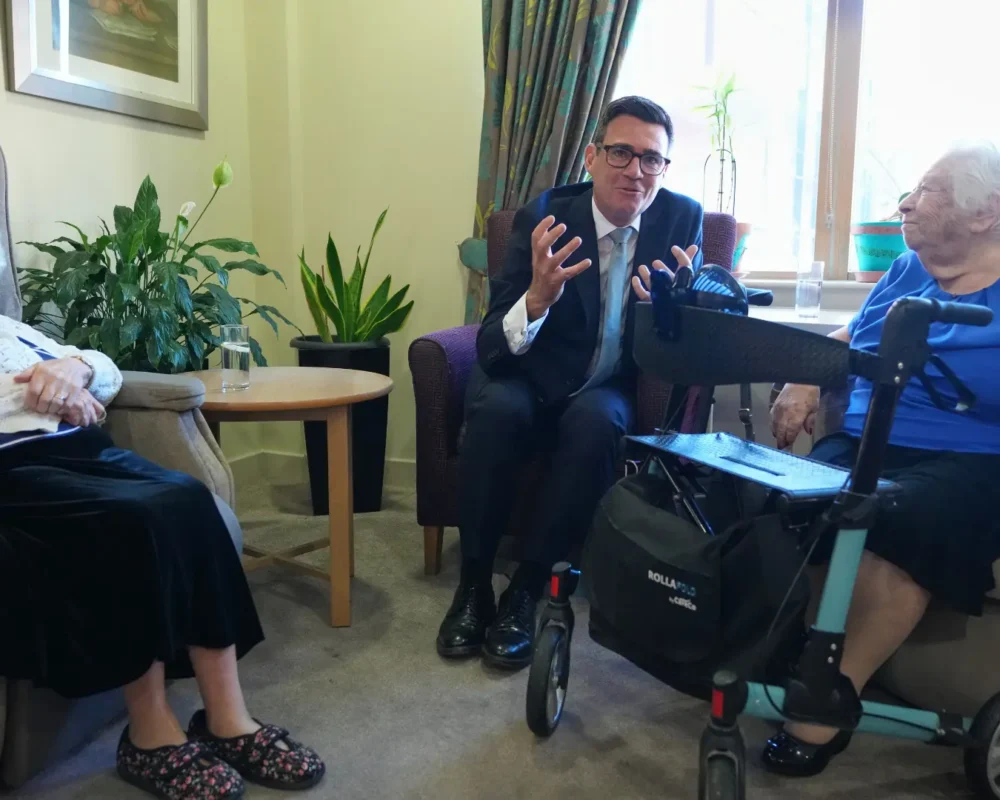
Andy Burnham has made social care his early priority. After three decades and more than 20 reviews, the system remains a lottery that punishes thrift, leaves local authorities overstretched and offers no sustainable answer to rising demand driven by longevity and the growing numbers of working-age adults with complex needs. One in seven people still […]
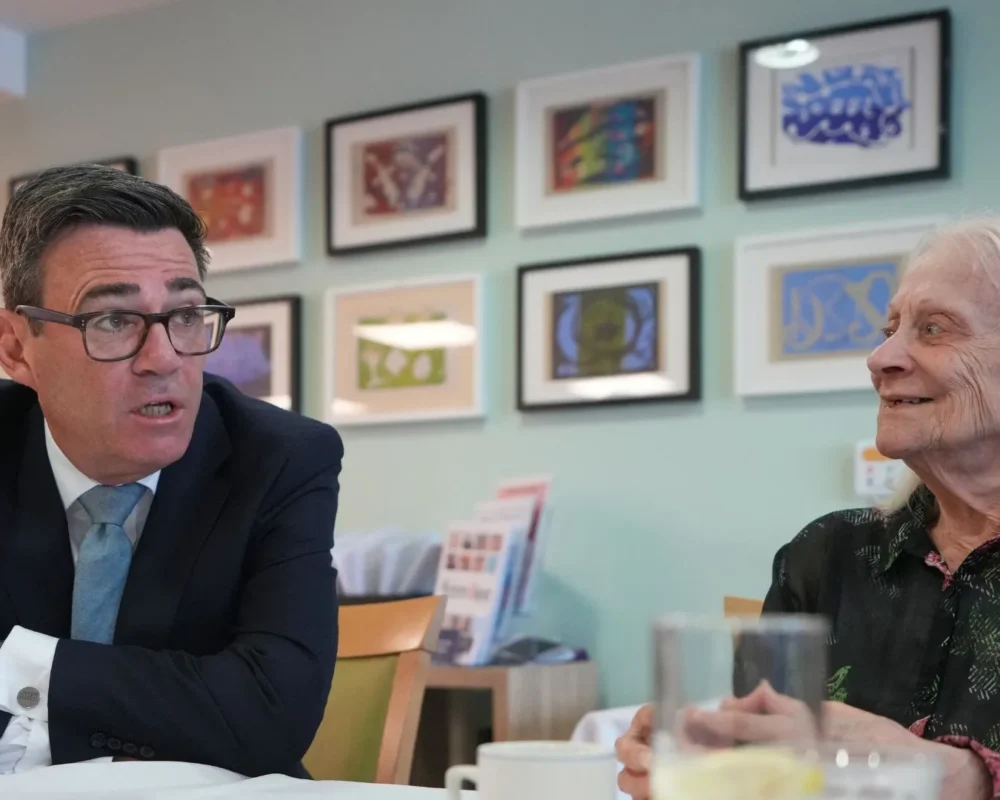
Andy Burnham is, apparently, going to solve the old age care problem. I tend to think he won’t but there we are, me and my cynicism. For he’s talking of organising something like the NHS, a National Care Service, which – as with the NHS – is the wrong way to do things. In order […]

Andy Burnham is not a forward-looking man. His musical interests stop at around 1998, his approach to industry is straight out of the 1970s and his favourite football team hasn’t won a trophy for over thirty years. It’s little surprise then that he takes a dim view of the ongoing tech revolution. It was reported […]