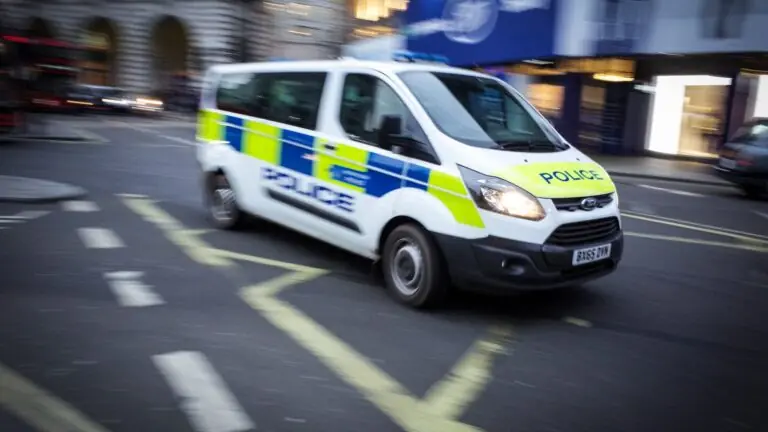
Mega police forces won’t make Britain safer
Getty Images
It is easy to be cynical. When Tony Blair was Prime Minister, he once sent a memo to his team demanding ‘eye-catching initiatives’ and adding: ‘I should be personally associated with as much of this as possible.’ The Home Secretary Shabana Mahmood is on manoeuvres. The speculation that Keir Starmer will be replaced as Prime Minister this year has gone from a whisper to a clamour. She is seen as a contender for his job. But then so is the Health Secretary Wes Streeting. Part of Streeting’s credentials is to show his proven record of energetic reforming zeal. Mahmood is playing catch-up.
This was seen in headlines about the ‘biggest set of changes since the police was founded two centuries ago.’ Will she really offer a legacy rivalling Robert Peel? I rather doubt it. Which is not to say that reform is not needed.
Greater focus on policing at a national level makes obvious sense. Crime used to be much more of a neighbourhood phenomenon. I remember a policeman explaining to me that traditional burglars were lazy when it came to travel. They liked to stick to their local district – often a neighbouring street or block of council flats. Coping with internet fraud and online scams carried on an industrial scale from abroad requires a very different policing response, which has often proved lacking.
So it is easy to imagine that when the Home Secretary asked her officials for an ‘eye-catching initiative’ they would have responded: ‘Set up a British FBI.’ We have been here before. As Robert Colvile, of this parish, wrote in the Sunday Times:
We’ve had versions of the same announcement in 1995, 2004, 2011 and 2016. And I may have missed a few.
Why are the civil servants so keen to push the idea? Writing on Unherd, Dominic Adler, a former detective in the Metropolitan Police, offers a clue:
Ever since the Serious Organised Crime Agency was established by New Labour in 2006 – yes, proudly announced as ‘the British FBI’ – the Home Office has agitated for increasingly centralised policing bodies. These would be compliant to the whims of civil servants, as opposed to 43 pesky chief constables. SOCA was troubled, a civilian non-police organisation slanted towards intelligence-gathering on organised criminals. Mocked as ‘MI7’, it endured fractious relations with police forces, its senior officers often high-handed former civil servants.
.
When it was replaced by the National Crime Agency in 2013, little changed. I once worked on an operation where the officer in charge was a civil servant with a background in food standards. Occasionally hostile to police partners, coppers jokingly referred to the NCA acronym as ‘No Cops Allowed’.
So it was a power grab. The bright idea of the Home Office civil servants was to transfer power and money from the police to…Home Office civil servants. I don’t remember a ‘Yes Minister’ episode on the theme, but it would have made for suitable material. That is no reason why police should be banished from involvement in a national police force.
Not that the police can be expected to do an effective job on their own. Every other day I am a ‘victim’ of an attempted crime in that there is an email, text message or phone call that is an attempt to trick me into some scam or another. Most are pretty obvious, but some are sophisticated. Hardly much point in telling the local police.
Never mind the Home Office, the Foreign Office needs to step up. British embassies and High Commissions are already involved in initiating some joint operations. If they wish to persuade us that Overseas Aid is value for money, then perhaps using it to fight crime might help?
Among the other proposals that have been reported, one deserves an unequivocal welcome. Mahmood tells the Daily Telegraph:
‘I don’t want them to be policing perfectly legal tweets. I want to make sure that they’re focused on the day job. I want them to get out of the business of essentially policing social media. That’s not where they need to be.’
The Free Speech Union has done an impressive job of showing how policing has been politicised in this area. Various incidents have caused consternation not just here but in the United States. But the irony is that the police themselves have not welcomed being dragged into this territory.
Finally, we have the proposal that strikes me as the least attractive – merging police constabularies to provide supposedly more effective ‘mega’ police regions. I live in London. The Metropolitan Police is the largest police force in England. That has not resulted in it being the most effective.
Local identity has an important place in the English psyche. We are proud to live in Essex, or Wiltshire, or Norfolk or wherever it happens to be. A county constabulary is part of that. Is that something a Home Office bureaucrat would understand the value of as the new regions are mapped out? ‘There are more things in heaven and earth, Horatio, than are dreamt of in your philosophy.’
Abolition of Police and Crime Commissioners is also a retrograde step. I yield to no one in frustration that they have not been more assertive in challenging wokery and other misplaced priorities. They supposedly have the power to sack failing chief constables but in practice have been too timid to use it. However, they have still quietly done some good work, certainly a better job than the more expensive unelected ‘police authorities’ which were mere talking shops.
Rather than give up on democratic accountability, we should strengthen it. Give the PCCs a less niminy piminy name – sheriffs would be the obvious choice. Abolish the National Police Chiefs’ Council and the College of Policing so that the chief constables no longer succumb to groupthink from those outfits.
In other words, adapt policing to the type of crime involved. Sometimes this will mean national policing, in other cases, strengthening local policing accountability.
Management reorganisations are not a panacea. In business, results seldom follow the textbooks. But those who take the risks of mergers and demergers face rewards for success and penalties for failure. The public sector operates without that discipline. In the end, Shabana Mahmood’s ambition may be the strongest incentive for her reforms to succeed.

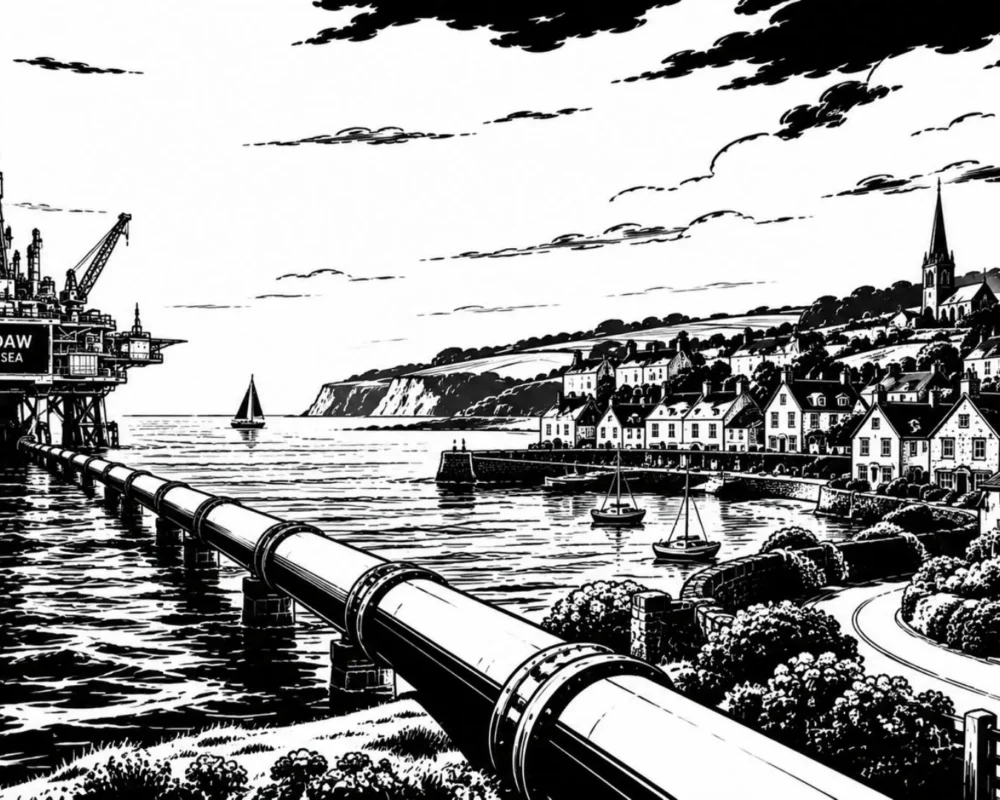
The Government has finally bowed to common sense and given the green light to the Jackdaw gas field in the North Sea. It’s the sensible move and a good start, although a decision on Rosebank is not yet forthcoming. Given the resistance both projects have faced, it’s worth setting out why Jackdaw’s approval is good […]
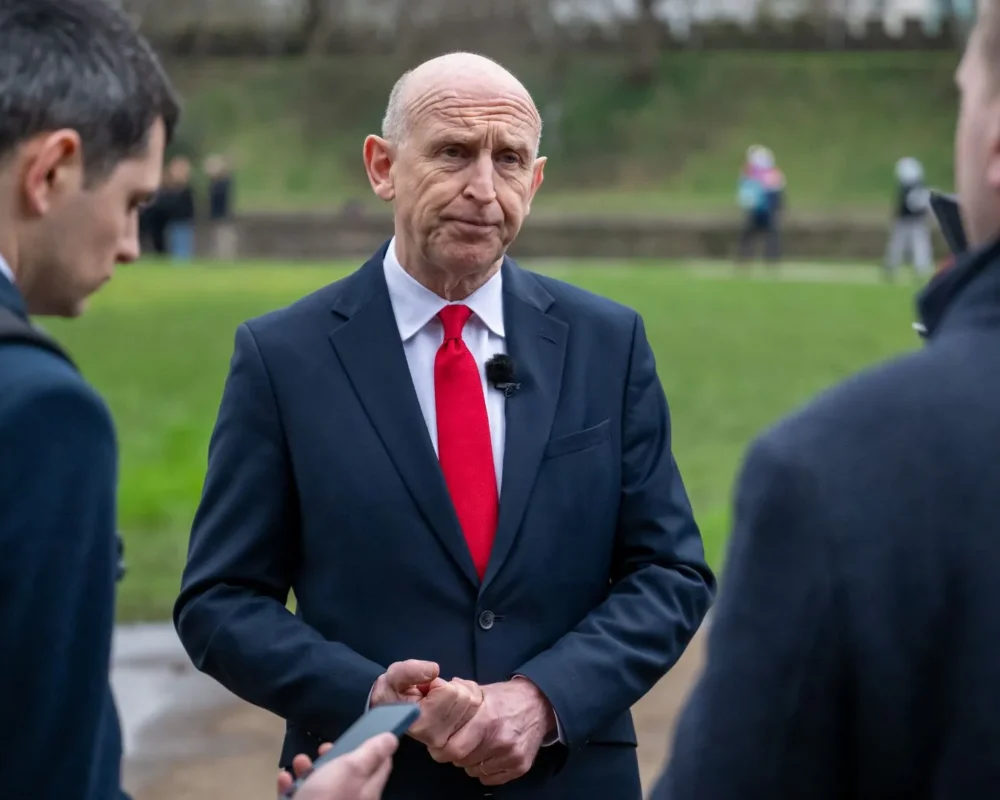
When John Healey sits down next Wednesday, the press gallery will focus hard on his headroom against the fiscal rules. In March the OBR put this at £23.6 billion against the main rule, which requires day-to-day spending to be covered by revenue by 2029/30. A recent Reuters poll of economists suggests it has since shrunk […]
Let’s go fly a kite? There has been rather less briefing about proposals to be announced in next week’s Budget than in recent years. The Chancellor of the Exchequer, John Healey, has been far less forthcoming than his predecessors, Rachel Reeves and Jeremy Hunt, whose plans were dribbled out weeks in advance. Some have suggested […]