Labour’s tax hikes are hitting the firms that build Britain
BEN STANSALL/AFP via Getty Images
Businesses across the UK understand the role they play in driving economic growth. It does not happen by accident – it comes from firms investing, creating jobs and backing their local communities.
Nowhere is that more true than in construction – a sector built on long-term investment and the confidence to plan ahead, underpinning everything from housing delivery to national infrastructure. Labour profess to recognise this, indeed they rely heavily on the sector to deliver 1.5 million homes and upgrade the country’s infrastructure.
But this ambition is being put at risk by their own policy choices. From this month, the cap on Business Property Relief will increase inheritance tax liabilities for thousands of family-run firms – forcing many to divert cash away from investment or sell up simply to meet tax liabilities.
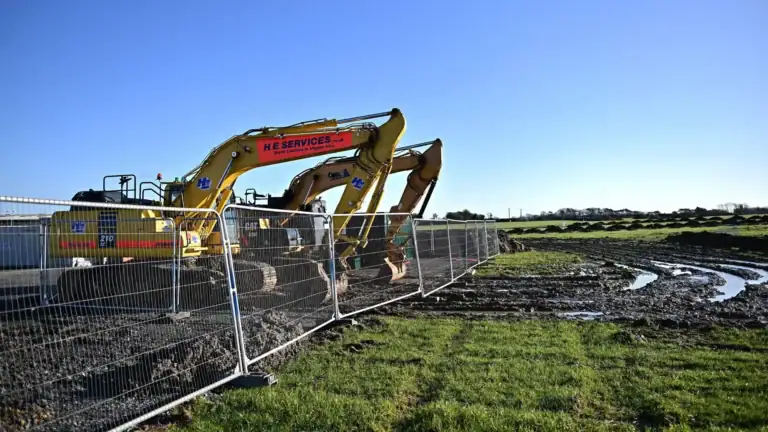
The impact is particularly acute in plant-hire. Our sector supplies the kit every construction site relies on. It is the most capital-intensive in the UK economy, with firms constantly reinvesting in machinery just to keep projects moving. Squeeze that investment, and projects slow.
Quite simply, without plant, nothing gets built.
Around 95% of our members are SMEs, many of them family-run businesses built up over generations. For many, April’s reforms create a cliff edge. Liabilities cannot be met through cash flow alone, leaving firms with a stark choice: sell assets, take on debt or in some cases close altogether simply to pay the bill. Adding to unemployment, quite the reverse of growth.
This is not a theoretical risk.
Our latest member survey found 46% of firms are reducing investment in staff, while 61% are cutting back on plant and equipment. In a sector where reinvestment is constant, that is a direct hit to capacity.
Less investment in machinery slows delivery and cuts output, while less investment in people shrinks the skills pipeline – a trend now reflected in fourteen consecutive months of falling construction activity.
To deliver 1.5m new homes, and deliver on infrastructure promises, construction needs an additional 161,000–250,000 workers, yet around 500,000 are expected to retire over the next 15 years. Without sustained investment in securing project starts, enabling training and recruitment, that gap will only widen.
Rising employment costs – including increases to employer National Insurance – are placing further pressure on already tight margins and making it harder for firms to invest or take on staff, and that’s before the introduction of the Employment Rights Act which will further compound the current problems.
Taken together, these pressures are not just slowing progress – they are actively constraining the sector’s ability to not only invest, hire and grow.
Labour want growth. They want 1.5m new homes. But they are squeezing the very sector they need to deliver.
There is still time to step back from the cliff edge. The government should work with the sector with an aim to reinstate Business Property Relief, ensuring that family-run firms are not forced into damaging short-term decisions that undermine long-term investment.
More broadly, we need a tax and policy framework that supports reinvestment, not one that penalises it. That means recognising the realities of capital-intensive sectors like plant-hire and giving businesses the confidence to invest in both equipment and people.
Alongside this, a renewed focus on employer-led apprenticeships and training is essential. Construction offers high-quality, skilled careers, but expanding that pipeline depends on firms having the financial headroom and pipelines of work to take people on and develop them.
If ministers want homes built and infrastructure delivered, they must work in lockstep with the businesses doing the heavy lifting. For every £100m spent with the plant-hire sector, the wider economy sees £300m returned, without adding to the national debt – the prize for getting this right is significant.
But without the right conditions – fair tax, long-term certainty and support for investment – that opportunity will be lost.
Construction stands ready to deliver. But it cannot do so while the firms at its core are being pushed towards a cliff edge.
If Labour are serious about growth, they must back the sectors that build Britain – or accept that their housing and economic ambitions will fall short.


Ambitions to get our economy growing require an equal determination to address the barriers that hold it back. This summer, half of England was reported to be in serious drought for the second year running, and the Environment Agency warns of severe consequences for the economy, environment and wildlife if conditions do not improve. There’s […]

This week, Nimby Watch is paying a visit to the University of Warwick Warwick! What a beautiful place to visit. We’ve got the River Avon, a truly historic castle – begun by William the Conqueror himself – and a beautiful series of heritage buildings. What a delight. I assume you want to bulldoze half of […]

This week, Nimby Watch is golfing in Sevenoaks, a leafy town firmly within London’s commuter belt. Hang on, we’re golfing now? Since when did either of us play golf? Hey, I’ll have you know I placed third in a golfing competition just last month. I take my time at the tee deeply seriously. That was […]