Labour’s latest tax hike will bury their housing hopes
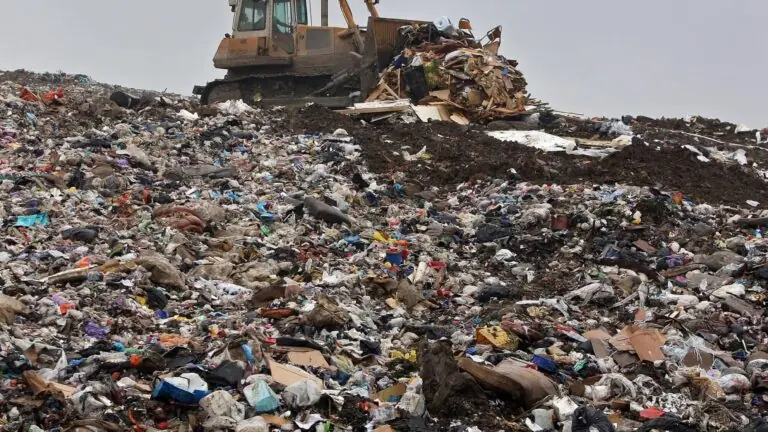
Photo by Peter Macdiarmid via Getty Images
The UK has a 6.5 million home shortage. Building more homes in and around our most productive cities is the surest way to grow the economy, and the Labour Government has made building 1.5 million homes one of their main priorities. Yet somewhere, deep in the Treasury, a few tax tweaks on landfills have been drawn up which risk blowing up both housebuilding and the 1.5 million target.
The UK currently has two bands of landfill tax. The standard rate is £126.15 per tonne. That’s for ‘active’ waste, which can decompose, release methane or leach harmful substances. Think food, plastics or general rubbish. Then there’s a lower rate of just £4.05 per tonne, which applies to ‘inert’ waste such as soil, rocks and concrete. These are non-hazardous and pose little risk in a landfill.
The Government has proposed merging the two, with the lower rate rising over the next five years to eventually meet the standard rate. Meanwhile, the standard rate will rise faster than inflation.
On paper it looks like a minor technocratic change. Yet this small tweak could kill Labour’s 1.5 million home target and housebuilding in London.
The 3,000% increase in low-rate tax will add between £22,000 and £28,000 to the cost of building a home. Some estimates put the cost as high as £52,000 per home. With Labour already off the pace to hit 1.5 million homes, such a massive tax hike will doom their ambitious target.
The impact of the tax is especially concentrated on blocks of flats, which often have basements and require deeper foundations. That means more soil and clay is dug up. The goal is to reuse or recycle this when possible, but there will still be cases where some waste has to go to a landfill. With the massive increase in tax, this waste will lead to a hefty tax bill.
Already housebuilding in London has ground to a halt, with only 2,158 new homes started in the first half of this year. Viability concerns from stringent building regulations, poor macroeconomic conditions, and a steep 35% affordability requirement already make building challenging in the capital. The extra tax could account for around 10% of the final sale price, pushing up the cost of housing and further reducing the number of new builds that are viable.
The intention to reduce the amount of waste sent to landfill is admirable, but the tax hike is completely unjustified. Local authority waste to landfill has already fallen by 90% since 2000 and landfill is already a last resort for the construction sector. It is also important to recognise that inert materials like soil, rocks, and concrete don’t pose a risk to the environment in the same way that dumping dangerous chemicals in a landfill does, so the two types should be taxed differently.
The high taxes also risk fuelling an increase in fly-tipping. Less scrupulous builders or sub-contractors may elect to just illegally dump the material instead, saving them from the tax hike, but worsening environmental outcomes. Already 18% of construction waste may be handled illegally. This number will rise with the steep tax hike
And it’s not just housing that is impacted by this tax change.
Within the Lower Thames Crossing’s 359,000 page planning application, there’s a section on how much waste the project will produce. In total, 92% of the waste will be reused or recycled, but some will inevitably have to go to landfill. There’s an estimate that 810,000 cubic metres of non-hazardous waste will be disposed of via landfill. At 1.9t/m³, that’s 1.54 million tonnes.
The 3,000% tax increase means that the Lower Thames Crossing could be on the hook for £190m in additional tax payments. The tax is also expected to rise above inflation, which could mean a final tax bill of £250m. That is a massive increase to an already expensive project.
Alongside the tax hike, the Government has also consulted on removing the quarry exemption. Right now, soil, clay, and chalk disposed of in a quarry is exempt from the landfill tax. This makes sense: once you’ve dug the holes, you probably want to fill them in again.
Under the proposed changes, however, this exemption would be scrapped, and any waste deposited in a quarry would be subject to the full £126.15 per tonne charge. Effectively that’s treating non-hazardous soil in a quarry the same as if it were black bag landfill waste.
A Universal Studios theme park is planned for Bedfordshire, which Sir Keir Starmer described as, ‘one of the biggest in Europe, firmly putting the county on the global stage’. Adjacent to the site is a former mineral quarry, where materials could be backfilled under the current Landfill Tax exemption. The scrapping of this exemption could hit Universal with an unexpected tax bill. It’s unclear exactly how much, but the cost is likely to be in the tens or hundreds of millions. With costs like that, why would anyone want to invest in the UK?
Building has long been at the mercy of small tweaks that sound good on paper but have disastrous consequences. From the Building Safety Regulator and second staircase rules to dual aspect and high affordability requirements, nice-sounding tweaks have made it much harder to build. We mustn’t make the same mistake with the landfill tax.
This article first appeared on Ben Hopkinson’s Substack, Yes and Grow

Ambitions to get our economy growing require an equal determination to address the barriers that hold it back. This summer, half of England was reported to be in serious drought for the second year running, and the Environment Agency warns of severe consequences for the economy, environment and wildlife if conditions do not improve. There’s […]
This week, Nimby Watch is paying a visit to the University of Warwick Warwick! What a beautiful place to visit. We’ve got the River Avon, a truly historic castle – begun by William the Conqueror himself – and a beautiful series of heritage buildings. What a delight. I assume you want to bulldoze half of […]

This week, Nimby Watch is golfing in Sevenoaks, a leafy town firmly within London’s commuter belt. Hang on, we’re golfing now? Since when did either of us play golf? Hey, I’ll have you know I placed third in a golfing competition just last month. I take my time at the tee deeply seriously. That was […]