Labour are pricing young people out of work

15 October 2026

Richard Pohle-WPA Pool/Getty Images
It’s never easy being young. The hormones, the debt, the uncertainty: the burden hangs heavy. Under Labour, it’s become even harder.
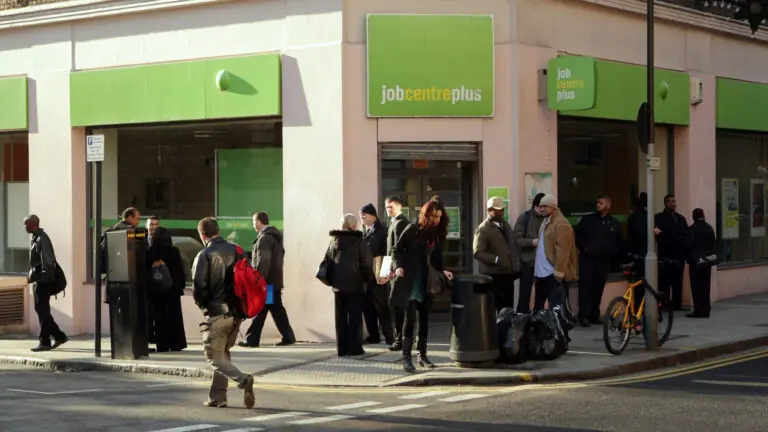
In the period April-June this year, there were 981,000 Britons aged 16-24 classed as not in education, employment or training (NEET). This is both morally and fiscally unconscionable. Being a NEET is not fun, and across the board they demonstrate a greater propensity for mental illness. According to a study in the Journal of Child Psychology and Psychiatry, some 35% of NEETs suffered from depression compared to 18% of non-NEETs, and 14% had generalised anxiety disorder, compared to 6% of their non-NEET peers.
God bless them, they also cost us a fortune. Analysis from the youth employment charity Impetus finds that each young person who becomes NEET costs an average of £244,000 over their lifetime. Applied across today’s cohort of almost 1 million, the lifetime cost to the public purse of our jobless youth is £240 billion.
For the likes of Andy Burnham, who see the private sector as little more than a cash cow for central government, the idea that giving businesses more freedom over their hiring practices could help the vulnerable is incomprehensible
What has the Government done to fix this? Nothing. Labour have in fact made matters worse.
The Employment Rights Act has saddled businesses with yet more obligations and given unions greater power over employers. The increase in the minimum wage has made it prohibitively expensive for small firms to hire minimum wage workers – for someone aged 18-20 working full-time on the minimum wage, the cost has increased from £15,652 in 2024 to £18,200 in 2025 to £19,747 in 2026. And the increase in employers’ National Insurance has forced businesses to tighten hiring budgets.
Reinforced rights for employees and a higher minimum wage might sound great on paper, but businesses have long warned of what the effects of this easy populism would be. Recruitment activity would slump as businesses increasingly view hiring young people as an expensive liability rather than an exciting opportunity. They were right. Who’d have thought? Britain’s once flexible labour market has ground to a halt.
While the Government remains intent on interfering in the labour market and ignoring businesses, we at the Prosperity Institute have an alternative plan.
The National Living Wage – the top band of the minimum wage – rose this year to £12.71 per hour. The hospitality sector – particularly pubs – often cites the ratcheting cost of the minimum wage as a leading cause of business closures. Young people rely on these jobs, yet the opportunities available will continue to diminish if the Government refuses to listen to the concerns of their employers.
We calculate that a temporary freeze for five years of the current rate of the National Living Wage (NLW) could create up to 600,000 jobs for young people and contribute £2.4bn directly to the Exchequer.
Let me explain. The minimum wage ‘bite ratio’ – the ratio of the minimum wage to the median wage – has risen from 46% in 1999 to around 66% today. This is comfortably above the 60% threshold which was the NLW’s original target and beyond which the minimum wage is widely thought to reduce employment opportunities.
The increasing inability of businesses to keep up with multiple increases in the minimum wage has not only led to fewer young people being hired but also distorted workplace incentives. Successive rises in the minimum wage have compressed the pay differentials between junior and mid-level roles, eroding the financial motivation to seek promotions. This has proved toxic for productivity and for people’s progression through the workplace. After all, minimum wage jobs are meant to be stepping stones into better-paid parts of the labour market.
A temporary freeze on the NLW is not the only policy that would help get young people back into the jobs market.
We must also abolish the Low Pay Commission, or at the very least redefine its remit. Setting the rates of the minimum wage should be a job for government, not a quango. Over the last decade it has stepped into the political domain with its wage increase recommendations, undermining its original purpose. Additionally, the Government should revert employer National Insurance contribution rates to their pre-April 2025 level. This would involve reducing the employer NIC back to 13.8% above the £9,100 secondary threshold, while keeping the current Employment Allowance at £10,500 so that SMEs are not left worse off. This would reduce the cost of hiring a worker on minimum wage by £800 per annum.
On the regulatory side, we should reinstate the two-year qualifying period for unfair dismissal protection. This would reduce the risk borne by firms seeking to hire new staff, particularly small businesses that rely on recruiting lower-productivity workers.
For the likes of Andy Burnham, who see the private sector as little more than a cash cow for central government, the idea that giving businesses more freedom over their hiring practices could help the vulnerable is incomprehensible. That doesn’t mean it’s not true. The truth is that for young people to find jobs and enjoy the quality of life that affords them, businesses need to be able to afford to hire them. Without an environment that facilitates this, the number of NEETs will continue to rise, and yet more firms will be forced to close.


Britain is looking for the effects of artificial intelligence in all the obvious places: redundancies, vacancies and unemployment numbers. So far, there is little evidence of dramatic change in overall headcount. The Office for National Statistics reports that most British businesses using AI have not changed the size of their workforce, even as AI adoption […]

This week, consultation closed on the Government’s proposals to place further restrictions on the use of zero-hour contracts. Labour’s intention was signalled in last year’s Employment Rights Act, which obliges employers to offer a guaranteed-hours contract based on the average hours worked in a ‘reference period’, to give workers ‘reasonable notice’ of shifts, and to […]
This morning the Guardian reported ‘Number of young people in UK not in work or education falls below 1 million’. Technically yes. The ONS released new statistics today which show that the number of people aged 16 to 24 not in employment, education or training (NEET) is down 30,000. Unfortunately, it is not cause for […]