How television ate politics
Getty Images
There is much discussion right now about the dysfunctionality of UK politics. This goes beyond complaints about the policy incoherence or ineffectuality of any particular government, whether that be the current one or its Tory and Coalition predecessors. Rather, there is a growing feeling that the political system itself, the whole process of politics, no longer works in terms of delivering any kind of result. This is leading some, and many of the young apparently, to think we would be better off with a dictatorship, where someone could make a decision and give the order to make it so. One can only say ‘Better hope you don’t get what you wish for’.
Many reasons have been given for this dysfunctionality, such as the electoral system, a sclerotic government machine, the domination of decisions by legally entrenched veto points or simply a whole series of ‘wicked problems’. These are all in addition to the usual suspects of major policy errors and the failings of individual politicians and parties. However, there is an additional, systemic, reason for the malaise, one that doesn’t get as much attention from Left or Right.
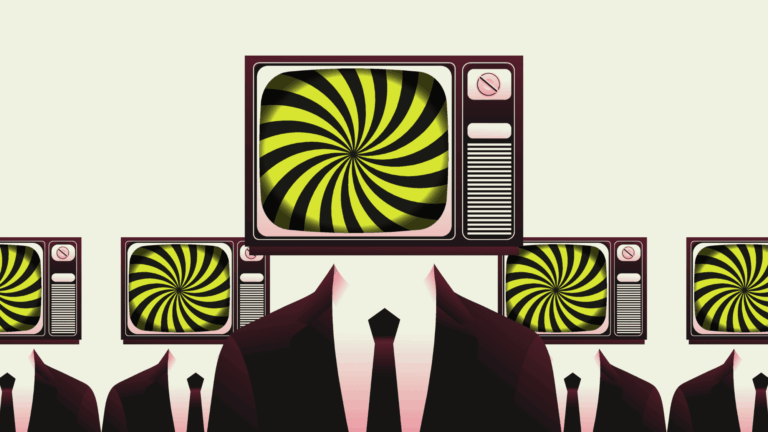
That is the way politics itself, as an activity, has been consumed by what was once a tool – the mass electronic media. That means originally and primarily television but now includes all of social media. From the 1880s through to the 1970s political parties were massive civil society organisations. In the 1950s and early 1960s the Conservative Party had two million members. The Labour Party had over a million individual members and an even larger number affiliated via their union. Tory and labour clubs and organisations played a big part in the social life of local communities – the Young Conservatives could be seen as the Western world’s largest dating agency and marriage bureau. In fact, many of the services parties provided were not narrowly political. This political ecology meant that politics was integrated into everyday life. It made politics a collective activity that many participated in, rather than a passive spectator sport. The parties provided a communication system through which politicians could communicate with the wider public and received feedback in return.
All this collapsed in the 1980s and 1990s. Television became the main medium for political campaigning and communication with the wider public. Consequently, the public face of politics became a form of entertainment (as did news at the same time). There came to be a focus on individual figures and fascinated gossip about their intrigues, rather than their ideas. Communication and campaigning became simply a type of marketing or public relations, with earnest talk about ‘brands’ not beliefs. As parties were no longer needed in the world of electronic campaigning and 24-hour television, they were allowed to collapse. Both big parties are now shell organisations.
Economics helps explain this. Everyone benefits from political participation and a vibrant politics. Trouble is, they benefit even if they do not participate. Political engagement is a ‘public good’ with a free rider problem. The usual solution, government provision, is ruled out, for obvious reasons. From the 1870s the actual solution was to link political participation to social activities that were not themselves political, such as entertainment, religious observance, youth activities, sport and education. To make politics as a process functional again one of the things we must do is to revive the parties, and restore the ties between social links and activities and political organisation.
How to do this? It is a major challenge, not least because of the way social media is now consuming not just politics but everyday social interaction. In my view, leaning in to this and trying to build an online network or movement is a recipe for failure. We might have to start a form of ‘electronic temperance movement’ in which people pledge to abstain from or limit their consumption.
The main thing however is to build social movements. Revive conservative, liberal and working men’s clubs. Build social organisations like the old Primrose League and youth, health and fitness organisations. The critical thing is that these reinvented social movements must not have politics or political campaigning as their main aim or activity. There has to be an activity that benefits participants while tying that into forming a political identity as a secondary or consequential outcome of the primary activity. The idea should be to build a social and cultural movement, of organisations that promote shared interests and beliefs, as the primary aim. The electoral politics should follow. This is how the Labour movement formed. Other examples would be Irish Nationalism or revival movements in the later Raj (which still exist).
Our hapless political class is probably beyond saving itself. What people of all ideologies who care should do is recreate the ecosystem they allowed to be destroyed.
On September 29, 1976, Britain’s Chancellor of the Exchequer, Denis Healey, announced his intention to apply to the International Monetary Fund (IMF) for a $3.9 billion loan, the largest ever requested. Britain, The Economist announced, was ‘bust’. This was a national humiliation, the crux of a decade of economic turmoil. Britain before 1979 was not […]
Why haven’t we grown in the last decade? We are experiencing the longest spell of workers experiencing no average wage growth in real terms for well over a century – ‘the longest in history since consistent wage records exist, dating back to Victorian times,’ as a paper in the Oxford Review of Economic Policy shows. […]
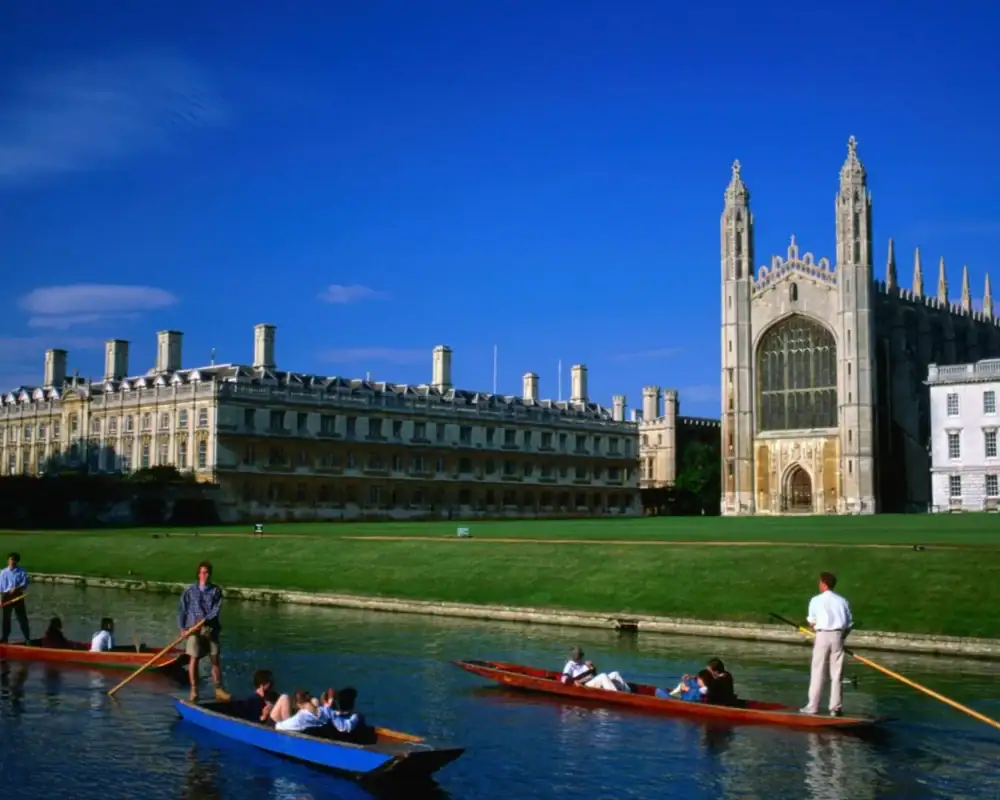
With the introduction of student fees in 1998, one might have expected that universities would gain independence from the state and its agencies. They would live off the fees paid by those who wanted them, free to act in accordance with whatever academic values they chose to embody. But the opposite happened: all the movement […]