Have Labour given up on planning reform?

Carl Court/Getty Images
According to reports over the weekend, Rachel Reeves is considering whether a new generation of public-private partnerships (PPPs), the modern successor to the old Private Finance Initiative (PFI), could help Labour’s ambitious plans for a new generation of towns. With borrowing constrained by Labour’s own fiscal rules, debt interest costs elevated and public finances under pressure, the attraction is obvious. Private investors provide the upfront capital, while the Treasury can avoid large upfront borrowing requirements and spread costs over a longer period.
Yet the striking aspect of the suggestion is not the financing mechanism itself. It’s the fact that PPPs are considered necessary at all.
Housing is not HS2, a nuclear power station or a flood defence scheme. Housebuilding, unlike many major infrastructure projects, generates immediate and readily identifiable revenue streams. Homes can simply be sold.
Developers, therefore, exist to build them and investors are there to provide any necessary capital. In any functioning market, there should be little need for government to devise novel financing structures simply to get houses built.
The fact that Britain is now searching for innovative ways to finance housebuilding is therefore a sign – as critics have argued for years – that something has clearly already gone badly wrong. It is not that capital is absent, nor that demand is lacking, but that the system through which land is released, consented and built upon has become progressively obstructive.
Housebuilding, unlike many major infrastructure projects, generates immediate and readily identifiable revenue streams. Homes can simply be sold
Labour has committed itself to building 1.5 million homes in England during this Parliament. To meet that target, England would need to deliver about 300,000 per year. Yet net additional dwellings in England stood at under 210,000 for 2024/25. If this rate persists, the Government will miss its target by almost half a million homes.
The answer isn’t a shortage of investors. Britain is hardly lacking capital. Pension funds, insurers, infrastructure funds and asset managers collectively oversee trillions of pounds in assets and are constantly searching for opportunities that can deliver stable, long-term returns. If building homes were straightforward, money would not be difficult to find.
Instead, governments of all stripes have spent decades making development more expensive and less predictable.
A major housing development today is expected to do far more than just build the desired number of homes. Developers are routinely required to fulfil such requirements as contributing to local infrastructure, satisfying biodiversity net gain requirements and undertaking environmental mitigation measures, and this is all before tackling the increasingly complex web of planning obligations. Section 106 agreements, design codes and environmental assessments, alongside local infrastructure negotiations, have collectively created a system in which even commercially viable schemes face years of delay before a single brick is laid.
The result has become increasingly predictable. Projects take longer to secure approval and development costs rise. Investors therefore face greater uncertainty over both timing and returns.
Indeed, even the proposed new towns are themselves expected to contain 40% affordable housing. Such requirements reduce the proportion of homes that can be sold at market value and therefore weaken the commercial incentives that should attract private capital.
Viewed in this light, the renewed interest in PPPs looks more like an attempt to compensate for institutional failure. The underlying problem is not a lack of willing investors, but a development system that increasingly struggles to convert investment into completed homes.
This does not mean that PPPs remove the need for planning consent, but they do change how planning risk is managed. Large-scale, PPP-backed schemes are typically delivered through more centralised structures – often development corporations or master planned frameworks – which concentrate decision-making and align infrastructure with housing delivery from the very outset. Therefore, the levels of fragmentation and uncertainty are reduced. Crucially, it also shifts part of the risk away from developers and onto the state, whether through upfront infrastructure provision or revenue guarantees.
Supporters of using PPPs for new towns would argue that new towns require more than houses alone. Roads, schools and GP surgeries must be provided alongside residential development. This is undoubtedly true.
Yet large-scale developments have long incorporated infrastructure provision through a combination of developer contributions and utility investment. The question is not whether infrastructure must be funded, but why a system that once enabled these elements to be coordinated now appears to require bespoke state-backed vehicles to achieve the same outcome.
The assumption underpinning the renewed enthusiasm for PPPs is that the housing market has somehow failed. Yet Britain has no shortage of housing demand and there is certainly no shortage of developers or investors willing to build. What it does have is a planning system in which consent is fragmented across multiple veto points, where local opposition can materially reshape or delay delivery regardless of national (or even local) need.
In this sense, PPPs are best understood not as a cure for Britain’s housing malaise, but as a symptom of it. They emerge because the ordinary mechanisms through which land, capital and labour should be brought together to produce homes no longer function as reliably as they once did.
The irony is that PPPs may indeed prove effective in accelerating delivery at the margins. By bundling infrastructure and concentrating political and financial support behind particular schemes, they can make developments viable that would otherwise likely stall, and potentially languish.
In that sense, PPPs are about whether Britain believes it can still deliver large-scale infrastructure and housing through a decentralised, locally contested planning system, or whether it increasingly requires centralised models to deliver it. They are, in effect, a referendum on whether the existing planning framework is still capable of producing outcomes at (any) scale, or whether increasingly exceptional delivery mechanisms are required to achieve them.
For a Government instinctively drawn towards state-led solutions, PPPs offer a way to expand the role of the state though housing delivery without requiring the Treasury to fund the full cost upfront.
Once again, this Government looks likely to decide on the path of least resistance of regulating for exceptions rather than simply loosening the rules.


This week, Nimby Watch is in Danson Park, Bexley, in South East London. But why? I see we’re in a park! You never bring me anywhere nice. It’s a particularly nice park, too! Danson Park, which celebrated its 100th birthday last year, has a lake – which hosts boating and water sports activities – football […]
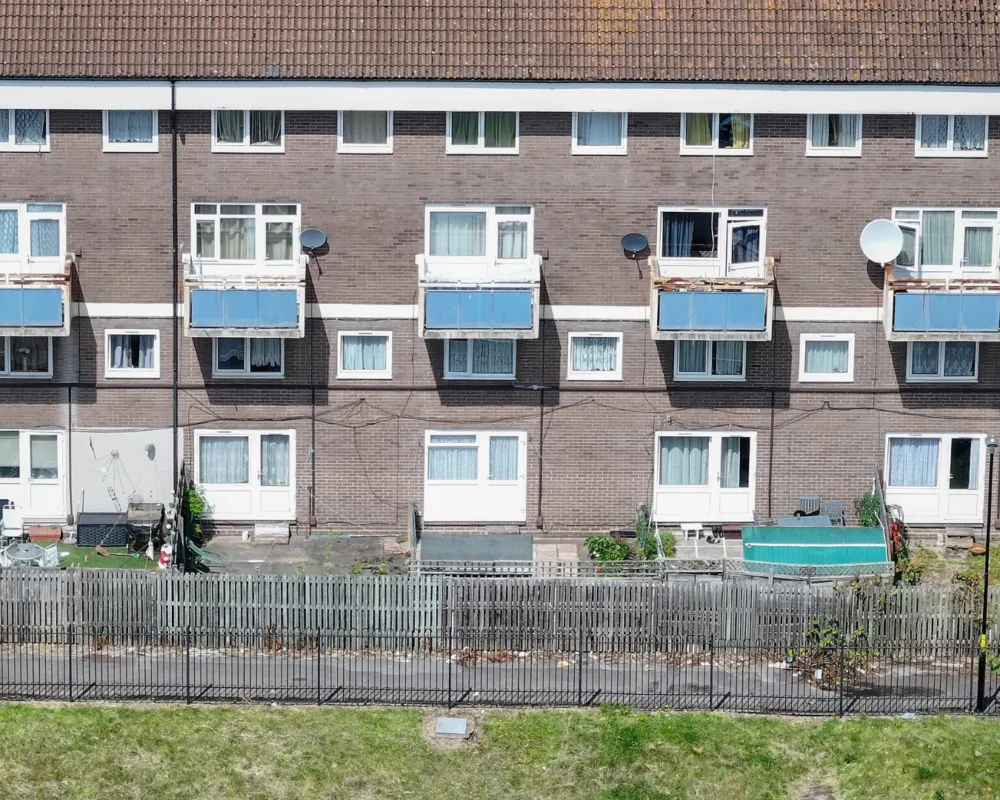
According to the Government, England is about to spend £39 billion on social housing. That may be just the start. Andy Burnham, the frontrunner to replace Keir Starmer if he wins this Friday’s Makerfield by-election, has made a large-scale expansion of social housing central to his pitch. Yet the discourse around this number focuses almost […]

This week, Nimby Watch is in Winstanley, in the historical county of Lancashire. But, like certain other people in Winstanley right now, we’ve got our eyes on Westminster… Okay then, why are we in Winstanley. Where exactly is Winstanley, anyway? Well, if you’re part of the southern Westminster elite, you might say that Winstanley is […]