Free trade among free nations
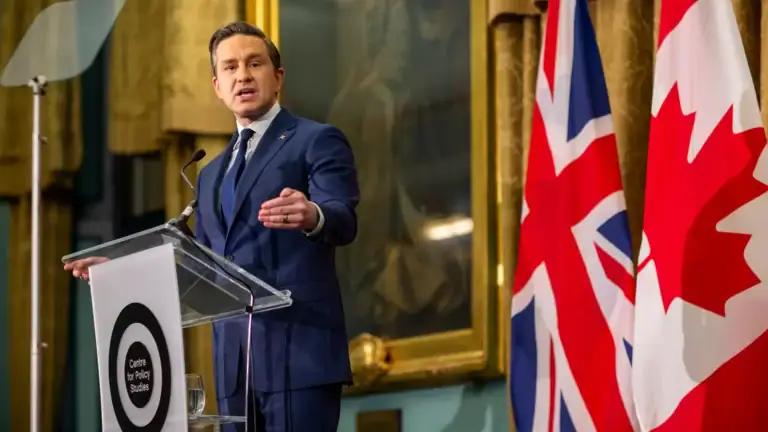
Photo: Centre for Policy Studies
Before I begin, let me share that I noticed a strange phenomenon when buying a coffee at your local coffee shop. I paid for the hot beverage and said ‘thank you’. But the lady did not say ‘you’re welcome’ back. She said, ‘thank you’. Our mothers taught us it was ‘thank you – you’re welcome’. But after every transaction, it is ‘thank you’, met with yet another ‘thank you’. That is because every transaction in the free market benefits both parties, or they would not agree to do it. If I have an apple and want an orange, and you have an orange and want an apple, and we trade, we are both better off even though we still both have just an apple and an orange between us. You may have heard that I prefer apples to oranges.
Voluntary exchange of work for wages, product for payment and investment for interest benefits all participants, or else they would not choose to participate. By contrast, everything the government does, it does by force of mandatory taxation. That is why no one writes ‘thank you’ on their tax return.
Even though we are in England, I hope you do not mind if I begin by quoting a great Scot. This Monday will be the 250th anniversary of Adam Smith’s ‘Wealth of Nations’. As he wrote, ‘what is prudence in the conduct of every private family can scarce be folly in that of a great kingdom’. Put simply: people can decide what is good for them and, when they are free to do so, we are all better off. What is good for the parts is even better for the sum.
Free exchange is the key to the well-being of both commoners and country. As he said: ‘Commerce… ought naturally to be, among nations, as among individuals, a bond of union and friendship.’ His books were long, but his principle was simple: free trade, free markets, free nations.
That is the theme of this speech. Canada must become stronger at home to build unbreakable leverage abroad. Opening trade with like-minded free nations will do that, by diversifying markets, lowering costs for consumers and boosting wages for workers.
Smith is probably the best-known and least-read economist. For that reason, he is often misunderstood. If you google ‘Father of Capitalism’, his name appears – yet neither ‘Wealth of Nations’ nor ‘The Theory of Moral Sentiments’ uses the word ‘capitalism’. He did not preach the supremacy of capital over labour, but the freedom of exchange between the two. Indeed, he wrote that ‘the annual labour of every nation’ is the true source of wealth, and he warned against profits earned through state protection rather than open competition.
Nor did he glorify greed. When he wrote that we expect our dinner not from the benevolence of the butcher, brewer or baker, but from their self-interest, he was describing how incentives work – not celebrating selfishness. In ‘The Theory of Moral Sentiments’, he reminds us that human beings are bound together by sympathy – by placing ourselves in another’s situation and seeing the world through their eyes.
Indeed, if sympathy means to care truly and actively about the other fellow’s wants and needs, then no one is more sympathetic than the entrepreneurial businessman who only gets ahead by supplying the needs and wants of others. If you want to sell what the customer buys, you have to see through the customer’s eyes.
Smith did not invent the free economy. He discovered it – just at the moment in history when economies were embracing it over serfdom.
So we can compare the before and after. Before 1776, economic growth was almost flat. Estimates by Angus Maddison show that from year 1 to 1700, global GDP per person rose from roughly $444 to about $615, meaning living standards barely changed over 17 centuries. From 1820 to 2000, per-person GDP went from $667 to over $5,700. On average, income per person grew as much every year as had been every 200 years before the free market era. Life expectancy in Western Europe increased from roughly 35–40 years in 1800 to over 75 years by the end of the 20th century.
Then there is transportation. As Churchill once noted, Sir Robert Peel in 1841 took as long to travel from Rome to London as a Roman emperor nearly two thousand years earlier. Then, in little more than a century, we went from horses and sailboats to jet engines and men on the moon. More advancement in a century and a half of free enterprise than in the prior two thousand years.
For generations, free markets lowered costs, raised wages and lifted billions out of poverty. Yet they are facing major pushback from socialism and protectionism today.
That risks turning the Wealth of Nations into the poverty of the people.
How did this happen?
There is a backlash because working people across the western world have been betrayed. Wages lag prices. Housing is out of reach. Energy costs soar. Opportunities blocked. And the silent thief of inflation has robbed buying power. The state took from hardworking many to enrich the privileged few. It is not that governments have left working people behind. Rather, it priced them out and shut them out altogether.
Net Zero policies drove energy and food costs up and paycheques down, all to fill the pockets of green grifters.
Protected monopolies shielded from competition keep prices high.
Corporate welfare enriched insiders at taxpayers’ expense.
Gatekeepers blocked homebuilding, resource development and infrastructure – shutting workers from jobs and youth from homes.
Licensing bureaucracies stopped immigrants from working in their professions, while mass migration drove wages down, housing costs up and social services into the ground.
And worst of all, inflationary money printing robbed savings and paycheques of working people and ballooned the assets of connected insiders.
That is the inflation tax. It is the most unjust tax – it takes the most from those with the least and is never even voted on in Parliament.
The inflation tax is when governments spend what they do not have on what people do not want and pay for it by creating cash and inflating prices. Indeed, your very own King Henry VIII was one of the great offenders. He used to have his minters melt down British coins and refill the inside with cheaper copper so that he could use the extracted silver for yet more coins. He put his own face on the front and when the coins and the silver would rub off in people’s pockets, it caused his protruding nose to turn red and gave him the nickname ‘Old Coppernose’. Every time someone saw that red nose, they knew the king had robbed them of their silver and buying power in what is now called the Great Debasement.
Today’s debasement has the same effect. An enormous gap between rich and poor has coincided with radical money-printing in the western world.
We wonder why homeownership is suddenly impossible for our youth. The number of dollars circulating has grown six times as fast as the number of homes in the last ten years in the U.K., U.S. and Canada. To be clear, housing does not cost more. Housing prices have gone down over the last 55 years – if your money was gold. So costs have not gone up; the value of dollars and pounds has gone down.
Meanwhile, billionaires leverage the newly-printed money – which, just like the aristocrats of Henry VIII’s era, they touch before anyone else – to balloon their assets. To be clear, earning fortunes through true industry is brilliant and should be rewarded. But having wealth inflated by government is not the same. We want people to get rich by making, not taking.
Smith warned that when corporate and political power merge, the public loses. When corporations get ahead by having the best lobbyist, not the best product; when those with money turn it into government power and turn that power back into more government money, then working people pay the price. This form of trickle-down economics takes from workers, entrepreneurs and savers to give to the government, which then funnels it through bureaucracy, interest groups and lobbyists – with only a small remaining fraction going to the people at the bottom of the pyramid who paid for it in the first place.
Ironically, those who seek to aggrandize the state tell us it is all to redistribute wealth to the poorest, like Robin Hood. The theory was that if the government decided who got what, it would make sure everyone got their fair share; that altruistic authorities would abolish greed. Because, while humans operating in the marketplace are greedy, in positions of governmental power they are transformed into new and perfected creatures caring only about others.
But if greed can exist in the market, it surely can thrive in the halls of governmental power.
As Macaulay reminded us, human nature travels everywhere man goes:
Where’er ye shed the honey, the buzzing flies will crowd;
Where’er ye fling the carrion, the raven’s croak is loud;
Where’er down Tiber garbage floats, the greedy pike ye see;
And wheresoe’er such lord is found, such client still will be.
If a man is greedy, he will find a way to get rich by taking what government forces others to pay–just as flies take honey without making any. Whereas in the free market, the greedy man must sell things that people choose to buy–much like the bee thrives by exchanging pollen for nectar, to make honey and multiply flowers.
We, Conservatives, must be the champions of the worker bees. From Sir John A Macdonald to Stephen Harper, from Winston Churchill to Margaret Thatcher: Conservatives have always known that the greatness of a nation lies in its working people.
We will champion them again by restoring the meritocratic, bottom-up competitive economy; an economy where businesses compete for workers through higher wages and for customers through better products and prices; Where business is disciplined by competition, not propped up by handouts, carve-outs and bailouts; economies that are stronger at home so that they can have unbreakable leverage abroad.
Some of that leverage for Canada will be deeper trade with more allies. Otherwise put: free trade between free countries. In 1994, Margaret Thatcher, the Great Iron Lady we honour today, said: “Trade is the oldest form of exchange known to man. From ancient times it was the most natural form of daily co-operation between peoples, whether it be in the smallest village or the bustling market places of Athens, Babylon or Rome. The marketplace is not the invention of some academic economist, it is the daily habit of the people.” What was true for Babylon was true in 1994 and remains true today.
Now more than ever Canada must be stronger at home to have unbreakable leverage abroad. One way is through free trade with free nations and greater bonds with old friends. For generations, our countries have traded, invested and fought side by side. The United Kingdom has long been one of Canada’s leading investment partners.
Much is happening in our world. With the authoritarian theocracy crippled and the Ayatollah dead in Iran, we hope to have another country join the council of free nations. We must support the Iranian people’s ambition to have a free and democratic country. And we must secure our borders and our homelands to keep ourselves safe in a dangerous world. We must draw inspiration from Lady Thatcher’s principled stand for freedom against Soviet communism and her role in the transatlantic alliance. Her courage and conviction helped the West win the Cold War. The same determination and a reinforced transatlantic alliance, including a strong NATO, are needed now, as then, to guarantee our shared freedom and security.
But long-standing trade ties are under pressure. Supply chains once taken for granted have become sources of risk. When democratic alliances fragment, others fill the vacuum. If trusted allies do not tighten their economic and security ties, less trusted powers will shape the rules, control the supply chains and set the terms. That is not a future that serves our people.
In such a world, warm words about old allies are not enough. When the treaties and agreements that allow us to trade freely face upheaval, we must double down and deepen ties with our oldest and most trusted alliances in practical, durable ways. Instead of shrinking markets behind tariffs, we should expand opportunities among friends.
Free trade among free countries is one way we make life more affordable for our people, strengthen our economies at home and build unbreakable leverage abroad.
That is why I believe the time has come for a new partnership among Canada, the United Kingdom, Australia and New Zealand – a modern CANZUK. A pact to open our economies further, remove barriers, recognise credentials, expand skilled labour mobility and deepen capital markets. Cooperation that helps us build stronger militaries and keep our countries safe from shared threats – like China, Russia and others.
Our four countries already have free trade through the Trans-Pacific Partnership Agreement. But we must go further. Tariffs are not the only – or even the biggest – barriers to trade. More often, trade is slowed by regulations, standards, product approvals, licensing rules and procurement barriers.
Canadian beef producers, for example, deserve real access to the UK market – not access on paper that is blocked in practice by red tape. We will work to remove the regulatory barriers preventing world-class Canadian beef from reaching British consumers.
Why should entrepreneurs and investors wrestle with needless complexity where trust is already strong?
So what would CANZUK mean in practice?
Under my leadership, Canada will create an Energy and Critical Minerals Reserve, available to our allies at commercial prices in the event of conflict.
There is also an opportunity for nuclear energy cooperation. Canada has some of the largest uranium reserves in the world. We invented the CANDU reactor. We will partner with trusted allies to strengthen their energy security.
We should also strike an LNG supply arrangement with the UK, with Canada committing to permit the private-sector terminals and pipelines needed to meet Britain’s future LNG demand.
The principle is simple: energy security is national security.
At the same time, all our countries are repairing their immigration systems. For that reason, we should put aside any shared immigration policy within CANZUK. We would also need protections for the French language policies in Quebec, which we could surely accommodate.
In a more uncertain world, it is wise to deepen practical ties among kindred nations that already know one another, trust one another, and share the institutions that make cooperation endure. We share language, legal roots, parliamentary government and a sovereign who stands above politics – a living symbol of constitutional continuity. CANZUK will be stronger than the sum of its parts. Together, Canada, Australia, New Zealand and, of course, the United Kingdom will each be stronger at home, with unbreakable leverage abroad.
Conservatives around the world must open up opportunities for the working class, for young people and for anyone who strives. In the last election, Canada’s Conservatives broadened our coalition and added 2.5 million votes, including winning by far the biggest share of self-described blue-collar workers. We won seats in unionized logging, manufacturing and mining towns that had never voted for us. We did it by doubling down on the common sense of the common people. And we won the youth vote on a message of homes, jobs and hope.We must be the party of balanced budgets and sound money, to preserve and even strengthen buying power. We must support lower taxes on work, investment, energy and homebuilding.We must unblock production of all forms of energy, including oil and gas. We must remove all governmental barriers to homebuilding so every youngster can strive to OWN a home and pay off a mortgage.We must ensure jobs go to our people, not low-wage temporary foreign workers. Canada and the United Kingdom share language, culture, parliamentary government–and folklore. Including the likely fictional legend of Robin Hood. I don’t mean the medieval Marxist of 20th-century retellings. Robin fought, as do we, for the ancient liberties of the common people to hunt, harvest and keep what was theirs. His legend actually emerged in the time of the Peasant Revolts, seeking economic freedom by fighting against laws that banned workers from travelling for work or accepting higher wages.
A legendary taxfighter, his nemesis, the Sheriff of Nottingham, was a tax collector. As Winston Churchill wrote:
Robin Hood is the spirit of the greenwood, the protest of the common man against the forest laws, the dream of the dispossessed. He is the hero of the yeomanry, as King Arthur is the hero of the knighthood. Whether he lived or not, he represents a reality in the hearts of the people and his fame has outlived that of many a king and statesman. He personifies the English love of freedom and the popular instinct for justice, especially when it is denied by those in power.
Though born an aristocrat, the great Conservative Winston Churchill knew the value of hard work and the men and women who did it. He proudly joined the bricklayer’s union. He did this because, while he had written 58 volumes of Nobel Prize-winning literature, he still respected the genius and greatness of those who worked with their hands. One of my favourite stories about Churchill is from the Blitz. After the worst bombing raids, he would go out and chat with the people of London in the rubble of their former homes. He would listen to their stories and comfort them. His bodyguard Inspector Thompson recorded in his diary that one day after a raid, he was helping the rescue workers near a bombed house.He went down on his knees to clutch an elderly woman, who, still conscious, was being dug out. For a moment, they looked at one another, Winston with his coat and trousers spattered with mud, the woman covered from head to foot in dust. Then, with a tremor in her voice, she thanked him and was taken away by friends. Tears were streaming down his face. He stood stone silent and finally said, ‘there goes greatness’. Churchill knew the war would not be won by political classes who fretted and prevaricated and despaired. Nor by Kings or Queens or even Prime Ministers. It was common people. Tram-drivers and steelworkers and tea-ladies. Barbers who dropped their scissors and shouldered their rifles. Mill girls who volunteered to serve as air raid wardens. Men rushed to the front, faced gunfire, and never spoke a word of their bravery when they came home. Women tilled fields, made munitions, and fought fires in the Blitz. They didn’t grumble. They didn’t ask for recognition. They did their bit. Conservatives have always known that the greatness of a nation lies in its working people. That there is nobility in work and resilience of men and women who fight their own battles, get knocked down by life, pick themselves up and quietly get on with the job. And there is wisdom in these common men and women who make things, build things, fix things and move things. So often we wrongly call them ordinary people. But there is nothing ordinary about them – they are extraordinary. They are not famous. They do not make the evening news. When they die, no headlines appear, nor words spoken of them in Parliament. But when they walk through heaven’s gate, the trumpets sound for them. And the angels murmur, in the words of Churchill: there goes greatness.
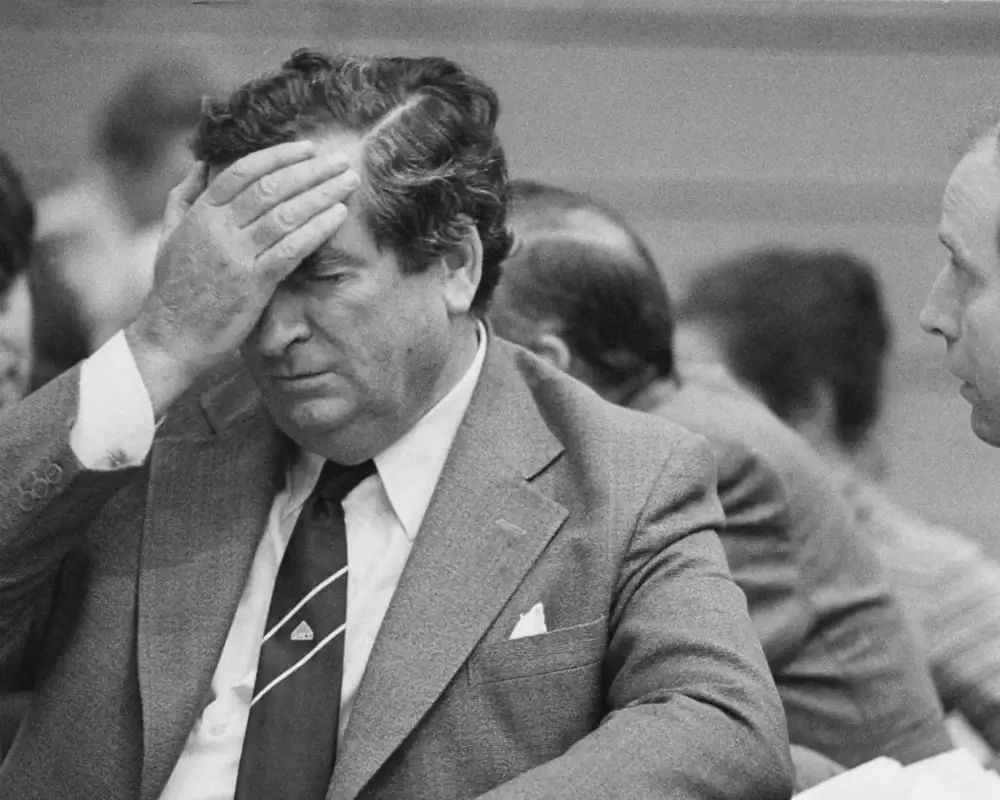
On September 29, 1976, Britain’s Chancellor of the Exchequer, Denis Healey, announced his intention to apply to the International Monetary Fund (IMF) for a $3.9 billion loan, the largest ever requested. Britain, The Economist announced, was ‘bust’. This was a national humiliation, the crux of a decade of economic turmoil. Britain before 1979 was not […]
Why haven’t we grown in the last decade? We are experiencing the longest spell of workers experiencing no average wage growth in real terms for well over a century – ‘the longest in history since consistent wage records exist, dating back to Victorian times,’ as a paper in the Oxford Review of Economic Policy shows. […]
With the introduction of student fees in 1998, one might have expected that universities would gain independence from the state and its agencies. They would live off the fees paid by those who wanted them, free to act in accordance with whatever academic values they chose to embody. But the opposite happened: all the movement […]