Forget Westminster! What does Clacton think?

HENRY NICHOLLS/AFP via Getty Images
Clacton is regularly noted as a ‘left behind constituency’, receiving little government support, with few jobs and poor educational attainment. One must only walk down Pier Avenue in the town centre to see the empty shops and occasional homeless person. But to so many in Westminster it has been a constituency of intense political fascination. As Nigel Farage triggers the latest political frenzy in the place which saw the only UKIP MP and large-scale Brexit rallies, it is worth noting exactly what people are saying in the constituency I’ve called home for the last 22 years.
Yesterday, in the early afternoon, the leader of Reform UK, Nigel Farage, resigned as an MP, saying that it was up to the people of Clacton to decide his future. His mandate, he said, came from them, not the media. As a resident, I’d put it more simply: Westminster may speculate, but Clacton decides.
The response to a ‘left behind’ constituency should not be to leave them behind electorally as well
My immediate thoughts after Farage’s announcement were of both the party-political bounce a renewed mandate could win him and the cost to the taxpayer of yet another by-election. Just last month, Andy Burnham’s victory in Makerfield came at a cost of more than £200,000, with another £5 million to cover the electoral cost of a new Manchester mayoral challenge.
In 2024, Reform were tangibly popular in Clacton, but were still at just 14% in the national polls. Farage ultimately achieved a majority of over 8,000 votes against the Conservative incumbent, Giles Watling. A majority of 24,000 in 2019 had been eviscerated in one ballot. With Reform now polling at 25% nationally, even if the main national parties were running against him, I would have expected Farage to extend his majority to over double that, picking up some national momentum and favourable headlines in the process.
But just hours after the announcement, Kemi Badenoch shot down the suggestion of a Conservative Party candidate, branding the whole affair a ‘fake by-election’. Soon after, the other parties followed suit, with the Greens being the final major party to pull out of the race at around midnight.
Many politicos will understandably see this as the best thing the established parties could have done. Farage is well-known for attracting followers through big gestures, rallies and public statements. Starve the contest of any electoral risk and the media presence there will be much diminished. But from my perspective, I feel sorry for my fellow constituents who now have no credible alternative if they have unfavourable views towards Reform.
A two-horse race between Nigel Farage and Count Binface will only strengthen the local narrative that Westminster has forgotten about them. How depressing too, that one of the first informal cross-party electoral pacts should be to stand behind a joke candidate!
Views on the ground in Clacton are far more split than the media has acknowledged. Farage remains a ‘Marmite’ character, with large numbers of people viewing him as dangerous or untrustworthy. Despite most of the electorate here voting for Brexit, some still hold perceived broken promises from the 2016 referendum against him, and it comes up in conversation to this day.
In the past, Clacton was dominated by traditionally Conservative viewpoints. The political stereotype of ‘Essex man’ (or later ‘Mondeo man’) summed up the constituency quite well, as one of small business owners, sceptical of state overreach or excess taxation. Today the viewpoints are far more diffuse.
The Green Party has gained a grassroots footing within the constituency, likely due to the rural communities outside of Clacton-on-Sea, Holland-on-Sea or Frinton-on-Sea. While unlikely to generate any real traction, left-wing viewpoints, especially in opposition to Nigel Farage, have begun to break through here. Equally, after the creation of a Restore Britain branch in Clacton and an advertisement campaign outside the town’s train station, there is likely a small but growing number of critical voices coming from the right of Reform.
As I have said before, broadly speaking, the Reform Party and Clacton go together. The media should not confuse this for unanimity, but Clacton is likely the safest seat in the country for the insurgent party. The consensus where I live, regardless of party affiliation, is that Britain is broken, as is politics. A large majority like the idea of ripping up the old conventions for something new: a perfect environment for a disrupting Farage. The divide appears when you ask people what the solution should be.
The answer to appealing to a ‘left behind’ constituency should not be to leave them behind electorally as well. Regardless of how the Westminster parties see the lay of the land, contesting elections is a democratic necessity. Grassroots groups from across the constituency would have relished the prospect of campaigning against Reform UK, something the big party HQs have now deprived them of. Just before the wider party stood down the prospect of fielding a candidate, activists from the local Tendring Green Party posted that they ‘are ready to get to work’ … ‘discussing next steps with our members’. By appearing to stand down these groups, party HQs delegitimise local democracy and damage goodwill.
Clacton is a lovely place to live, visit and campaign. It deserves better from Westminster than to be written off by parties who won’t show up to fight for it.


I was going to open this column by listing the soppy reasons I was a Remainer: the EU represented a model of tolerance, compassion and partnership that would contribute to a more peaceful world; Brexit was revolutionary, therefore unconservative; abandoning our closest trade partnership would harm the economy. These are all perfectly good arguments which […]
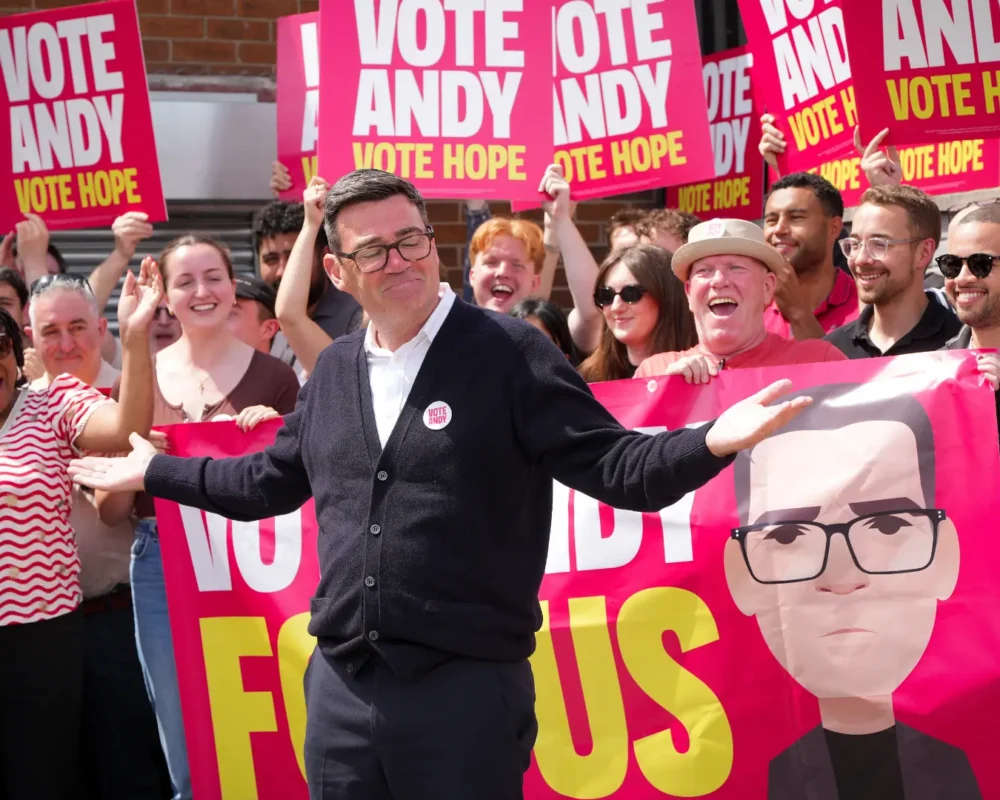
The numbers are not in dispute, whatever the spin. Andy Burnham took Makerfield with 54.8% of the vote and a majority of 9,231, on a turnout of 58.7%, the highest at any parliamentary by-election in almost seven years. Labour’s lead over Reform, 13 points at the general election, widened to 20. A seat Reform UK […]
I was in a field in Kent as the local election results came in. As an unapologetic adherent of the metropolitan elite, it’s not my natural environment. But over the weekend it became increasingly clear that I’m not the only Londoner who’s out of touch with the rest of the country. The capital is now […]