A Remainer repents
The biggest mistake of the Brexit campaign was the failure to articulate a clear idea of what a vote to leave the EU meant
23 June 2026
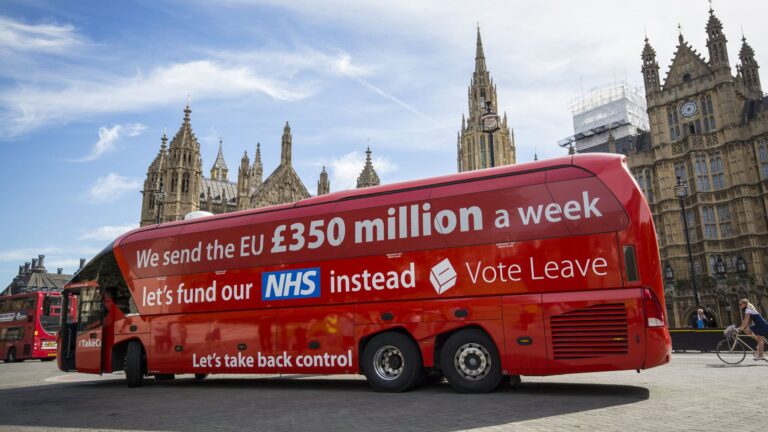
Photo: Jack Taylor/Getty Images
The biggest mistake of the Brexit campaign was the failure to articulate a clear idea of what a vote to leave the EU meant
I was going to open this column by listing the soppy reasons I was a Remainer: the EU represented a model of tolerance, compassion and partnership that would contribute to a more peaceful world; Brexit was revolutionary, therefore unconservative; abandoning our closest trade partnership would harm the economy. These are all perfectly good arguments which will no doubt be remade if, as some are predicting, a future Labour government campaigns to re-join. But they are also rationalisations of a different truth. I’m a snob.
Fundamentally, I believed metropolitan liberals like David Cameron and George Osborne were my kind of people, my kind of Tories, and therefore right. Whereas the likes of Nigel Farage, Bill Cash and Mark Francois were nasty oiks, therefore their views were beneath me. Ten years on, my identity hasn’t changed, but my opinions have. I now think going back would be a huge mistake.
It was that sense that Brexit was about who we were as a nation, rather than a trading arrangement, that made it so divisive. And if politics was split between the U and the non-U in 2016, it is much worse now. There are now at least seven different parties to which Brits can pin their sense of self, therefore so many more ways to hold your fellow citizens in contempt. Overturning the referendum result would also be an insult to democracy and to everyone who voted for Brexit. It is typical of the Left to look at the success of Nigel Farage – the face of Brexit – and believe the answer is for the government to tell the people they are wrong. But reigniting a culture war when the country is already so fractured is not the main reason we shouldn’t re-join the EU. The main reason is that it would be bad for business.
“Fundamentally, I believed metropolitan liberals like David Cameron and George Osborne were my kind of people, my kind of Tories, and therefore right. Whereas the likes of Nigel Farage, Bill Cash and Mark Francois were nasty oiks, therefore their views were beneath me“
Brexit was the filling in a sh*t sandwich, nestling between the Great Financial Crisis and Covid. These have had long-term scarring effects on the economy that are not only financial, but psychological. As Andy Haldane has written, we are facing a 21st Century “paradox of thrift” similar to the Great Depression, but we have tested to destruction – through mass public spending during Covid, borrowing and money printing – the Keynesian theory that government intervention can fix it. The animal spirits of business have been caged and yet more political upheaval is not the way to unlock them.
But don’t take it from me. Benjamin Craig is an Associate Director at R&D specialist Ayming UK who also voted Remain. Yet ten years on he told me “I don’t think reopening the debate about rejoining the EU will help. At a time when businesses are already facing uncertainty around the economy and political leadership, another prolonged argument about Britain’s relationship with Europe only risks delaying investment decisions and creating more uncertainty.
“The bigger lesson from Brexit is that the UK still lacks a coherent long-term plan. We’ve made it harder and more expensive to attract high quality overseas skills, for example, but we haven’t matched that with a clear strategy for developing domestic talent. Consistent, long-term policymaking is what businesses need now.”
There are those who will counter that Brexit has harmed the economy and cite the Bank of England’s estimate of a 6% hit to GDP. But even if you accept that analysis, there is no guarantee that going back in would automatically undo it, especially if we rejoined on less favourable terms. And business sentiment regarding the impact of Brexit is by no means uniform. Figures from BDO indicate that while 26% of mid-sized enterprises felt the impact of Brexit had been worse than they expected in 2016, 38% say the outcome has been better than anticipated and a similar number (36%) believe it has broadly matched expectations.
Craig is surely right that the biggest mistake of the Brexit campaign was the failure to articulate a clear idea of what a vote to leave the EU meant and what would happen next. There were essentially two competing versions of Brexit: the buccaneering, free-trading vision ascribed to by the likes of Daniel Hannan and Matthew Elliott and the more nativist, protectionist and anti-immigration one embodied by Farage. But Britain got neither. In fact we got the worst of both: more immigration and even less growth.
Had Brexit been framed as a policy choice about our trading relationships, rather than a question of what kind of country we wanted to be, it would have been far less damaging and its outcome far easier to deliver. So the policy choice now is obvious: deregulate, compete and make the best of being outside the EU.
Brexit continues to feel unresolved after a decade because people voted for better lives and didn’t get them. The answer is to make them richer through free trade.
I’m a Remainer, but my struggle is finished. I have won the victory over myself. I love Brexit.
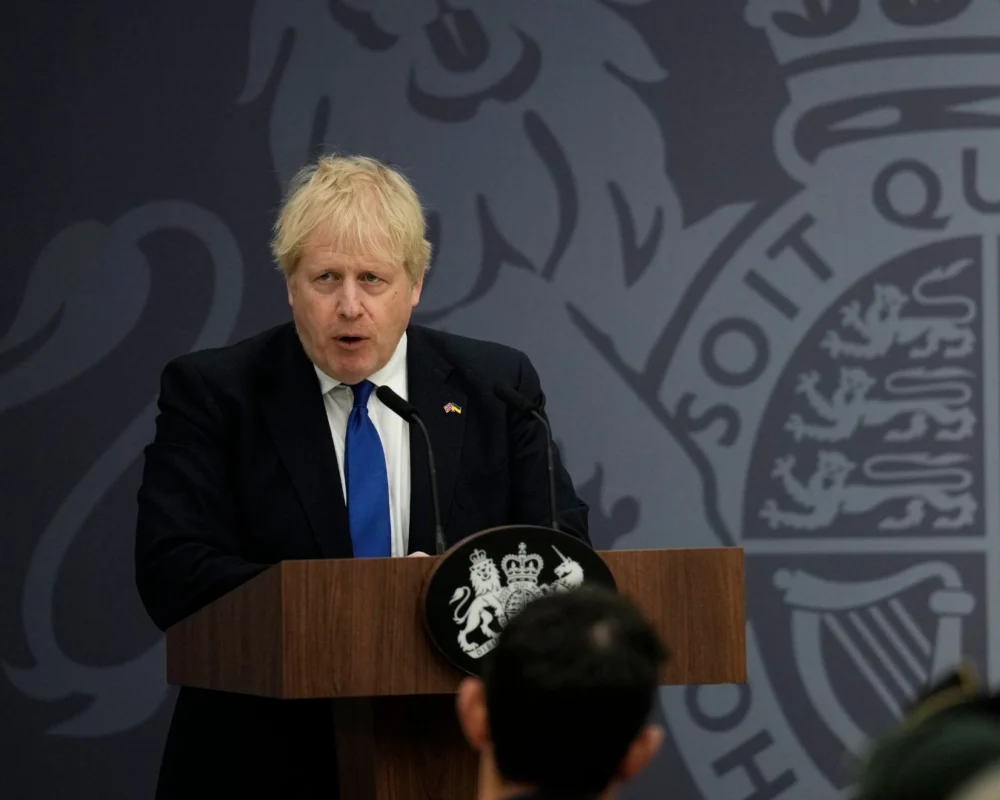
Whenever I think about Boris Johnson, the old French proverb ‘après moi le déluge’ comes to mind. It means a blithe, even nihilistic disregard for whatever ruination ensues after one’s own time. For many years, it was thought to have originated with Louis XV or his mistress Madame de Pompadour in the 1750s. It thus […]
At a few minutes past six on Friday morning, in a leisure centre on the Essex coast, the returning officer reached the bottom of a ballot paper roughly a metre long and announced a number that deserves more attention than it is likely to receive. Nigel Farage, 22,239 votes. The commentary had settled into its […]
This weekend the Telegraph ran a story with the striking headline ‘Burnham told to trade nuclear umbrella for access to single market’. The idea is the brainchild of Nick Boles, the former Conservative MP who quit the party in 2019 over Brexit, switched his allegiance to Labour and helped to advise Keir Starmer on the […]