European football is losing its kick
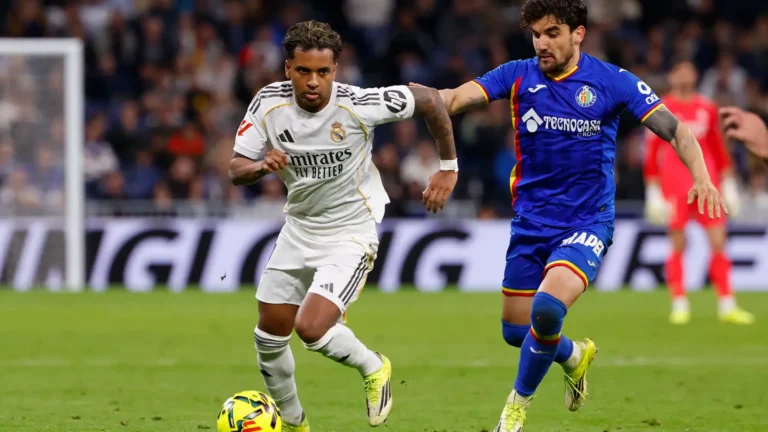
Photo: Antonio Villalba/Real Madrid via Getty Images
Something is going very wrong in European football. The sport has never been richer, yet it has rarely felt flatter. The great promise of football – its unpredictability, its capacity for genuine surprise – is eroding before our eyes.
Every year, a handful of ‘superclubs’ hoover up the most promising players, dominate domestic leagues, collect the lion’s share of European prize money, and return to do the same again and again. Meanwhile, everyone else fights over scraps. And fans are left paying more for a product that offers less genuine competition than ever.
This is not an accident of history or the inevitable triumph of ‘the best teams’. It is the predictable result of a system that has combined technological change, legal rulings and regulatory drift into a machine that funnels power and money upwards while draining excitement, diversity, and competitive balance from the world’s most popular sport.
The numbers tell the story. In 1968, Bobby Charlton earned what would be £307,000 in today’s money. Today, Erling Haaland earns roughly 88 times that amount. Transfer fees have exploded even faster: Alexander Isak’s £130 million move to Liverpool is 31 times more expensive than the record fee in the late 1960s, adjusted for inflation.
This is not merely because Haaland is 88 times the player Charlton was. It is because football has become a ‘globalised entertainment product’, prone to what economists call the superstar effect. Technological change (global broadcasting, streaming, social media) allows the biggest stars to reach billions. When output is infinitely scalable, the top talent absorbs a wildly disproportionate share of the rewards.
In other words, football has become a winner-takes-most market. And it shows.
But technology alone does not explain how a handful of clubs came to dominate a continent of 55 football associations and tens of thousands of clubs. An important accelerant came from Brussels and Luxembourg.
The Bosman ruling in 1995 ended transfer restrictions for out-of-contract players and abolished limitations on using EU players. This supercharged mobility but not in a way that helped weaker clubs. Instead, it allowed the richest clubs to shop across the entire European talent pool while preventing rivals from doing the same. A difference-in-difference analysis by Norbäck, Olsson and Persson shows that the ruling tightened the grip of incumbents on the Champions League: fewer clubs now reach the latter stages, year after year.
Last year’s Diarra ruling may add additional fuel to this development. It prevents FIFA from blocking transfers due to contractual disputes and loosens the rules that previously discouraged clubs and players from inducing breaches of contract. Analysts argue this ruling will increase player mobility, especially for ‘late bloomers’ trapped in long, underpaid deals. Victor Gyökeres move from Sporting CP to Arsenal is a case in point.
And who benefits from that new freedom? Not mid-sized clubs like Plymouth, Villarreal or Atalanta. Not even relatively wealthy clubs like Dortmund or Benfica. The beneficiaries will be the superclubs with the financial firepower to snap up players the moment they break through.
Legal idealism about ‘free movement’ has delivered a football dystopia: a market where only the giants can truly exercise that freedom.
The consequences are measurable and stark.
This is a sport increasingly dominated by economic incumbency, structural advantages, and global brand power, not by sporting merit and competitive churn.
It’s not just boring; it’s economically destructive. Fans value unpredictability. Leagues with more balanced competition enjoy higher demand and higher engagement. When competitive balance declines, so does the sport’s social and cultural value.
European football is no longer a functioning competitive market. It suffers from a combination of economic distortions:
Regulation has failed too. UEFA’s financial rules are riddled with loopholes, easily gamed by large clubs with legal firepower. And no single European institution has the incentive and authority to defend the common interest: vibrant, competitive football.
In effect, European football is governed by a patchwork of bodies whose rules conflict, whose enforcement is inconsistent, and whose incentives are misaligned.
There is also a broader cultural problem. European football policymakers are slow, fragmented, and defensive. The default stance of national associations and UEFA is to protect incumbents, not competition. Meanwhile, the EU increasingly treats football as just another labour market to be liberalised, indifferent to the sporting consequences.
This cultural drift explains why reform efforts often miss the mark. The instinct is always to layer another procedural rule, another financial ‘framework’, another technical measure rather than confronting the structural causes of imbalance.
If European football is to be saved from its slow-motion decline into predictability, it should learn from the region that has successfully maintained competitive balance in major sport: North America.
American leagues operate as regulated cartels – salary caps, revenue sharing, strict governance rules, and draft systems designed to distribute talent. They are far more competitive than Europe’s supposedly ‘open’ leagues, and they remain commercially successful.
Europe does not need to copy these leagues wholesale. Promotion and relegation are culturally ingrained and rightly so. But Europe can borrow and hybridise:
Crucially, this must be done within football, through self-regulation – otherwise EU law will continue to override sporting logic.
European football is not just a market. It is a cultural institution, a community anchor, a social ritual. When a handful of globalised clubs dominate everyone else, the sport’s wider ecosystem suffers: fans, local communities, youth players, smaller clubs, national leagues.
If policymakers continue to treat football as a labour market with goalposts, rather than a complex ecosystem with social and cultural stakes, the decline in competitive balance will continue and eventually become irreversible.
Europe must act before the sport becomes an empty spectacle: global stars playing globalised exhibition matches for globalised audiences, while everything beneath them withers.
A vibrant football culture needs vibrant competition. And at present, Europe is losing both.
Depending on who you ask, the welfare state is either the only thing left in Britain worth fighting for or a byword for state failure, waste and deceit. A cursory look at the statistics will leave readers under no illusion as to which is the correct interpretation. In the 2025/26 financial year, we are projected […]
Britain and America have spent a decade arguing about Nimbyism as if it were a housing problem. It is much bigger than that: our inability to build, in a broad sense, has grown into a source of geopolitical weakness. The economic argument has been made already. Growth controls add anywhere from 17% to 38% to […]

More than 20 million people across England and Wales are currently under hosepipe bans. This should be no surprise following the driest July on record, with the Met Office provisionally recording just 5.6mm of rain across England, less than half the previous record, set in 1911. But how much of the blame can be laid […]