
Matt Ridley

Matt Ridley is a journalist and author.

Articles

Coronavirus

Science journals, Wuhan and a truly bizarre Twitter episode

One of the subtexts of the debate over the origin of the pandemic concerns the role of the scientific journals. The magazines that publish scientific papers have become increasingly dependent on the fees that Chinese scientists pay to publish in them, plus advertisements from Chinese firms and subscriptions from Chinese institutions. In recent years observers […]

I was an enviro-pessimist, but human ingenuity proved me wrong

In 1980, the year that PERC was founded, I spent three months in the Himalayas working on a wildlife conservation project. The purpose was to do wildlife surveys on behalf of the Indian government in the stunningly beautiful valleys of the Kulu region in northern India, among forests of deodar cedar and evergreen oak. One […]

Technology

The war on vaping and the irresistible urge to ban

Suppose that millions of Britons were driving a dangerous type of car that was killing 80,000 people a year. Suppose somebody invented a new car that was much, much safer, significantly cheaper, and emitted far fewer fumes, while performing just as well. Would you a) ban the new car, or b) encourage people to buy […]

Technology

Are we really in danger of getting ‘designer babies’?

There was a horrible inevitability about the recent announcement of a gene-edited baby: that it would happen at some point, that it would be in China, that it would be announced on YouTube by the rogue researcher, He Jiankui of the Southern University of Science and Technology in Shenzhen. More reassuring, but also not surprising, […]

Technology

Britain has the chance to lead the world in AI. Will we take it?

The government announced a “sector deal” for the artificial intelligence industry today, which it says is worth £1 billion. About a third of that comes in the form of public funding and a third from new private sector investment, the rest being a mixture of expansions and in-kind contributions. Matt Hancock, the congenitally connected culture […]

Ideas

The case for free-market anticapitalism

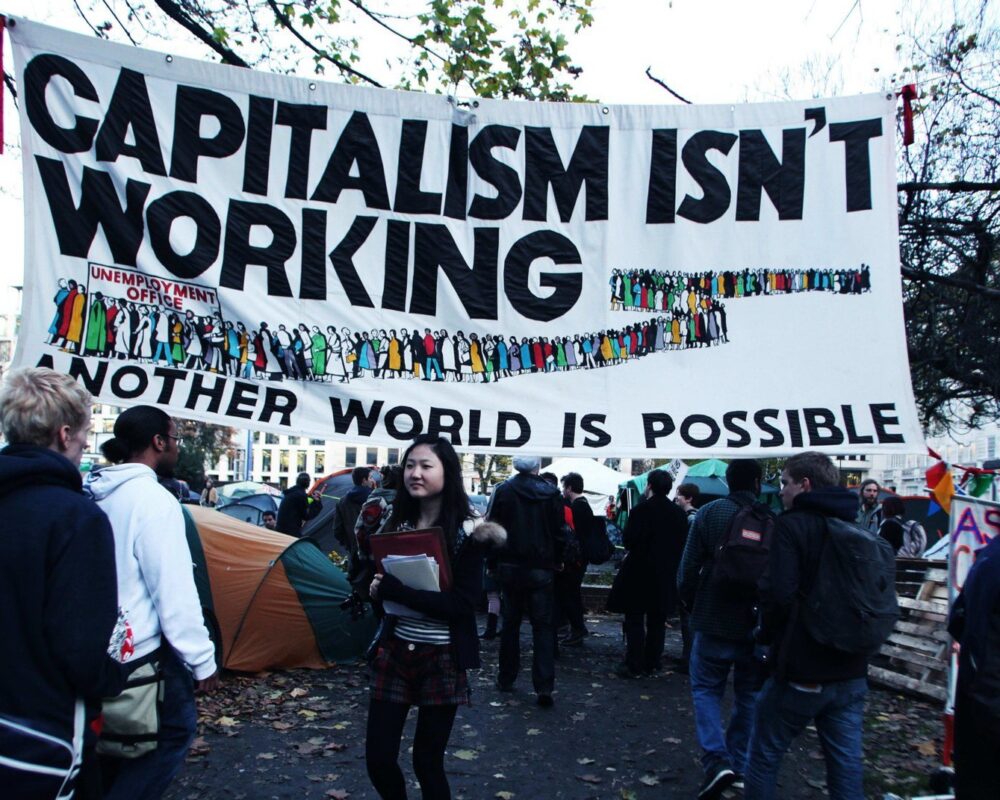
Daniel Yergin and Joseph Stanislaw in their 1998 book Commanding Heights, had this to say about what Keith Joseph was thinking after the fall of the Heath government in 1974: “The source of the problem was the postwar consensus, with its promotion of the interventionist state. The enemy was ‘statism’. What had to be changed […]

Ideas

The world will miss Calestous Juma

The death of Calestous Juma last week is miserable news. A Harvard professor who rose from poverty in western Kenya, son of a carpenter father and a farming mother, Calestous was a truly original scholar, writer and thinker on the topic of innovation. He was also enormous fun, always wreathed in smiles and heaving with […]

Ideas

The case for free-market anticapitalism

Daniel Yergin and Joseph Stanislaw in their 1998 book Commanding Heights, had this to say about what Keith Joseph was thinking after the fall of the Heath government in 1974: “The source of the problem was the postwar consensus, with its promotion of the interventionist state. The enemy was ‘statism’. What had to be changed […]

Ideas

Friedrich Hayek and the collective brain

It is possible to go through an entire education to PhD level in the very best schools and universities in the British system without any of your teachers or professors breathing the words “Friedrich Hayek”. This is a pity. Hayek died 25 years ago today, yet his ideas are very relevant to the 21st century. He […]

Enterprise

In the name of science, Britain must leave the EU

Over the Christmas week, CapX is republishing its favourite pieces from the past year. You can find the full list here.  Britain – for its size – is probably the world’s leading scientific country. We have less than 1% of the world’s population, but 15% of the most highly cited scientific papers, and more Nobel […]

Enterprise

In the name of science, Britain must leave the EU

Britain – for its size – is probably the world’s leading scientific country. We have less than 1% of the world’s population, but 15% of the most highly cited scientific papers, and more Nobel prize winners than any other European country. We are world leaders in biotechnology and digital technology and our greatest potential collaborators […]

Culture

What happened to left-wing libertarianism?

I have never quite understood why libertarians are considered right wing. They believe in small government because they trust people, distrust elites, are suspicious of Leviathan and value freedom. In what sense is any of that either conservative or reactionary? In the nineteenth-century, support for free trade, small government and individual autonomy went together almost […]