Marian L. Tupy

Marian L. Tupy is Editor of HumanProgress and a Senior Policy Analyst at the Center for Global Liberty and Prosperity

Articles

Government

How should the world respond to South Africa’s illiberal turn?

South Africa’s government is embarking on a truly dangerous course. According to press reports, the state has now begun the process of expropriating of privately-owned farmland without financial compensation, thereby ignoring the post-apartheid political settlement, which allows for land redistribution in the country only on a “willing buyer, willing seller” basis. The owners of Akkerland Boerdery, […]

Energy & Environment

How humanity won the war on famine

Adequate nutrition is a basic requirement for human survival, yet historically food has always been scarce. The prevalence of food shortages can be gleaned from the profusion of commonly used idioms, such as “feast today, famine tomorrow,” children’s stories such as Hansel and Gretel, and scriptural references, such as the Biblical Four Horsemen of the […]

Economics

The world has come a long way from cesspits to sanitation

Most of us take modern restrooms for granted, but proper sanitation is a relatively modern phenomenon and is still far too rare in the poorest regions of the world. The need to keep human and animal waste away from human contact may seem obvious today, but for millennia that was not the case. Before the […]

Health

Humanity is winning the war on AIDS

Humanity is winning the war on HIV/AIDS. Deaths from the disease are down. The same goes for new infections. More people then ever have access to cheap and effective antiretroviral therapy. Chances are that, in the foreseeable future, a cure or a vaccine will deliver the once terrifying disease a final coup de grâce. Acquired […]

Energy & Environment

How the profit motive can help fight climate change

Decarbonisation of the global economy has been one of the main objectives of the green movement for many years. Carbon Dioxide emissions from the burning of fossil fuels, many scientists worry, could result in catastrophic global warming. Unfortunately, renewable energy is nowhere close to producing enough power to replace fossil fuels. Should we, therefore, limit […]

Housing

Cities are central to human flourishing

Town versus country may seem like a question of personal preference, but it’s really a matter of human progress. Cities are the engines of human liberation and economic growth. Urbanisation is also good for the planet, for people in the cities have a smaller environmental footprint than people in the countryside. And, as such, it […]

Policy

Market capitalism has achieved what Karl Marx always wanted

Marxism was supposed to have brought about a lot of positive changes, including the creation of a classless society, where everyone lived in peace. To these ambitious goals can be added substantial reduction in the amount of labour required from the proletariat. As Rodney G. Peffer from the University of San Diego put it in […]

Government

The death of democracy? The data tells a different story

Is democracy in trouble? Asked about the state of democracy around the world during a recent interview, former US Secretary of State Madeleine Albright replied, “I am worried about the fact that there are conditions out there that provide the petri dish for something terrible to happen, where some of the definitions I gave of […]

Trade

Trump’s best chance of reining in China is to revisit the TPP

China joined the World Trade Organization in 2001. So far membership has served it well. The same, broadly speaking, is true for the rest of the world. The vast majority of WTO members are richer today than they were at the start of the millennium. Today, China stands credibly accused of forced technology transfers, disregard […]

Energy & Environment

How progress turns scarcity into abundance

Since he published his bestselling book, Enlightenment Now: The Case for Reason, Science, Humanism, and Progress, Steven Pinker has been criticised for excessive optimism. Writing for Open Democracy, Jeremy Lent, argues that Pinker is insufficiently concerned about depletion of the planet’s natural resources, including freshwater reserves. He faults the Harvard University psychologist for embracing a […]

Policy

Jordan Peterson is right – inequality does not always imply discrimination

By now, millions of people in the United Kingdom and the rest of the world have watched the Channel 4 News exchange between British journalist Cathy Newman and Canadian psychologist Jordan Peterson. It has been the subject of countless online comments; hundreds of articles have been written analysing both Newman’s and Peterson’s performance. At the […]

Government

Hillary Clinton and John Bolton – dumb and dumber

Foolishness in the political class is a luxury afforded to rich and powerful countries. Reckless rulers, as the unfortunate citizens of Zimbabwe and Venezuela can attest, can bring poor and weak nations to their knees in a relatively short period of time. America, in contrast, is a superpower and, considering the laughably incompetent politicians from […]

Policy

Israel is a lesson in what makes nations thrive

This week I joined in the celebration of the 70th anniversary of the founding of Israel at an event at magnificent Andrew W. Mellon Auditorium in Washington, D.C. In attendance were many of America’s movers and shakers, including US Vice President Mike Pence. The Jewish State, as many readers on both sides of the Atlantic know, […]

Energy & Environment

Fifty years on, The Population Bomb is as wrong as ever

This year marks 50 years since Stanford University biology professor Paul R. Ehrlich published The Population Bomb. This highly influential book went through a number of editions, sold millions of copies and was translated into many languages. The early editions included the now infamous statement: “The battle to feed all of humanity is over. In the […]

Policy

Income equality is no measure of human progress

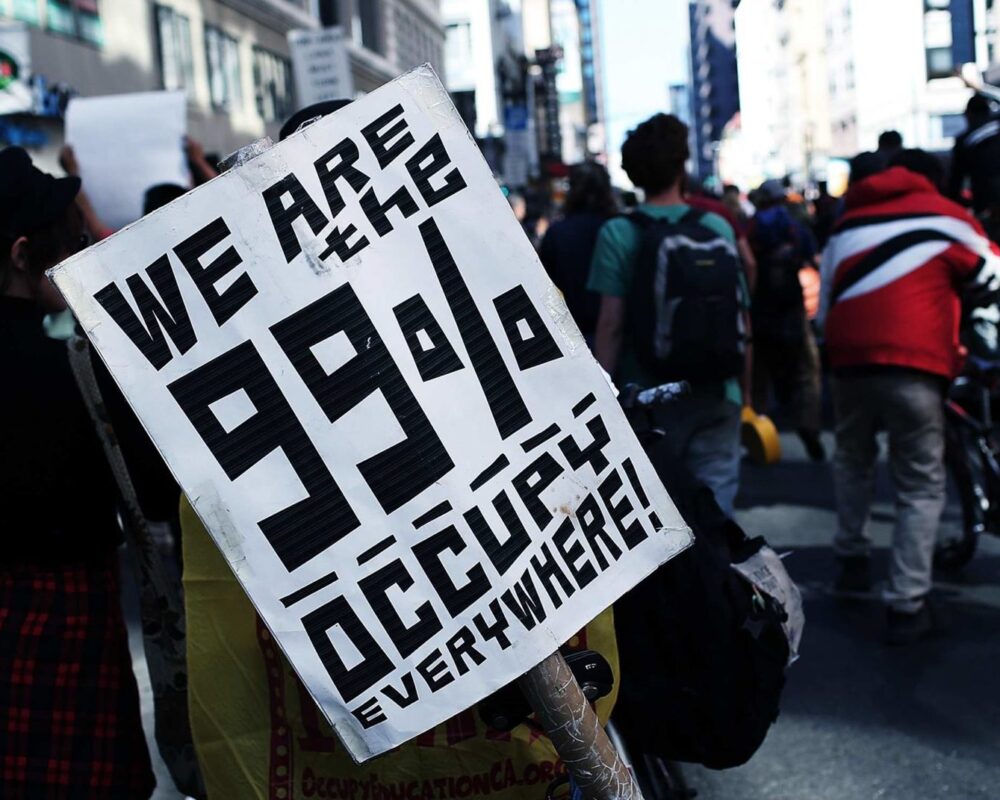
Following the Great Recession of 2008, income inequality became a focal concern of those who feel that market economy has let them down. In 2011, “We are the 99 per cent” became a unifying slogan of the Occupy Wall Street movement. In 2013, the U.S. President Barack Obama described income inequality as the “defining challenge […]

Energy & Environment

Rare earth elements, scarcity and human ingenuity

On April 10, a team of 21 Japanese scientists discovered a 16 million ton patch of mineral-rich deep sea mud near Minami-Tori, an island 790 miles off the coast of Japan. The patch appears to contain wealth of rare earth elements, including 780 years’ worth of yttrium, 620 years’ worth of europium, 420 years’ worth […]

Ownership

Free enterprise is the solution to South Africa’s problems

In 1986, a well-known African-American economist travelled to South Africa for a conference on the role of business in helping to overcome racial divisions in that country. Three years later, Professor Walter E. Williams of George Mason University published a book titled South Africa’s War against Capitalism. Racial discrimination in the country, he wrote, was […]

Investment

Humanity’s remarkable economic history

Earlier this year, the Groningen Growth and Development Centre released a new edition of its Maddison Project Database, which provides information on global growth and income levels over the long run. The 2018 version of the data covers 169 countries up to the year 2016. Some information, dealing with parts of Europe and the Middle […]

Culture

A decade of human progress

Last month marked 10 years since Bear Stearns collapsed and was purchased by JPMorgan Chase. Having lost billions of dollars in subprime mortgage investments, Bear Stearns’ price declined from $30 per share to $2. The shocking news sent the global stock markets tumbling. The financial meltdown of 2008 and the subsequent economic downturn threatened to […]

Culture

The meaning of happiness

For many decades, critics of economic development argued that rising incomes and greater material abundance did not lead to higher levels of happiness. In 1974, Richard Easterlin from the University of Southern California noted that people in richer countries were not happier than people in poor countries. Subsequent research found that the so-called Easterlin Paradox […]