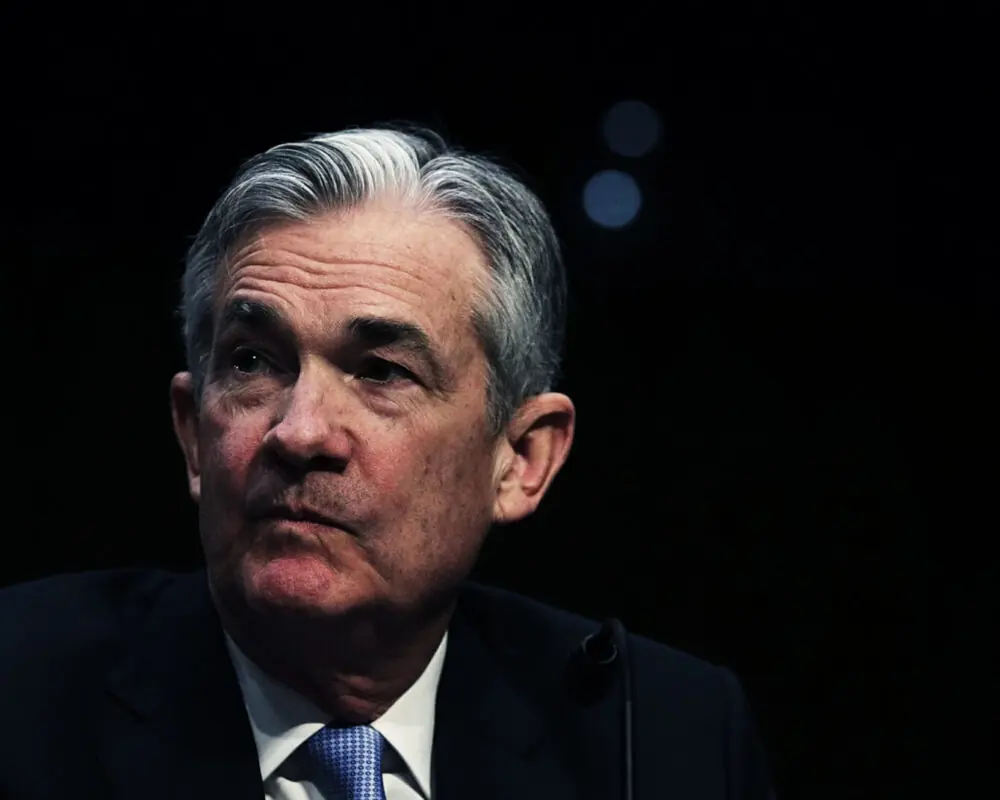

Diego Zuluaga

Diego Zuluaga is a policy analyst at the Cato Institute’s Center for Monetary and Financial Alternatives.

Articles

Policy

Grace Blakeley’s ‘Stolen’ is a tired invective against market capitalism

It is safe to assume that most books bearing the term “financialisation” in the title are not mainly about finance. Grace Blakeley’s Stolen: How to Save the World from Financialisation is no exception. Blakeley’s book, her first, is a sweeping polemic against the market economy. A researcher at the UK’s Institute for Public Policy Research (IPPR), […]


Business

Facebook’s Libra is part of a welcome trend

It’s not entirely surprising that, so far in the short public life of Libra, the Facebook-led cryptocurrency project launched this week, the discussion has focused on the product’s potential applications and risks. “What will Mark Zuckerberg do with our money?” is the question commentators and policymakers probably wish to have answered but are too afraid […]

Business

Index fund pioneer Jack Bogle was a hero of popular capitalism

Many politicians are sceptical that competitive markets can effectively protect consumers. They think that, in the absence of government intervention, private firms will prey upon gullible customers. The lifework of Jack Bogle, founder of investment fund giant Vanguard, belies politicians’ incredulity. Bogle, who died in January at the ripe old age of 89, made it […]

Business

It may take another crash to learn the lessons of the 2008 crisis

It is a decade since the financial crisis, and no one is happy. Progressives like Elizabeth Warren and John McDonnell think the guilty bankers went unpunished. Free-marketeers despair over the absence of meaningful reforms to discourage risk-taking on the taxpayer’s dime. Ordinary people across much of the West have only seen tepid growth since 2008. […]

Enterprise

America’s most political bank

In the turbulent history of American banking, one institution looms larger than the rest. Take a momentous event in US history — the end of slavery, the country’s breakneck industrialisation, its infatuation with the stock market in the 1920s, and the recent mortgage meltdown — and chances are that two-hundred-year-old Citi was involved: sometimes bankrolling […]

Asia

Are we on the verge of a Chinese credit crunch?

If China were a Eurozone country, it would likely be regarded as the next victim of the bond vigilantes. The People’s Republic has more than doubled its stock of private credit relative to GDP in the last ten years, even as output grew at annual rates exceeding 6.5 per cent. Indeed, China accounts for fully […]

Business

How innovation drives financial inclusion

At a time when the world’s two largest economies are engaged in a destructive quest to limit trade between people, any evidence of the benefits impact of globalisation cannot come soon enough. Recently, we got just such an illustration in the form of the World Bank’s Findex report on global financial inclusion. The report is […]

Education

Government loan programmes are failing the most vulnerable students

To extend credit to people in the knowledge that they are unlikely to repay is decried by some as predatory lending. Those suspected of engaging in this practice will face scorn from regulators and opprobrium in the media. Yet predatory is not an inaccurate sobriquet for government policy towards the funding of higher education. So […]

Business

Does regulation breed financial illiteracy?

Ask the average person about her smartphone, and the odds are better than even that she’ll be able to recite the make, model, and salient features such as battery life and camera quality. She may even be in a position to rank the phone relative to other handsets, and to make a recommendation as to […]

Government

A proposal to fix welfare and fight intergenerational unfairness

The Resolution Foundation recently proposed to introduce a “citizen’s inheritance” of £10,000 in order to offset the growing wealth gap between generations. Free-market advocates did not welcome the report with open arms, and for good reason: its authors seem to want to address what is at root a problem of constrained housing supply and low productivity growth with redistribution. Transfers may improve […]

Policy

The quiet triumph of economics

If an economist from 1918 could be transported to the present day, he – back then, it was always he – would be both impressed and disappointed. He’d be impressed because economic science has long settled what in his time was the most pressing empirical issue: whether a system of production coordinated and planned from […]

Business

Why the fall in IPOs is a threat to popular capitalism

In 1996, at the start of the dot-com boom, the number of initial public offerings (IPOs) in the United States reached 677. This marked the peak of new share offerings on American exchanges. It seems particularly fitting that, at the end of that year, then-Federal Reserve chairman Alan Greenspan would warn of “irrational exuberance… unduly […]

Government

Behavioural economics works better in theory than in practice

The last ten years have witnessed an explosion of government regulation. Never before were the people’s health and financial well-being subject to as much state intervention. This despite the fact that the world is today healthier and richer than ever before in history. But regulators haven’t always had it so good. At the end of […]

Business

The price of not knowing the value of Bitcoin

Some time ago, I confessed to CapX readers my unease about pricing cryptocurrencies such as bitcoin. I wasn’t alone in my hesitation: New York University finance professor Aswath Damodaran has voiced scepticism that assets with no cash flows can be valued, in the financial sense of estimating what the future payoffs from holding the asset are worth. Not to […]

Investment

Dodd-Frank is in trouble – and for good reason

If legislation were judged on length and complexity then the Dodd-Frank Act, passed in the wake of the last financial crisis, would constitute an unambiguous triumph. Alas, the correlation tends to run in the opposite direction. The US Bill of Rights, that most influential and long-standing of modern constitutional documents, fits within a page of […]

Business

Passive funds can be actively good for investors

Jack Bogle is one of the great unsung heroes of our age. Together with Ingvar Kamprad of IKEA, Amancio Ortega of Zara and Michael O’Leary of Ryanair, Bogle has led the cost-cutting revolution which, over the last 40 years, has brought goods and services which previously were only available to the privileged few into the […]

Business

Finance is for the many, not the few

At a time when no politician will publicly stand up as a friend of the banks, the leader of the Labour Party is the industry’s most virulent foe. Long gone are the days when Peter Mandelson could cavalierly declare that Labour was “intensely relaxed about people getting filthy rich”. Jeremy Corbyn may decry austerity Britain, […]

Government

How statistics distort policy

Macroeconomic statistics shape our world. Just witness markets’ reaction to the higher-than-expected US inflation numbers reported this week. Often, these data have economic and political consequences of their own. Sir John Cowperthwaite, the self-effacing civil servant widely credited for the triumphal emergence of Hong Kong as a free-market powerhouse, famously banned the collection of aggregate economic statistics. […]

Business

Which is a better bet: Bitcoin or the dollar?

Keeping your funds in cash is generally viewed as much safer than holding them in stocks. This is because, on any given day, the value of the US and UK capital stock – as measured by the NYSE and FTSE indices – can easily fluctuate by one or two percentage points either way. By contrast, […]

Competition

Can Jay Powell provide the punch the Fed needs?

William McChesney Martin, long-time chairman of the Federal Reserve, famously said that the US central bank’s most important task was to “take away the punch bowl just as the party gets started”. The quotation’s conceited paternalism chimed well with the post-war Keynesian doctrine that aggregate demand could and should be managed by the high priests […]