Argentina’s real miracle is bigger than Milei
Getty Images
For the past eight and a half years, I’ve lived in Buenos Aires. Which means that every day for what is now nearly a decade, someone back home has sent me a hysterical headline about the mind-boggling fluctuations of Argentina’s economy.
For the longest time, these headlines were nothing but doom and gloom. ‘Peso Collapse Triggers Ninth Default Amid Worst Market Rout Since 2001’. ‘Financial Chaos As Markets Hit Record Low After Debt Crisis Forces Fresh Currency Plunge’. ‘Historic Drought, Crop Disaster Push Nation To Brink Of Self-Immolation’. That sort of thing.
Lately, though, the situation has reversed. Nowadays all I receive are breathless international alerts about Argentina’s ‘economic miracle’. Since the improbable election of Javier Milei, I never stop hearing how ‘Argentina is the country of the future’.
As it happens, I believe that last one to be true. Argentina is indeed the country of the future – no question. Just not quite the one the headlines have in mind.
I learned the hard way that when you live abroad, people assume you chose to emigrate based on bond spreads, fiscal surpluses or GDP growth. As if the only reason anyone moves to another country is a favourable CPI print. Then, once you’ve settled in – found a place to live and begun adjusting to a new culture – they bombard you with updates about balance-of-trade numbers and industrial production, as though any of it has the faintest impact on your day-to-day life.
It shouldn’t need saying, but when I moved to Argentina, it wasn’t for its historically strong and stable economy. Call me a hopeless romantic, but I’ve yet to make a life decision based on a bar graph or a stock index chart. I ended up here in the time-honoured way: I met a girl, fell in love and followed her like a slobbering lapdog when she accepted a job in a strange country seven thousand miles away about which I knew recklessly little. Macroeconomics had diddly-squat to do with it.
Which was just as well. Nobel laureate Simon Kuznets famously observed that there are four distinct types of economy: developed, underdeveloped, Japan, and Argentina. Live here for any length of time and you soon understand his point. Blessed with all the bounties of creation, my country of choice has nonetheless endured a century of economic decline. Corruption is so endemic it might as well be diagnosed as a congenital addiction. The phrase ‘Rich as an Argentine’, coined in the early decades of the twentieth century, once described the lavish spending and opulent lifestyles common in what was then one of the world’s wealthiest nations. The same nation that is now routinely dismissed as an unfixable basket case.
When I first arrived here from London, as clueless as I was curious, the exchange rate was 15 Argentine pesos to the British pound, which I assumed was normal. Today it hovers around 2,000, which I now suppose is normal. In 2023, annual inflation surpassed 211%, which had me shopping for wheelbarrows. Meanwhile, Argentina remains by far the largest debtor in the history of the International Monetary Fund, currently owing the institution a cool $57 billion. A debt I have no doubt it will repay. Around the year 2983.
Then there are the countless political scandals – crazier than fiction, juicier than the local steaks. It’s impossible to pick a favourite, though it’s hard to beat the former public works secretary, José López, caught throwing plastic bags over the walls of a monastery containing euros, Japanese yen, $9 million in cash and a rifle.
With a radical new president committed to free-market economics came an unprecedented wave of chainsaw austerity and shock therapy. Subsidies were slashed, government ministries turned to dust, unions confronted. And yet, the big takeaway from my eight and a half years in this crazy, wonderful country is that, against all rhyme and reason, despite the chaos and upheaval, nothing much has really changed.
Call it the Argentine paradox: radical policy shifts, hair-raising headlines, epoch-shaking inflation… yet somehow the atmosphere and routines of daily life carry on admirably undisturbed. Regardless of current circumstances or recent crises, the cafés of Buenos Aires are overflowing and the asados never-ending.
There’s an old saying: leave Argentina for a week and everything has changed; leave it for ten years and nothing has. ‘This? This is nothing,’ my friends here insist with a wave of the hand whenever I ask them about the latest batshit-crazy event that, in more sober nations, would qualify as an historic and potentially catastrophic emergency. ‘You should have been here in…’ And they never fail to find a date in the past when things were even more insane.
Crisis fatigue, you might call it. Which sounds like a bad thing, until you consider that Argentines learned long ago to pull up a chair, take a moment or three and wait for the dust to settle. Because it always does, eventually.
‘You Brits need to learn to relax,’ a lawyer once told me at a golf range overlooking the Río de la Plata. ‘If the equivalent of your Brexit ever happened in Argentina, it might be the third most important news item that day. What became of your famous stiff upper lip? When did you people start acting like hysterical Latinos?’
But it’s not just us Brits. When inflation peaked at 9.1% under President Biden, friends in the US called, sounding so terrified you’d have thought Jack Nicholson was chasing them with an axe. Meanwhile, here in Argentina, when inflation soared above 200% under President Fernández, the subject barely came up in conversation.
Nothing shakes these people. If World War III breaks out tomorrow, Argentina is the place to be. Not just geographically – which is obvious enough – but because Argentines would greet global conflagration with a shrug. ‘No pasa nada,’ they’d say, sharing yerba mate with friends, family and strangers. ‘You should have been here in…’
I’ve come to believe that Argentines are immune to disaster. They’ve been through the wringer so many times they possess a supernatural resilience to anything that might crush them. Defaults, hyperinflation, political implosions. It’s all water off a duck’s back down here. These people embody the live-in-the-moment ethos that mindfulness apps always promise but never deliver. If they could bottle their art of being present, they’d be rich as… well, as Argentines.
Lately, the panic du jour abroad is artificial intelligence. You can’t open your phone without hearing or reading about robots destroying industries, taking all the jobs, and eventually staging a coup against humanity. People ask me what Argentines will do when the machines inevitably take over, and I tell them: exactly what they’re doing now. They’ll shrug, order another coffee, and go about their day, como siempre. Argentines already live as though robots are handling all the wealth-generating drudge work.
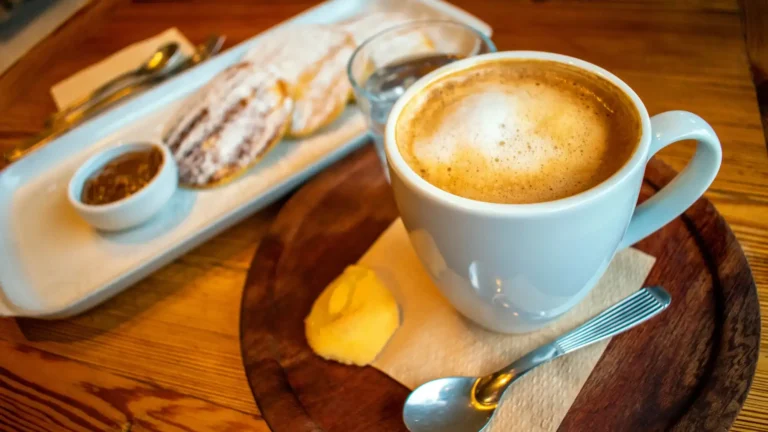
And what living it is. Time spent with friends isn’t squeezed between more important obligations – it’s the main event. Family gatherings last so long they’re best measured in geological epochs. Merienda, the late-afternoon ritual of coffee and pastries, is even sanctioned by the Ministry of Health as one of the recommended four daily meals.
What Argentina understands – better than anywhere I’ve lived – is that the small things are the big things. An unending conversation. An eight-hour lunch. Sitting in a café with no particular purpose beyond being there. This is wealth that no inflation rate can erode, no government mismanage, no machine replace.
Argentines know they can’t control global events. But they can spend the afternoon arguing about football with the people who matter most to them. The world may not be their oyster, but who can swallow an oyster that big, anyway?
Economic miracle or crisis, robots or nuclear war, life here just goes on. Beautifully. Joyfully. Stubbornly. Yes, the headlines are dramatic. The numbers soar and crash and swirl like the plot of an Italian opera. And the rest of the world will always view Argentina as a uniquely nonsensical puzzle.
But come what may, I know where I want to be: somewhere in Buenos Aires, enjoying a long, carefree merienda.
Nigel Farage, the Member of Parliament for Clacton and leader of Reform UK, has resigned, triggering a by-election in the constituency. This follows weeks of speculation regarding an undeclared £5 million gift Farage received before he became an MP, as well as other gifts he allegedly should have declared. Farage intends to stand in the […]

Josiah Quincy Jr., who was the mayor of Boston in the middle of the nineteenth century, wrote in his Last Will and Testament that his son should read ‘John Locke’s works, – Lord Bacon’s works, – Gordon’s Tacitus, – and Cato’s Letters. May the spirit of liberty rest upon him!’ Indeed, there is nothing closer […]
Should Sadiq Khan decline to run for a fourth term as London mayor, his contribution to public life will largely have been stoking the culture war. From spaffing European symbols over the New Year’s fireworks to funding bemusing anti-misogyny campaigns, the public messaging has been relentless, if little else has. And yet there’s another cultural […]